
New public safety building may be urgent, but Miami’s bond math isn’t adding up | Opinion
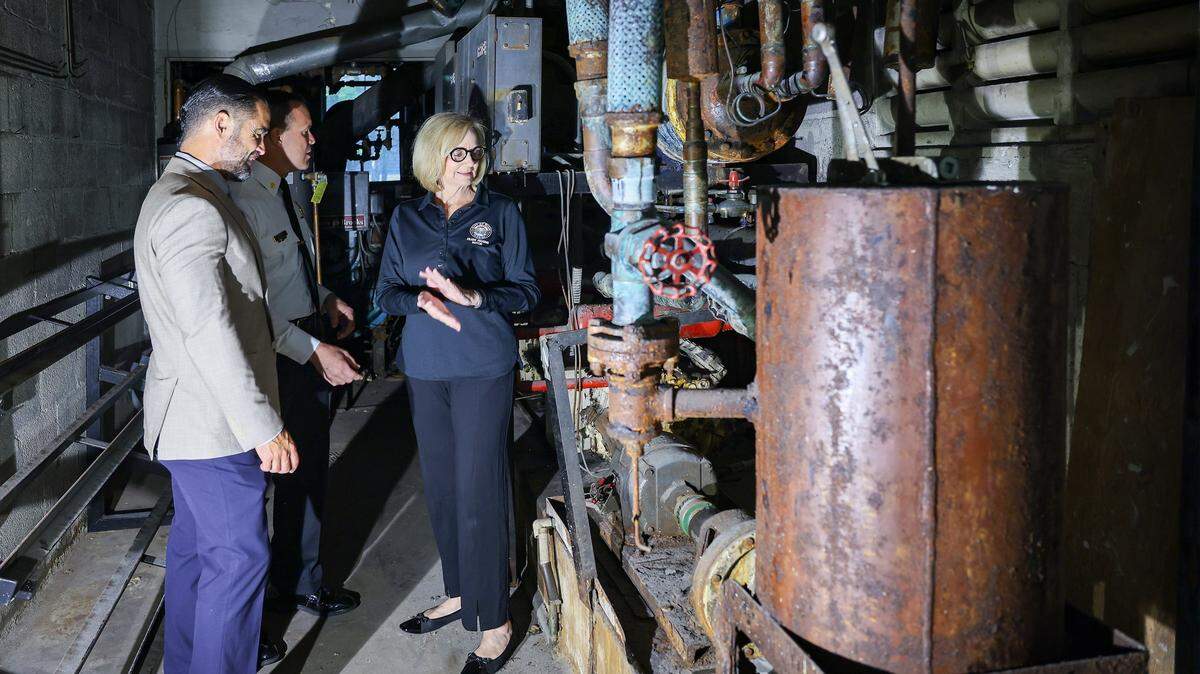
Miami city commissioners hit the brakes Thursday on a $450 million bond issue for new public safety facilities. It was a painful decision — no one wants to be accused of slow-rolling necessary improvements for first responders — but delaying the decision was right.
We’re talking about nearly a half-billion dollars of debt if this bond issue goes through. That’s a lot to ask, especially when the city hasn’t spent all of a $400 million Miami Forever bond issue approved in 2017 for public safety, affordable housing and flood resiliency. This community hasn’t forgotten: At Thursday’s meeting, a number of residents spoke against the latest bond issue, with some mentioning Miami Forever.
We are all for modernizing city facilities — isn’t Miami supposed to be the city of the future? — but those efforts must be balanced with fiscal restraint when it comes to taxpayer dollars. That is especially true if Florida starts reducing property taxes.
Miami Mayor Eileen Higgins outlined the case for new facilities on Thursday. She said voters elected her to provide “decisive leadership.” She called it a “moral responsibility” to do something about deteriorating conditions in the city’s police and fire facilities. She said response times in some parts of the city are so bad that “you should be afraid,” the Herald reported. She added that, “One of these facilities will fail.”
That sounds ominous. Obviously, Miami must make sure its police officers and firefighters work in safe conditions and are able to respond adequately to emergencies. But the mayor has yet to make a strong enough case. Commissioners voted 4-1 to defer the issue to the next meeting.
That effectively forecloses the possibility of the bond issue making it onto the ballot for an August vote. Thursday’s meeting was the last one before the May 22 deadline to send referendums to the primary ballot. The November election, though, is still possible, and that may be best. More people generally vote in November. This is a big decision that deserves strong voter input.
Higgins had hoped to persuade commissioners to give the proposal the go-ahead this week. She underlined that point by flexing a bit of muscle: She issued a memo Thursday to say she would preside over the commission meeting as mayor rather than allowing Commission Chair Christine King to do so. There are five commissioners. The mayor does not get a vote on the commission but can preside over the meetings.
The political maneuver didn’t do the trick. Commissioner Rolando Escalona, a co-sponsor of the bond item, was the only vote against deferring the issue. He told WLRN that he was at first skeptical of the high price of the bond, but became convinced when he saw the state of the police department himself. Under the bond, the city would build a new public safety building for about $305 million to house emergency services and a new Miami Police headquarters.
But even though commissioners postponed a decision for the second time — in April, they pushed it back to the meeting this week — Higgins’ commitment to the idea is notable. She’s right that voters wanted new leadership in the city. She’s setting down clear markers of progress, and she’s not afraid to put herself on the line to get something done.
The mayor’s job may not include a vote on the commission, but that doesn’t mean the mayor can’t lead. The mayor of Miami has a big platform, a bully pulpit. People will listen. The mayor also has veto power and can meet privately with commissioners to whip votes. And by presiding over commission meetings, she’s exercising a power that Francis Suarez should have thought more about when he was mayor.
Higgins has support from Police Chief Manuel Morales and Miami Fire-Rescue Chief Robert Hevia for the bond issue. We have no doubt there are leaky roofs and moldy walls that must be addressed. Building a new public safety building may even be a moral responsibility, as the mayor has said. But even if commissioners agree to put the bond issue on the November ballot, it’s Miami voters — who have a bad taste in their mouths from the Miami Forever bond — that Higgins ultimately has to convince.
BEHIND THE STORY
MOREWhat's an editorial?
Editorials are opinion pieces that reflect the views of the Miami Herald Editorial Board, a group of opinion journalists that operates separately from the Miami Herald newsroom. Miami Herald Editorial Board members are: opinion editor Amy Driscoll and editorial writers Isadora Rangel and Mary Anna Mancuso. Read more by clicking the arrow in the upper right.
What's the difference between an op-ed and a column?
How does the Miami Herald Editorial Board decide what to write about?
The Editorial Board, made up of experienced opinion journalists, primarily addresses local and state issues that affect South Florida residents. Each board member has an area of focus, such as education, COVID or local government policy. Board members meet daily and bring up an array of topics for discussion. Once a topic is fully discussed, board members will further report the issue, interviewing stakeholders and others involved and affected, so that the board can present the most informed opinion possible. We strive to provide our community with thought leadership that advocates for policies and priorities that strengthen our communities. Our editorials promote social justice, fairness in economic, educational and social opportunities and an end to systemic racism and inequality. The Editorial Board is separate from the reporters and editors of the Miami Herald newsroom.
How can I contribute to the Miami Herald Opinion section?
The Editorial Board accepts op-ed submissions of 650-700 words from community members who want to argue a specific viewpoint or idea that is relevant to our area. You can email an op-ed submission to oped@miamiherald.com. We also accept 150-word letters to the editor from readers who want to offer their points of view on current issues. For more information on how to submit a letter, go here.