
Brightline’s money issues should make Florida think twice about cutting Tri-Rail | Opinion
Here’s the inconvenient truth about public mass transit: It will probably always require taxpayer dollar investment, and the cavalry is probably not coming from the private sector.
When Brightline, the private higher-speed train, opened in South Florida in 2018, it helped but didn’t solve the region’s lack of transit options. And now that the rail line connecting Miami to Orlando is financially strapped, it’s become even clearer that Florida should invest more, not less, in providing transportation alternatives in congested urban areas. Brightline is struggling with an enormous amount of debt, raising speculation that it could be headed toward bankruptcy.
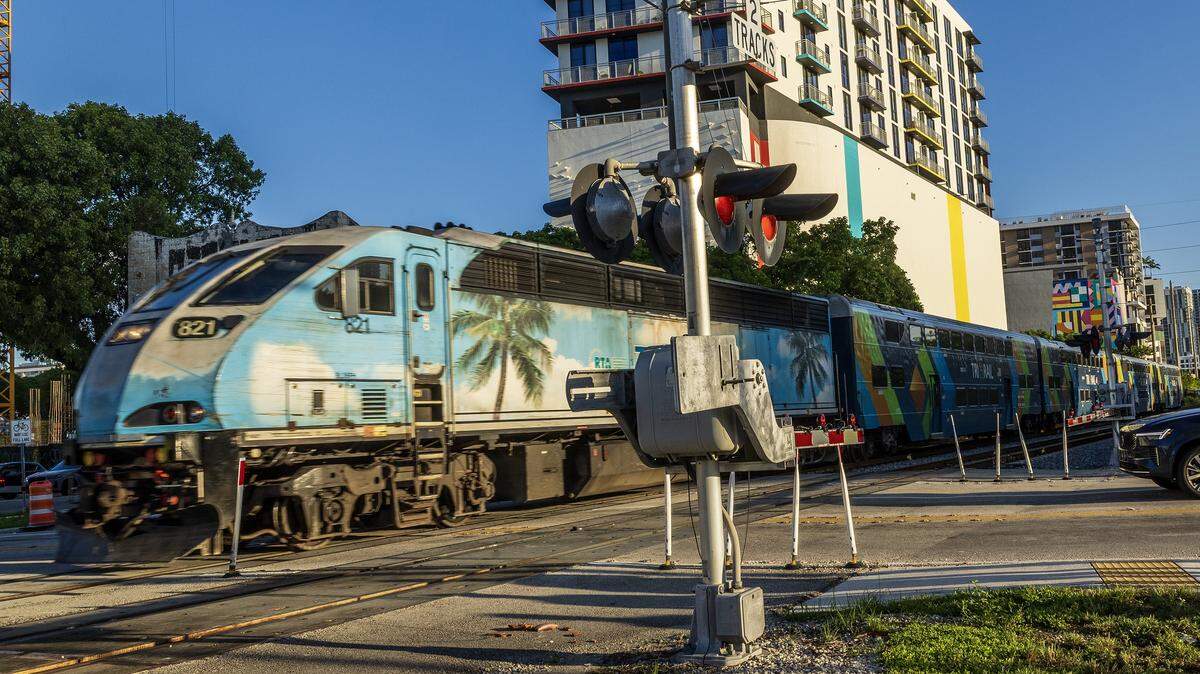
That makes it more urgent for lawmakers to come to an agreement on funding for Tri-Rail, the public train line that connects Miami to West Palm Beach with service just west of Interstate 95. The state last year cut its funding for Tri-Rail by $27 million. That could force the service out of business by next year, even though ridership has grown — 4.5 million commuters rode the trains last year, up from 4.2 million a decade ago.
The Florida House and Senate are on the verge of passing a new state budget during a special session that begins Tuesday. House Speaker Daniel Perez, a Miami Republican, said Monday the House wants to restore state funding for Tri-Rail, but he isn’t sure whether the money will make into the final budget.
“The House is going to do their part. And the House is going to fund the Tri-Rail,” Perez said, according to the Sun Sentinel. But, he added, “I don’t know if the Senate is going to want to reciprocate that. So the real question is going to go to the senators.”
These are the times when it pays off to have a House speaker from South Florida, where transportation issues are vastly different compared to other parts of the state. Perez should make funding for the tri-county commuter rail a priority in his negotiations with Senate President Ben Albritton, who represents parts of rural Florida.
Tri-Rail averages 15,000 riders daily, CBS News Miami reported last year. These are 15,000 people who would otherwise get on congested roads such as I-95 or lose transportation to and from work. We invite senators from other parts of the state to drive in South Florida during rush-hour traffic. That might help them understand the value of mass transit. However, even if they do, funding still would have to survive Gov. Ron DeSantis’ veto pen.
It would be ideal if public transit could pay for itself through fare revenue, but that’s rare, especially if the point is to make service affordable. As for Brightline, the service was not necessarily designed to be a commuter train — it’s got few stops and fares are more expensive — though many commuters use it as such. Tri-Rail fares usually cost less than $10.
There are plans to build a publicly-funded, 85-mile commuter service on the same tracks as Brightline, with Miami-Dade stops east of I-95 in Wynwood, the Design District, Little Haiti and more. However, those plans were thrust into doubt when the company that owns the tracks, Florida East Coast Railway, sued Brightline last year. FECR argues Brightline violated its agreement by negotiating a rail deal with county governments without bringing FECR into the conversation, WLRN reported.
Even if plans for the “Coastal Link” commuter rail move forward, we’re looking at years, if not decades, before South Florida residents can use it. In the meantime, losing Tri-Rail would set Miami-Dade County back on its plans to expand its public transit network.
It’s the job of Perez and other South Florida lawmakers to explain this to their legislative colleagues. Fiscal responsibility is important, but lawmakers should balance that with the realities of commuting in South Florida.
Florida leaders have become increasingly hostile to anything that sounds remotely liberal and that may even extend to public transportation. In 2011, then-Gov. Rick Scott, now a U.S. senator, famously turned down billions in federal dollars from the Obama administration to build high-speed rail between Orlando and Tampa. The money went to other states.
Transportation infrastructure shouldn’t fall victim to politics. South Florida residents should demand funding for Tri-Rail.
BEHIND THE STORY
MOREWhat's an editorial?
Editorials are opinion pieces that reflect the views of the Miami Herald Editorial Board, a group of opinion journalists that operates separately from the Miami Herald newsroom. Miami Herald Editorial Board members are: opinion editor Amy Driscoll and editorial writers Isadora Rangel and Mary Anna Mancuso. Read more by clicking the arrow in the upper right.
What's the difference between an op-ed and a column?
How does the Miami Herald Editorial Board decide what to write about?
The Editorial Board, made up of experienced opinion journalists, primarily addresses local and state issues that affect South Florida residents. Each board member has an area of focus, such as education, COVID or local government policy. Board members meet daily and bring up an array of topics for discussion. Once a topic is fully discussed, board members will further report the issue, interviewing stakeholders and others involved and affected, so that the board can present the most informed opinion possible. We strive to provide our community with thought leadership that advocates for policies and priorities that strengthen our communities. Our editorials promote social justice, fairness in economic, educational and social opportunities and an end to systemic racism and inequality. The Editorial Board is separate from the reporters and editors of the Miami Herald newsroom.
How can I contribute to the Miami Herald Opinion section?
The Editorial Board accepts op-ed submissions of 650-700 words from community members who want to argue a specific viewpoint or idea that is relevant to our area. You can email an op-ed submission to oped@miamiherald.com. We also accept 150-word letters to the editor from readers who want to offer their points of view on current issues. For more information on how to submit a letter, go here.