
The real redistricting scandal: DeSantis treating Florida’s constitution as optional | Opinion
“Signed, Sealed, and Delivered.”
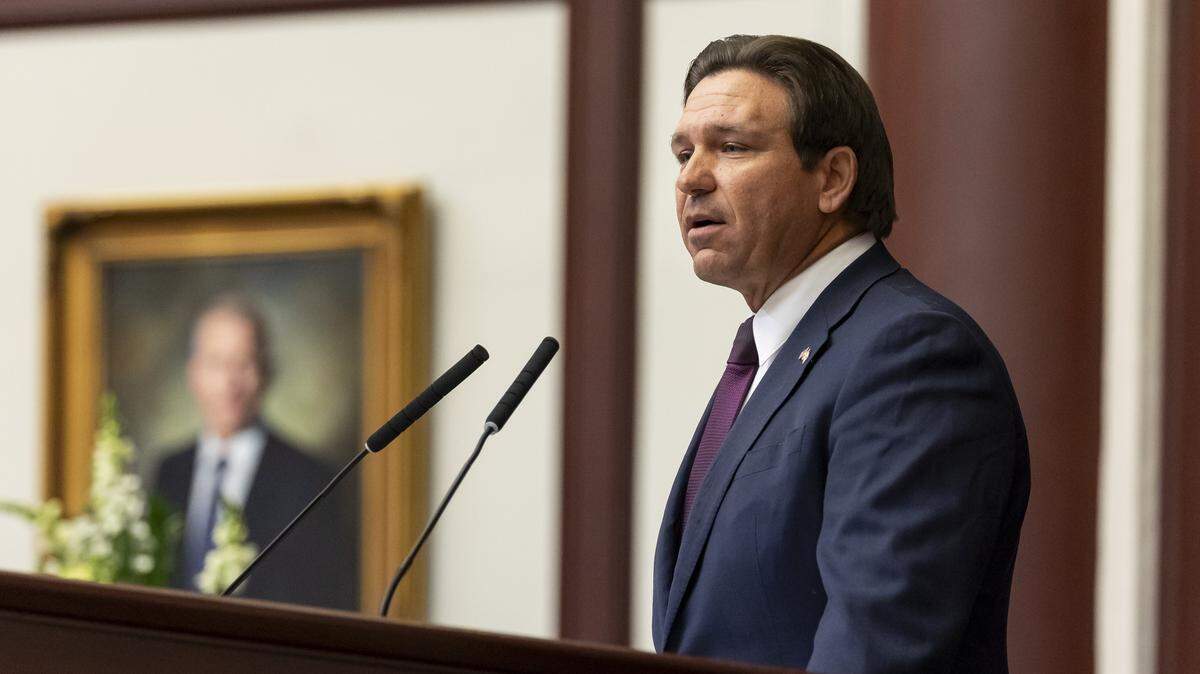
Those were the words Gov. Ron DeSantis wrote in a post on X after signing newly redrawn congressional maps into law on Monday.
The new maps are expected to give Florida Republicans an additional four seats in Congress. But the more troubling issue is how DeSantis achieved this.
In an effort to help the GOP keep the U.S. House, DeSantis’ general counsel argued a key provision in the Florida Constitution — the Fair Districts Amendments — is unenforceable. Approved by 63% of voters in 2010, the amendments prohibit drawing districts to favor a political party and require the protection of minority representation.
While the newly drawn districts face legal challenges from opponents, the precedent DeSantis has set by ignoring part of the constitution is concerning.
Under Florida’s Constitution, the governor’s role as the chief executive officer is clear — enforce the law, not reinterpret it at will. There’s a provision for constitutional ambiguity: The governor can seek advisory opinions from the state supreme court on questions affecting his powers and duties.
But in this case, DeSantis chose not to seek clarity from the courts. Instead, he acted on his interpretation and positioned himself as both governor and constitutional arbiter.
This isn’t the first time DeSantis has bent the rules to achieve his electoral map goals. In 2022, DeSantis rejected a map the Legislature created and replaced it with a more GOP-favorable map, increasing Republican-leaning seats to 20 out of 28 — four more than the initial maps drawn by GOP lawmakers. That move upended democratic norms surrounding the redistricting process. DeSantis erased two Black districts, one in Orlando represented by then-Democratic U.S. Rep. Val Demings and another that connected Black communities across North Florida represented by then-Democratic U.S. Rep. Al Lawson. ProPublica reported at the time that political scientists and law professors noted this was the first time they’ve been aware of a state doing this.
Ultimately, the Florida Supreme Court sided with DeSantis, upholding his maps in a ruling last year that found Lawson’s old district was likely the result of race-based gerrymandering. The governor has made a similar argument to dismantle a Black-majority district in Broward and Palm Beach counties this year.
In 2022, DeSantis’ move felt like an aggressive use of political power. Now, he’s escalated it into something more consequential: an attempt to throw out a voter-approved constitutional amendment.
DeSantis has pointed to the recent U.S. Supreme Court’s ruling in Louisiana v. Callais as justification, arguing that it voids the state’s requirement to consider race in redistricting. In its ruling, the court struck down two majority-Black districts in Louisiana.
Unfortunately, the Florida Supreme Court is stacked with DeSantis’ conservative appointees, so they might help him bring down the Fair Districts Amendments. But when voters approved the amendments, their intent was clear: to protect minority representation and prevent partisan gerrymandering. That should mean something 16 years later.
Setting voters’ will aside brings to question what other voter-approved constitutional provisions could be undone by future governors.
If that becomes the standard, the implications will go farther than heavily partisan maps. Constitutional limits become subject to the reinterpretation by those in power, not enshrined into law by the will of Florida voters.
Florida’s constitution is a living document and belongs to the voters. Amendments are added to the constitution without caveats or expiration dates. They’re intended to endure the political ambitions of any officeholder.
Allowing this precedent to go unchecked sends a message to voters that constitutional limits are negotiable and voter-approved amendments are provisional.
BEHIND THE STORY
MOREWhat's an editorial?
Editorials are opinion pieces that reflect the views of the Miami Herald Editorial Board, a group of opinion journalists that operates separately from the Miami Herald newsroom. Miami Herald Editorial Board members are: opinion editor Amy Driscoll and editorial writers Isadora Rangel and Mary Anna Mancuso. Read more by clicking the arrow in the upper right.
What's the difference between an op-ed and a column?
How does the Miami Herald Editorial Board decide what to write about?
The Editorial Board, made up of experienced opinion journalists, primarily addresses local and state issues that affect South Florida residents. Each board member has an area of focus, such as education, COVID or local government policy. Board members meet daily and bring up an array of topics for discussion. Once a topic is fully discussed, board members will further report the issue, interviewing stakeholders and others involved and affected, so that the board can present the most informed opinion possible. We strive to provide our community with thought leadership that advocates for policies and priorities that strengthen our communities. Our editorials promote social justice, fairness in economic, educational and social opportunities and an end to systemic racism and inequality. The Editorial Board is separate from the reporters and editors of the Miami Herald newsroom.
How can I contribute to the Miami Herald Opinion section?
The Editorial Board accepts op-ed submissions of 650-700 words from community members who want to argue a specific viewpoint or idea that is relevant to our area. You can email an op-ed submission to oped@miamiherald.com. We also accept 150-word letters to the editor from readers who want to offer their points of view on current issues. For more information on how to submit a letter, go here.