
Florida AG wants to keep his job. Voters deserve grand jury answers | Opinion
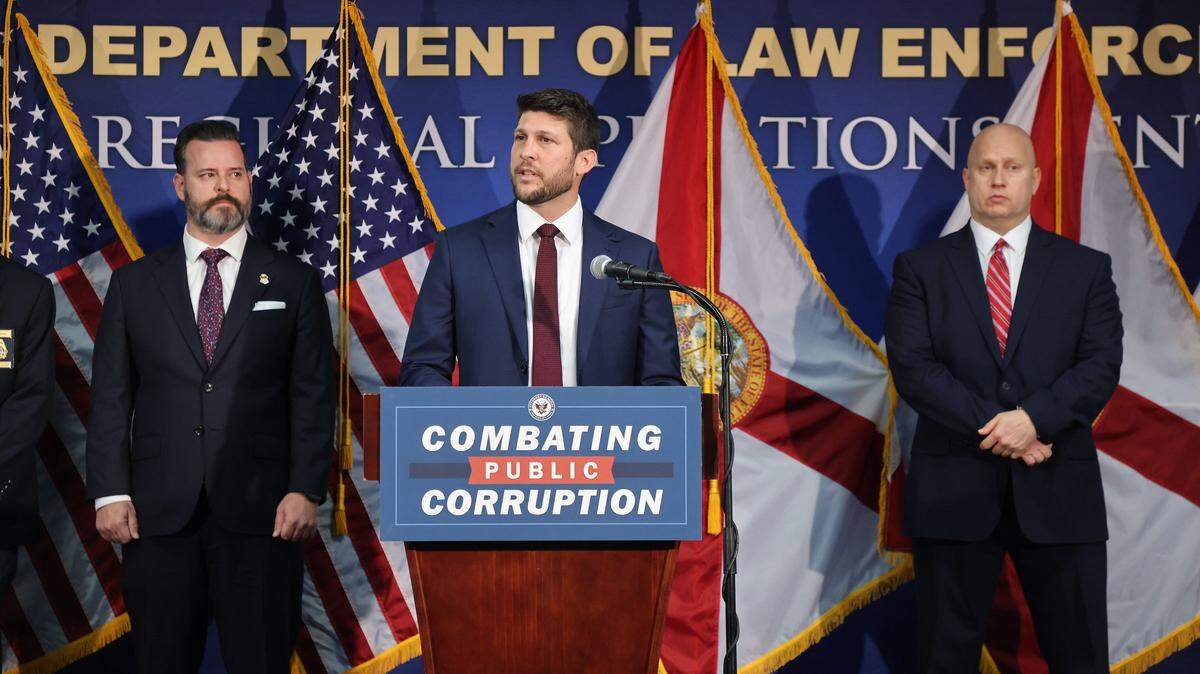
If there is indeed a grand jury report on the investigation into a Hope Florida charity — and it certainly sounds as though there is — voters should be demanding to see it, and soon.
That’s because a key figure in the investigation, Florida Attorney General James Uthmeier, is running for election in November. He was appointed to the job in February by Gov. Ron DeSantis.
It’s unfair to voters to have to evaluate Uthmeier for the top law enforcement job in the state without knowing what the grand jury has uncovered. And yet, as the Herald/Times Tallahassee Bureau recently reported, there’s a legal process allowing people named in a grand jury report to keep it secret for months.
How did voters get stuck in this position? Uthmeier used to be DeSantis’ chief of staff. When he had that job, he was in control of a political committee, Keep Florida Clean, that received $8.5 million from the charity linked to Hope Florida, a program created by Florida’s first lady aimed at getting residents off welfare.
That charity is part of the grand jury investigation. The investigation began after Republican state Rep. Alex Andrade accused officials in DeSantis’ administration last year of diverting the money from a state Medicaid settlement to that political committee ahead of the 2024 election.
Keep Florida Clean opposed the ballot measure to legalize recreational marijuana. Its opposition may have worked; Amendment 3 was defeated, falling just short — 56% — of the necessary 60% of the vote. Having millions of dollars in taxpayer money could have been the deciding factor.
There is no official confirmation that the jury in the Hope Florida case has issued a report. But there’s reason to believe it has: the Leon County prosecutor’s office has responded to public records requests in the case by citing exemptions to state law, including one relating to a grand jury “presentment.” A presentment is a grand jury report issued to spotlight problems with public officials or entities. They often call for change and sometimes recommend an official be removed from office or even charged with a crime.
That doesn’t necessarily mean charges will follow. But presentments can start a dialogue or, importantly, hold people and institutions to account. And they can help voters decide whether to elect the attorney general. Presentments can push for reform. They can highlight unfairness. And in the case of Hope Florida, all of that is sorely needed.
In Miami-Dade County, we know the power of a grand jury report. After Hurricane Andrew in 1992, two grand juries convened to examine building codes. We now have some of the toughest building codes in the nation. After the Surfside condo collapse in 2021, another grand jury met and urged a series of reforms to Florida’s condo safety laws.
Hope Florida deserves that kind of public examination, too. Directing money from a public settlement into a charitable foundation and then into a political committee sounds like the opposite of government in the sunshine. If there was ever a case that could use a full airing out in the light of day, it’s this one. We look forward to hearing what the grand jury found. And as the Herald/Times reported, the IRS may be interested in the foundation’s finances when it files its tax return.
That makes the potential delay that much worse. Under state law, grand jury presentments are made public only after anyone named in the report has a chance to ask the court to black out any part they see as “improper and unlawful.” That’s a legal process involving a judge — and it can take months or longer.
Voters don’t have that kind of time. Uthmeier is asking them to trust him in the job that DeSantis handed him. (He is finishing the term of Ashley Moody, now a U.S. senator, after she was appointed to fill Marco Rubio’s seat.) But how will they fairly evaluate Uthmeier without all the information?
It’s critical that voters have the full picture of the man who wants to be elected as Florida’s top law enforcement officer. To do that, they need to know what the grand jury has to say, if anything, on Uthmeier’s role in the Hope Florida case.
BEHIND THE STORY
MOREWhat's an editorial?
Editorials are opinion pieces that reflect the views of the Miami Herald Editorial Board, a group of opinion journalists that operates separately from the Miami Herald newsroom. Miami Herald Editorial Board members are: opinion editor Amy Driscoll and editorial writers Isadora Rangel and Mary Anna Mancuso. Read more by clicking the arrow in the upper right.
What's the difference between an op-ed and a column?
How does the Miami Herald Editorial Board decide what to write about?
The Editorial Board, made up of experienced opinion journalists, primarily addresses local and state issues that affect South Florida residents. Each board member has an area of focus, such as education, COVID or local government policy. Board members meet daily and bring up an array of topics for discussion. Once a topic is fully discussed, board members will further report the issue, interviewing stakeholders and others involved and affected, so that the board can present the most informed opinion possible. We strive to provide our community with thought leadership that advocates for policies and priorities that strengthen our communities. Our editorials promote social justice, fairness in economic, educational and social opportunities and an end to systemic racism and inequality. The Editorial Board is separate from the reporters and editors of the Miami Herald newsroom.
How can I contribute to the Miami Herald Opinion section?
The Editorial Board accepts op-ed submissions of 650-700 words from community members who want to argue a specific viewpoint or idea that is relevant to our area. You can email an op-ed submission to oped@miamiherald.com. We also accept 150-word letters to the editor from readers who want to offer their points of view on current issues. For more information on how to submit a letter, go here.