
Trump library looks more like an ego tower than a museum, even by Miami standards | Opinion
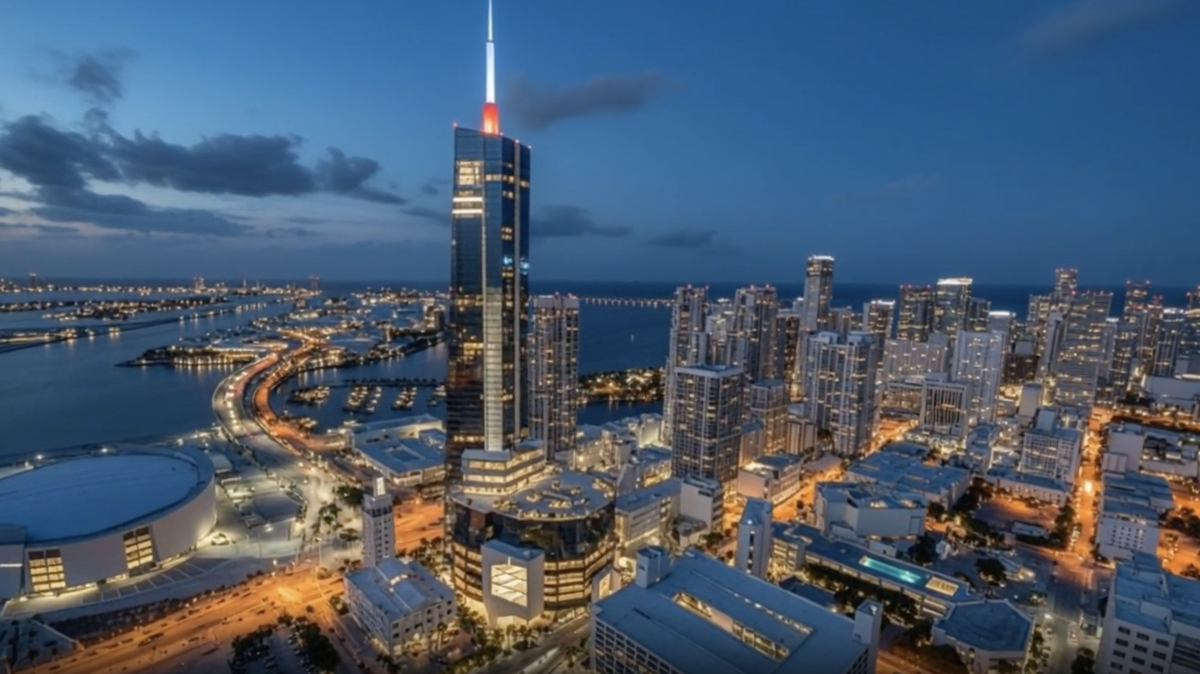
Miami is no stranger to excess. In this city, gaudy isn’t so much an insult as a way of life. But even in a place known for Lamborghinis, Brazilian butt lifts and wannabe billionaires, President Trump’s planned presidential library stands out.
On Monday, the Trump Library Foundation released the first rendering of the downtown building, accompanied by an online video. The images are entirely on brand.
The library is a representation treated the same way he’s treated his elected office: as an extension of himself. This is, after all, the president who is putting his signature on dollar bills and whose allies and administration have added his name to the U.S. Institute of Peace, the Kennedy Center in Washington, D.C., and have put up banners with his face on federal buildings in the nation’s capital.
The Trump library, built on public land given to his foundation at no cost, will overlook Biscayne Bay and be as tall or nearly as tall as anything around it in downtown Miami. In typical Trump Tower fashion, the signature logo “TRUMP” will sit atop the building. The rendering shows it dwarfing Miami’s iconic Freedom Tower, a symbol of the city’s immigrant history, whose overshadowing by a president in charge of mass deportations is in itself symbolic.
And, then, there’s the giant golden Trump statue with a fist raised inside the building’s ballroom. Strangely, the video seemed to show a glimpse of the statue outside, standing atop a front entrance, with only the legs and shoes visible. It’s unclear from the video how many statues there will be. Will the president, like a Roman emperor, overlook the city? There are also jumbo video screens showing Trump’s face on the exterior of his library.
Flashy exterior aside, what should irk Miamians the most isn’t the project’s aesthetics but how this came to be. Miami Dade College, a public institution, purchased the downtown land in 2004 and tried to develop it with a series of agreements to support students in 2016, but that deal fell through.
It’s not necessarily unusual for public entities to donate property for presidential libraries. But last September, the college’s Board of Trustees voted — after little discussion and with few details given to the public — to transfer the land for the state to give to Trump’s library foundation.
Thanks to a lawsuit, the Board had to re-approve the transfer in a December meeting. There were no public documents outlining specific benefits or concessions for the college in return for its 2.6 acres of prime real estate, the Herald reported at the time. The property is worth at least $67 million — and that may be a conservative estimate.
The project has been shrouded in secrecy so it’s unclear what else besides a library could be included in it. Trump’s son, Eric, told the Herald there will be “no residential” uses. Trump on Tuesday told reporters the tower will “most likely” include a hotel and might have an office component.
Trump’s library foundation has been granted nonprofit status but could this project — built on donated public land — become a money-making deal for the Trump family?
Supporters are right that presidential libraries can be an economic boost for communities. This project, with all its ostentatiousness, will certainly attract attention — for better or worse — and visitors to South Florida. It also has some interesting features, such as replicas of the Oval Office and the Rose Garden and an Air Force One, according to the renderings. The presidential airplane, by the way, is being donated by the government of Qatar, with delivery expected this summer — another example of how the president has crossed ethical lines to benefit himself. Trump has said he would keep the jet in his presidential library after leaving office.
Presidential libraries are built for purposes of history and public education. Those aspects are important. In the end, though, this presidential library may become a representation of the Trump presidency’s lack of temperance and moderation. And even in Miami, a city where restraint is sometimes a bad word, this project is over the top.
BEHIND THE STORY
MOREWho decides the political endorsements?
In advance of local and state elections, Miami Herald Editorial Board members interview political candidates, as well as advocates and opponents of ballot measures. The Editorial Board is composed of experienced opinion journalists and is independent of the Herald’s newsroom. Members of the Miami Herald Editorial Board are: Amy Driscoll, editorial page editor; and editorial writers Isadora Rangel and Mary Anna Mancuso. Read more by clicking the arrow in the upper right.
What does the endorsement process look like?
The Miami Herald Editorial Board interviews political candidates to better understand their views on public policy and how their policies will affect their constituents. Board members do additional reporting and research to learn as much as possible about the candidates before making an endorsement. The Editorial Board then convenes to discuss the candidates in each race. Board members seek to reach a consensus on the endorsements, but not every decision is unanimous. Candidates who decline to be interviewed will not receive an endorsement.
Is the Editorial Board partisan?
No. In making endorsements, members of the Editorial Board consider which candidates are better prepared to represent their constituents — not whether they agree with our editorial stances or belong to a particular political party. We evaluate candidates’ relevant experience, readiness for office, depth of knowledge of key issues and understanding of public policy. We’re seeking candidates who are thoughtful and who offer more than just party-line talking points.
This story was originally published March 31, 2026 at 4:11 PM.