
Is Florida’s attorney general a genius? He’s being paid like one | Opinion
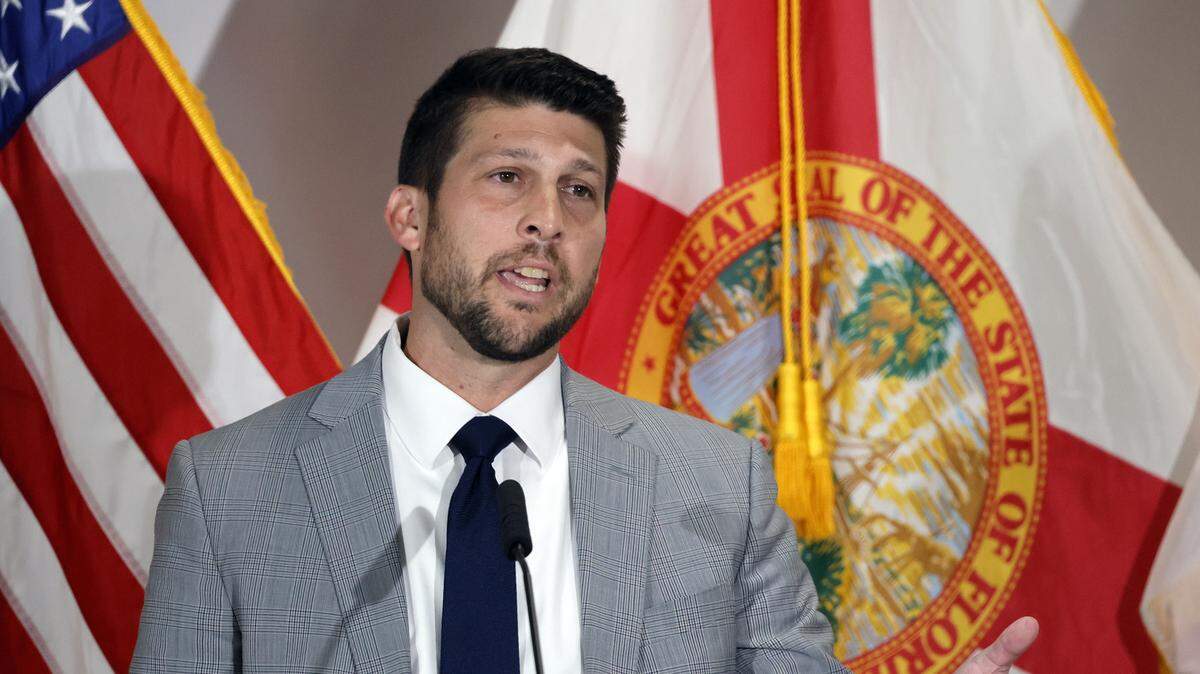
Florida Attorney General James Uthmeier has landed a $100,000 job at the University of Florida to teach two courses. If that sounds like an eye-popping amount of money for an adjunct professor, it is.
How big? It’s eight times higher than what the median law school adjunct professor gets paid, the Miami Herald reported. And it makes Uthmeier the highest-paid adjunct professor at UF’s Levin College of Law in at least a quarter-century, the Herald said, citing compensation records going back to 1997.
What makes him so valuable? The obvious guess: his proximity to Gov. Ron DeSantis.
DeSantis appointed him attorney general a year ago to replace Ashley Moody, who left her state job to fill the U.S. Senate seat vacated by Marco Rubio, now secretary of state.
That episode of musical chairs in Florida politics led to Uthmeier, then Desantis’ chief of staff, becoming attorney general in February 2025. He was hired for the side gig at UF a few months later and started the job in August. UF didn’t announce the hiring until last weekend, days after the Miami Herald/Tampa Bay Times Tallahassee bureau began asking questions.
It’s not illegal for Uthmeier to be an adjunct professor. Other attorneys general accept teaching jobs on the side. The issue is the money. Why would the university hire DeSantis’ former top aide for such a large sum? This is, after all, a public university.
The answer appears to be: cronyism.
Certainly, hiring the state’s top lawyer has a certain amount of prestige value for a university. He used to teach as an adjunct at Florida State University, UF’s rival. Maybe you could consider that an intercollegiate coup — except, at FSU, he was being paid about $1,500 per course, according to his contract, the Herald/Times wrote.
Uthmeier is a graduate of Georgetown Law and earned a bachelor’s in political science from UF. He clerked for a federal appeals court judge, worked in private practice, worked in the Department of Commerce for the Trump administration and joined DeSantis’ office in 2019 as a senior adviser, later rising to chief of staff and helping guide the governor’s legal and policy agenda.
Uthmeier has also been involved in some high profile issues, including the Hope Florida saga, when the administration routed most of a $10 million Medicaid settlement through the foundation to a political committee to fight a constitutional amendment to legalize marijuana. A federal judge found Uthmeier in contempt of court last year, too, after he encouraged local law enforcement agencies to enforce a new state immigration law despite a prior court ruling blocking it.
For students, perhaps there’s a certain thrill in being close to power by taking his class. Maybe they’ll even get special insight into legal rulings from someone in the top legal job in the state.
In addition to teaching, Uthmeier does apparently have some other academic duties, though they sound pretty light. As the Herald/Times reported, he’ll be expected to support UF’s new Program in Law and Government by “attending events and providing guidance” along with teaching his two courses, one in the spring and one in the fall. That’s basically $50,000 a course.
As Bob Jarvis, a longtime law professor at Nova Southeastern University, told the Herald/Times, it’s hard to understand why UF would offer such hefty compensation: “What’s Uthmeier done that puts him in the Einstein category?”
Worse, this is all happening as lawmakers say they are trying to crack down on overspending — DOGE anyone? — especially at the state’s universities. The DeSantis administration has been pushing Florida’s 40 public universities and colleges to justify their expenses.
And yet the administration seems to have no problem spending millions of tax dollars from the state’s emergency fund, typically used for natural disasters, on immigration enforcement. The governor has spent a total of $579 million — more than $400 million in the last six months alone — in emergency money on immigration, all without any oversight.
And then we have the reaction by Republican Rep. Alex Andrade, a DeSantis foe, to the news of Uthmeier’s salary: 10 seconds of laughter. Perhaps that’s the best way to sum up this entire, sorry episode.
BEHIND THE STORY
MOREWhat's an editorial?
Editorials are opinion pieces that reflect the views of the Miami Herald Editorial Board, a group of opinion journalists that operates separately from the Miami Herald newsroom. Miami Herald Editorial Board members are: opinion editor Amy Driscoll and editorial writers Isadora Rangel and Mary Anna Mancuso. Read more by clicking the arrow in the upper right.
What's the difference between an op-ed and a column?
How does the Miami Herald Editorial Board decide what to write about?
The Editorial Board, made up of experienced opinion journalists, primarily addresses local and state issues that affect South Florida residents. Each board member has an area of focus, such as education, COVID or local government policy. Board members meet daily and bring up an array of topics for discussion. Once a topic is fully discussed, board members will further report the issue, interviewing stakeholders and others involved and affected, so that the board can present the most informed opinion possible. We strive to provide our community with thought leadership that advocates for policies and priorities that strengthen our communities. Our editorials promote social justice, fairness in economic, educational and social opportunities and an end to systemic racism and inequality. The Editorial Board is separate from the reporters and editors of the Miami Herald newsroom.
How can I contribute to the Miami Herald Opinion section?
The Editorial Board accepts op-ed submissions of 650-700 words from community members who want to argue a specific viewpoint or idea that is relevant to our area. You can email an op-ed submission to oped@miamiherald.com. We also accept 150-word letters to the editor from readers who want to offer their points of view on current issues. For more information on how to submit a letter, go here.