
Miami waterways can be noisy nautical nightclubs. Here’s a chance to stop that | Opinion
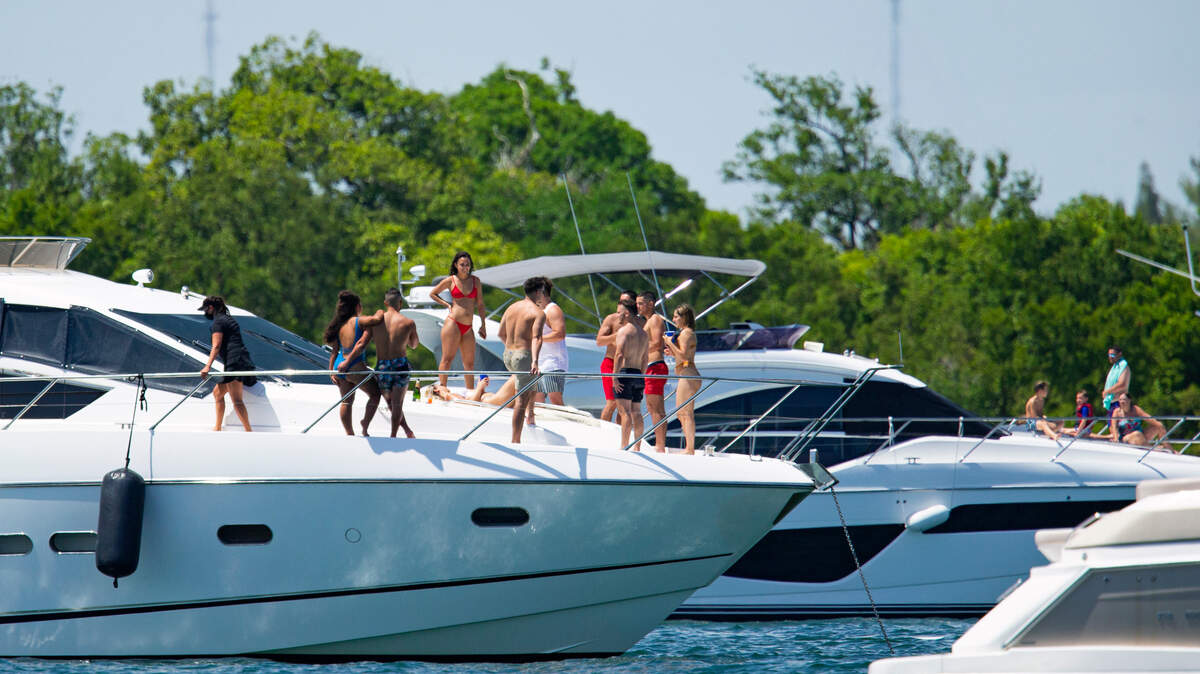
Residents who live near waterways shouldn’t have their evenings disrupted by music blaring on boats. It’s time to rein in the nautical nightclubs once and for all.
Boat noise has become a regular disruption in parts of Miami-Dade, such as Brickell, downtown and coastal areas — causing some to sleep with earplugs to block out the late night music.
Next week, the Miami-Dade County Commission will vote on noise legislation that would make it easier for law enforcement to issue citations to boaters who play loud music. The proposal is both sensible and necessary.
Under the legislation, the enforceable distance for noise would be reduced to 25 feet between 11 p.m. and 7 a.m. Currently, the county’s noise ordinance establishes a 100-foot limit for loud music coming from buildings, cars and boats. But on the water, the standard has proven difficult to enforce.
Anyone who lives near the waterfront, knows that sound travels — and, in the still of the night, can be disruptive to a good night’s sleep. For boaters, it may seem like harmless entertainment but nearby residents may beg to differ.
The county’s skyline has also changed in recent years, with more residential buildings going up along the waterfront. As development continues, so does the number of residents impacted. While the current ordinance may have not been perfect, it was less problematic when the population was smaller. But with the growing population both on and off the water, clear and enforceable standards are now more necessary than ever.
North Bay Village Mayor Rachel Streitfeld told the Miami Herald, “We have zoning rules for a reason. Just because our residents live next to the water doesn’t mean they shouldn’t be protected from what are effectively nightclubs in their backyards.”
Streitfeld is right. Noise on land is more easily regulated. Bars can’t blast music at all hours next to a residential building, and nightclubs must comply with zoning and noise ordinances. There’s no reason waterways adjacent to residential buildings should be treated differently.
The legislation is proposed by County Commissioner Micky Steinberg, a former Miami Beach commissioner, who told the Herald, “This is a quality of life issue for people who live on county waters.” That framing is important.
Miami is known for its boating — some would say it’s a way of life here — but late-night loud music shouldn’t be allowed to pollute waterways. Boating at night isn’t the problem, it’s the amateur disc jockeys playing music at full volume. The intracoastal shouldn’t be treated like an entertainment district.
Under the current law, police officers’ hands are tied because enforcing the noise ordinance is difficult. Currently, a law enforcement office can ask a boater to turn down the music, but in order to ticket, they must ensure the boat is 100 feet away from nearby buildings. Reducing the distance to 25 feet makes it easier to determine.
The proposed legislation gives police officers a clearer, more enforceable standard and removes the guesswork out of determining distance.
Explicit rules in this case would benefit all Miamians. When expectations are set for boaters, residents are protected, and officers can apply the law consistently across the board. Communities from North Bay Village to Brickell should be able to enjoy quiet nights at home without being subjected to unwanted noise.
Critics may argue shrinking the enforceable noise distance will stifle nightlife on the water. But Miami’s vibrant nightlife shouldn’t be measured in decibel levels at 2 a.m.
The county has worked to make public spaces more accessible and better for everyone. Updating enforcement codes on noise ordinances deserves the same attention.
Waterfront communities shouldn’t be forced to listen to someone else’s Spotify playlist after dark. Regulating boat noise is a pro-community move and long overdue.
BEHIND THE STORY
MOREWhat's an editorial?
Editorials are opinion pieces that reflect the views of the Miami Herald Editorial Board, a group of opinion journalists that operates separately from the Miami Herald newsroom. Miami Herald Editorial Board members are: opinion editor Amy Driscoll and editorial writers Isadora Rangel and Mary Anna Mancuso. Read more by clicking the arrow in the upper right.
What's the difference between an op-ed and a column?
How does the Miami Herald Editorial Board decide what to write about?
The Editorial Board, made up of experienced opinion journalists, primarily addresses local and state issues that affect South Florida residents. Each board member has an area of focus, such as education, COVID or local government policy. Board members meet daily and bring up an array of topics for discussion. Once a topic is fully discussed, board members will further report the issue, interviewing stakeholders and others involved and affected, so that the board can present the most informed opinion possible. We strive to provide our community with thought leadership that advocates for policies and priorities that strengthen our communities. Our editorials promote social justice, fairness in economic, educational and social opportunities and an end to systemic racism and inequality. The Editorial Board is separate from the reporters and editors of the Miami Herald newsroom.
How can I contribute to the Miami Herald Opinion section?
The Editorial Board accepts op-ed submissions of 650-700 words from community members who want to argue a specific viewpoint or idea that is relevant to our area. You can email an op-ed submission to oped@miamiherald.com. We also accept 150-word letters to the editor from readers who want to offer their points of view on current issues. For more information on how to submit a letter, go here.