
Judge in TPS case was told ‘I hope you die today’ but democracy will not be intimidated | Opinion
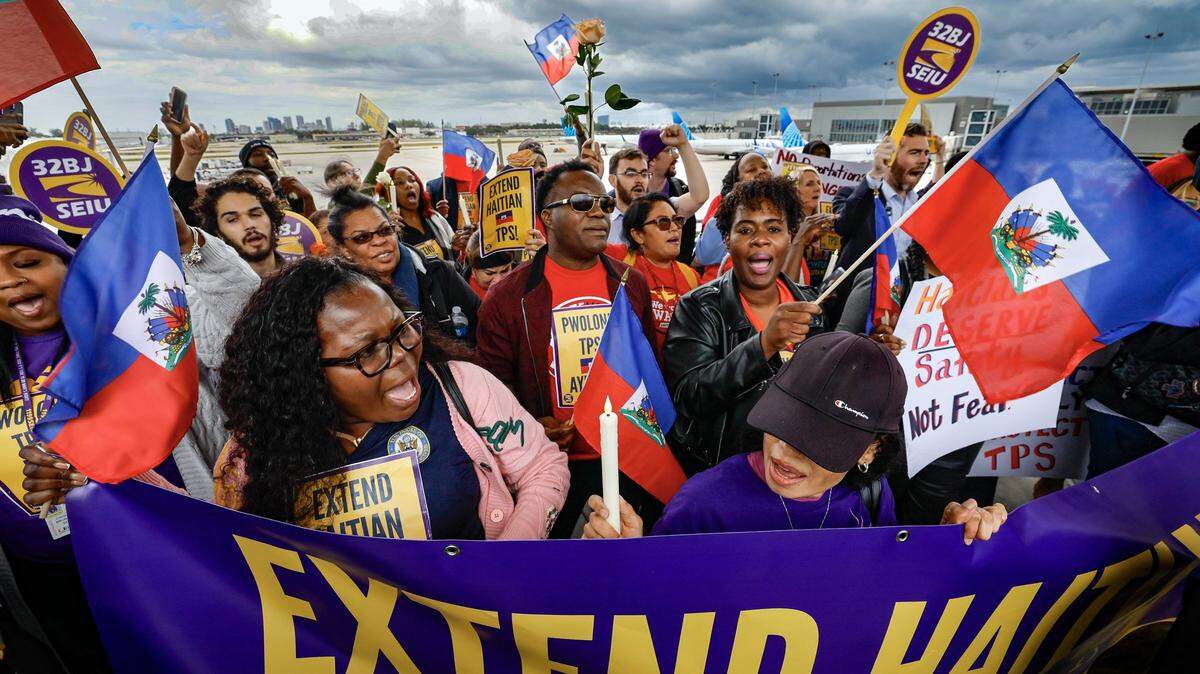
The death threats and foul language used against a Washington, D.C., federal judge after a controversial immigration ruling in favor of Haitians are many things: disgusting, appalling and uncivilized.
But they are also self-defeating. If we want to protect our nation — as President Trump says we must do when it comes to immigration — we should start by upholding the institutions that make it strong. That includes the rule of law and the courts.
And yet this is what U.S. District Court Judge Ana Reyes read out loud in her courtroom Thursday from an email she received: “I hope you die today. Enjoy choking on your tongue.”
Reyes is the judge who, on Feb. 2, blocked the Trump administration from ending immigration protections for more than 300,000 Haitians. And she ruled again on Thursday, declining to reverse her decision that paused the termination of Haiti’s Temporary Protected Status designation.
After the Thursday ruling, she took a moment in the courtroom to address the backlash after her initial decision: death threats, calls on social media for the hanging of judges, the use of offensive adjectives to refer to her.
She said some messages called her “illiterate” — though she graduated magna cum laude from Harvard Law School and spent 22 years litigating in federal court. She acknowledged that, yes, she is an immigrant — she came to the U.S. from Uruguay as a child — and no, she didn’t hide that information from any of the agencies that investigated her candidacy after she was nominated to the federal bench by then-President Joe Biden.
And then she thanked those who disagree with her: “Judges should be questioned, the politicians should be questioned. I welcome the government’s appeal because appellate courts are a necessary part of the democratic system.”
Attacks like these are becoming almost common for judges, she said. But, she added, “We will not be intimidated.”
That’s an important statement. The power of the judiciary is backed by the Constitution. It is supposed to serve as a check on power for both the legislative and executive branches. Separation of powers is critical to a functioning democracy. Fear of personal attacks cannot affect judges’ decisions
Of course, Trump has been attacking judges for years. Last year, he called the chief judge of the U.S. district court in Washington — Judge James Boasberg — “a troublemaker and agitator” when the judge temporarily stopped the administration’s efforts to deport Venezuelans. Last May, Trump criticized judges on Truth Social, calling them, “USA HATING JUDGES WHO SUFFER FROM AN IDEOLOGY THAT IS SICK, AND VERY DANGEROUS FOR OUR COUNTRY.”
And the New York Times reported last year that threats against federal judges had increased greatly in the months after Trump’s election, based on data from the U.S. Marshals Service.
Those who want to see judges dead, impeached or intimidated should consider what happens when they’re the ones who want to see justice done: One day it’s a ruling we don’t like. The next, it’s one that we do like. But how many Americans have lost the ability to accept the ebbs and flows of democracy without resorting to violence, insults and denigration of our opponent? The assassination of conservative activist Charlie Kirk and of a Democratic lawmaker and her husband in Minnesota last year are symptoms of the same political disease that’s afflicting America.
We don’t want a nation, like so many others, where the judicial system is an extension of those in power and where outcomes are predetermined. If judges are afraid to rule, then Americans can say goodbye to the country we know. It was thanks to the judiciary that we got Brown v. Board of Education, which declared racial segregation in public schools unconstitutional, and so many other rulings that put our nation on a better path.
The Department of Justice should denounce these threats. So should anyone who believes in the Constitution. Tolerating this kind of behavior only encourages it. Reyes displayed courage in confronting the issue and saying it out loud. And it bears repeating: We will not be intimidated.
BEHIND THE STORY
MOREWhat's an editorial?
Editorials are opinion pieces that reflect the views of the Miami Herald Editorial Board, a group of opinion journalists that operates separately from the Miami Herald newsroom. Miami Herald Editorial Board members are: opinion editor Amy Driscoll and editorial writers Isadora Rangel and Mary Anna Mancuso. Read more by clicking the arrow in the upper right.
What's the difference between an op-ed and a column?
How does the Miami Herald Editorial Board decide what to write about?
The Editorial Board, made up of experienced opinion journalists, primarily addresses local and state issues that affect South Florida residents. Each board member has an area of focus, such as education, COVID or local government policy. Board members meet daily and bring up an array of topics for discussion. Once a topic is fully discussed, board members will further report the issue, interviewing stakeholders and others involved and affected, so that the board can present the most informed opinion possible. We strive to provide our community with thought leadership that advocates for policies and priorities that strengthen our communities. Our editorials promote social justice, fairness in economic, educational and social opportunities and an end to systemic racism and inequality. The Editorial Board is separate from the reporters and editors of the Miami Herald newsroom.
How can I contribute to the Miami Herald Opinion section?
The Editorial Board accepts op-ed submissions of 650-700 words from community members who want to argue a specific viewpoint or idea that is relevant to our area. You can email an op-ed submission to oped@miamiherald.com. We also accept 150-word letters to the editor from readers who want to offer their points of view on current issues. For more information on how to submit a letter, go here.