
With Alligator Alcatraz testimony, Florida is learning the cost of immigration panic | Opinion
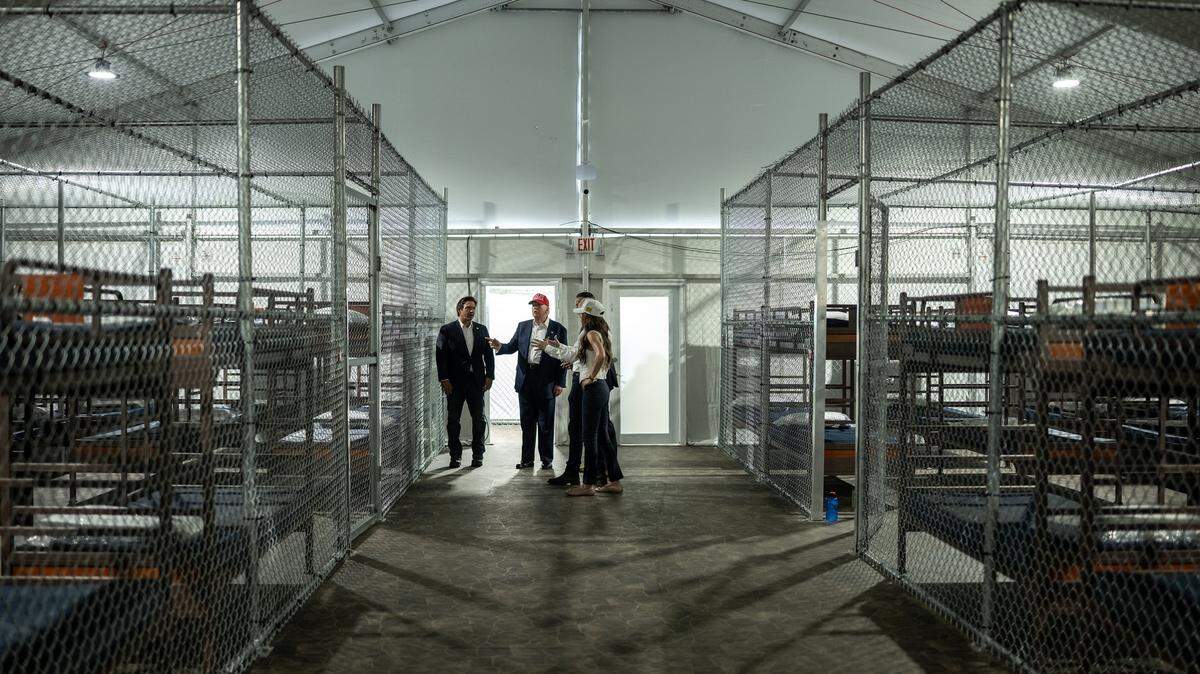
Alligator Alcatraz, that disgraceful symbol of our heavy-handed immigration policies just west of Miami-Dade County, has been open for seven months now. Remember that opening day video of President Trump, Homeland Security Secretary Kristi Noem and Florida Gov. Ron DeSantis touring the tent-and-trailer detention center like it was a new amusement park?
Trump even made a jokey little remark about how hard it would be to escape because of the alligators in the surrounding swamp. A beaming DeSantis — still trying to win favor in the administration — bragged to the president back then that it had taken just “eight days” to get the new facility “up and running.” But speed comes at a cost.
Now, during a Florida court hearing this week, we’re starting to learn more about the real price of our rush to build that site on the edge of the Everglades amid a Trump-induced panic over immigrants. The bottom line? A disregard for constitutional rights, according to detainee testimony.
And the idea that this is happening so close to Miami, a place where immigrants from Latin America and the Caribbean have long sought refuge from lawless and corrupt nations, makes the whole enterprise doubly offensive.
The hearing in federal court in Fort Myers on Wednesday was part of a civil lawsuit against federal and state immigration enforcement agencies and officials, including Noem and DeSantis. They’re accused in the suit by former detainees and legal advocates of violating detainees’ rights to legal counsel and free speech at the state-run facility. The suit is asking for a temporary injunction to require the facility allow the same level of attorney access as other immigration detention centers.
Why care about the concerns of immigration detainees? If we care about constitutional rights in this country, we have to care about them as they apply to everyone. Not everyone being picked up and deported is a criminal, and errors can have serious consequences. (Remember the Maryland man who was wrongly sent to El Salvador’s notorious CECOT prison?)
In the hearing, former detainees testified that they had to write lawyers’ and families’ phone numbers on their bed frames using soap after they were denied pens and paper. And when they were allowed to make a call, the phones would glitch and drop the call, according to the testimony.
In other words, detainees were denied meaningful access to lawyers. Unless you believe that detainees shouldn’t get such constitutional rights — we’re still a democracy, right? — that’s a very big problem.
And then there was the pressure to sign deportation papers. “I didn’t know what they said because they were in English. The officer told me to sign quickly,” said one former detainee, only identified by his initials, H.C.R, on a video call from Colombia, where he had been deported. He signed. (He also said he had to eat with handcuffs on and that he had restricted access to his medications.)
Another former detainee, a Haitian man named J.E. — who described “horrible” treatment at the detention center — said he, too, was pushed to sign deportation papers. He was led to believe that would result in him being sent to Mexico, he said. It wasn’t until he boarded the plane on Jan. 7 that he found out he was instead being flown to Haiti. He’s living there in hiding, he told the court by video, according to the Herald’s reporting.
Juan Lopez Vega, deputy director for ICE’s Miami field office, testified that ICE oversees the facility and insisted it is in compliance with standards, the Herald reported. But he also acknowledged he hasn’t visited the site himself since last summer when it first opened.
And then there was testimony from a representative of the government contractor, Nakamoto Group, that handles attorney visit scheduling for Alligator Alcatraz. About six weeks ago, he said, there was a change in policy that now allows attorneys to visit detainees without scheduling an appointment in advance. If they show up, they’re supposed to be able to see a detainee.
That is the bare minimum. A federal judge hasn’t yet ruled in this case, but maybe the plaintiffs are already forcing important changes.
BEHIND THE STORY
MOREWhat's an editorial?
Editorials are opinion pieces that reflect the views of the Miami Herald Editorial Board, a group of opinion journalists that operates separately from the Miami Herald newsroom. Miami Herald Editorial Board members are: opinion editor Amy Driscoll and editorial writers Isadora Rangel and Mary Anna Mancuso. Read more by clicking the arrow in the upper right.
What's the difference between an op-ed and a column?
How does the Miami Herald Editorial Board decide what to write about?
The Editorial Board, made up of experienced opinion journalists, primarily addresses local and state issues that affect South Florida residents. Each board member has an area of focus, such as education, COVID or local government policy. Board members meet daily and bring up an array of topics for discussion. Once a topic is fully discussed, board members will further report the issue, interviewing stakeholders and others involved and affected, so that the board can present the most informed opinion possible. We strive to provide our community with thought leadership that advocates for policies and priorities that strengthen our communities. Our editorials promote social justice, fairness in economic, educational and social opportunities and an end to systemic racism and inequality. The Editorial Board is separate from the reporters and editors of the Miami Herald newsroom.
How can I contribute to the Miami Herald Opinion section?
The Editorial Board accepts op-ed submissions of 650-700 words from community members who want to argue a specific viewpoint or idea that is relevant to our area. You can email an op-ed submission to oped@miamiherald.com. We also accept 150-word letters to the editor from readers who want to offer their points of view on current issues. For more information on how to submit a letter, go here.