
Letting 10K+ Floridians go without HIV drug access is reckless, especially in Miami | Opinion
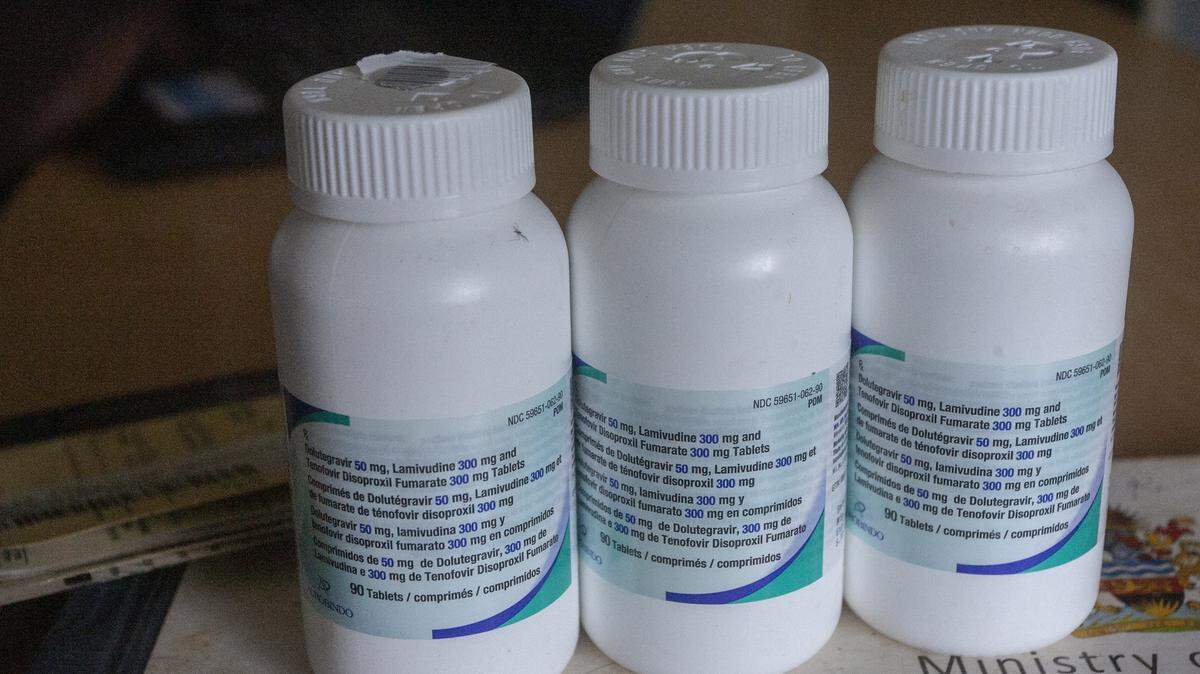
Believe Republican lawmakers and Florida’s surgeon general when they say cuts to Florida’s HIV treatment program are “a big deal” and “a serious issue,” as they did earlier this month during a hearing before a Senate committee.
So, what are they doing about it during the 2026 legislative session that began in January? If state leaders in the past found tax dollars to build immigration detention facilities, fly migrants to other states and campaign against marijuana legalization, they must find a way to continue to pay for life-saving medicine.
The Florida Senate is discussing how to plug a $120 million funding shortfall in the AIDS Drug Assistance Program, Politico has reported. Until that’s in the state budget and approved by Gov. Ron DeSantis, there are no guarantees.
If it’s been a long time since you thought about HIV or heard the horrific stories of AIDS patients languishing in hospitals, it is because of access to drugs to treat people with the virus — drugs that, crucially, prevent transmission by lowering a patient’s viral load to undetectable levels.
It’s a reckless idea to suddenly drop at least 10,000 of Floridians with HIV who rely on state assistance to access these expensive drugs — the actual number of people affected is still unclear, and AIDS advocates say it’s closer to 16,000. Florida had the third-highest rate of new infections in the nation in 2022, accounting for 11% of new HIV diagnoses in the U.S. that year, according to KFF, a nonprofit health policy research organization.
If more people become sick, they will burden local hospitals, leaving the rest of us to pick up the tab. When people who stopped taking medication spread the virus to others, the problem is exacerbated. It’s a vicious cycle.
And nowhere else will this issue be as prominent as in Miami-Dade. The county had the highest rate of HIV transmission among all counties in the U.S. as of 2023 — Broward had the second-highest — Esteban Wood, director of advocacy, legislative affairs and community engagement at the AIDS Healthcare Foundation, told the Herald Editorial Board.
The speaker of the Florida House, Daniel Perez, is from Miami, and the county has the largest delegation in the Legislature. They should keep these statistics in mind.
The cuts to the AIDS Drug Assistance Program, which provides HIV drugs to low-income people, are a result of the Florida Department of Health changing its eligibility threshold. The program has been open to those making up to 400% of the federal poverty level, or $62,600 for an individual — hardly a fortune in South Florida considering HIV drugs can cost $4,500 each month, according to Wood. Starting in March, eligibility will change: Only people making up to 130% the federal poverty level, or $20,345 for an individual, will be eligible.
The changes will also eliminate access to Biktarvy, the most popular, one-a-day medication for people with HIV/AIDS.
Florida Surgeon General Joseph Ladapo has said these cuts are necessary because Congress didn’t extend Affordable Care Act tax credits last fall, creating the $120 million funding shortfall. He also said the program is funded through a combination of sources, and a large portion of it comes from rebates from drug manufacturers, which have some “inherent instability,” the Herald/Times Tallahassee Bureau reported.
Ladapo told a Senate committee in January his team had been “tirelessly trying to figure out a solution” to these cuts. But many AIDS advocates are skeptical. Wood told the Editorial Board they have been trying to obtain the program’s budget documents from the DOH since 2024, to no avail. He accused the agency of lacking transparency and said that the eligibility cuts caught patients off guard and lacked the public input process that’s common for such changes.
“The state created this crisis; the state can solve it,” Wood said.
We’re glad that Ladapo and lawmakers understand what a “big deal” it is to allow 10,000 to 16,000 Floridians to lose access to HIV/AIDS treatment. Now show us the solution.
BEHIND THE STORY
MOREWhat's an editorial?
Editorials are opinion pieces that reflect the views of the Miami Herald Editorial Board, a group of opinion journalists that operates separately from the Miami Herald newsroom. Miami Herald Editorial Board members are: opinion editor Amy Driscoll and editorial writers Isadora Rangel and Mary Anna Mancuso. Read more by clicking the arrow in the upper right.
What's the difference between an op-ed and a column?
How does the Miami Herald Editorial Board decide what to write about?
The Editorial Board, made up of experienced opinion journalists, primarily addresses local and state issues that affect South Florida residents. Each board member has an area of focus, such as education, COVID or local government policy. Board members meet daily and bring up an array of topics for discussion. Once a topic is fully discussed, board members will further report the issue, interviewing stakeholders and others involved and affected, so that the board can present the most informed opinion possible. We strive to provide our community with thought leadership that advocates for policies and priorities that strengthen our communities. Our editorials promote social justice, fairness in economic, educational and social opportunities and an end to systemic racism and inequality. The Editorial Board is separate from the reporters and editors of the Miami Herald newsroom.
How can I contribute to the Miami Herald Opinion section?
The Editorial Board accepts op-ed submissions of 650-700 words from community members who want to argue a specific viewpoint or idea that is relevant to our area. You can email an op-ed submission to oped@miamiherald.com. We also accept 150-word letters to the editor from readers who want to offer their points of view on current issues. For more information on how to submit a letter, go here.