
Three very bad decisions Miami’s new leaders are right to reconsider | Opinion
The election of a new mayor and a new commissioner in Miami should have historic importance. That’s if they successfully push for key changes in a city that has suffered from scandals, bad behavior from the dais and a loss of trust among constituents.
Most of the responsibility will fall on Eileen Higgins, elected mayor in a December runoff on a promise to transform City Hall. Commissioner Rolando Escalona, a restaurant manager, also ran on an anti-status quo platform in District 3 and pulled off an upset against former Commissioner Frank Carollo. While both newly elected officials must now prove their effectiveness, they can only do so with buy-in from at least some of the other members of the five-person City Commission.
Constituents are expecting city leadership to do something, but there are also things they must undo. Over the past few years, Miami has made several poor decisions. Here are some of them the city is already working on:
Moving elections, the right way
Perhaps Miami’s biggest misstep last summer was to try to move the 2025 elections to 2026 and give commissioners and then-Mayor Francis Suarez an extra year in office. It took a lawsuit and two court rulings to halt that effort.
The city’s means were wrong, but the ultimate goal was a good one: to move elections to even-numbered years when voter turnout is higher. The problem was that Miami did not put the issue before voters via a referendum, as required by the city charter.
Now Miami can get it right. The question is how.
The commission last week voted to have the city attorney draft ballot language for the August election to ask voters whether they want to transfer the elections to even years, but not until 2032. If voters approve the measure, it would mean that commissioners would be elected to a five-year term — instead of four — in 2027. Higgins, on the other hand, wants to shorten her mayoral term to three years and run for reelection in 2028 instead of 2029.
Whichever way this goes, the city now appears to understand that voters must have the final say. Good.
Undoing that ICE deal
This might be tricky. When Miami agreed to enter a partnership with federal immigration enforcement last June, the argument was that the city was required to do so under state law. Gov. Ron DeSantis threatened officials in other parts of the state with removal if they didn’t comply.
It should not be the role of local law enforcement to enforce immigration laws, much less in a city of immigrants. City Manager James Reyes, whom Higgins recently appointed, said last week he would be “evaluating” Miami’s 287(g) agreement with ICE. The city attorney, however, declined to tell a Herald reporter whether Miami could exit the agreement.
Higgins’ administration must, at the very least, answer that legal question. A judge dismissed a lawsuit the city of South Miami filed last year on the issue but did not rule on whether municipalities must help ICE under Florida’s sanctuary city law.
Revoking 287(g) might put Miami on shaky legal ground — and in DeSantis’ political crosshairs. Only three Miami police officers had been assigned to perform immigration duties last June, according to the Herald. That’s a small number and, if ending the agreement is not an option, that number should at least not grow.
Giving that theater back
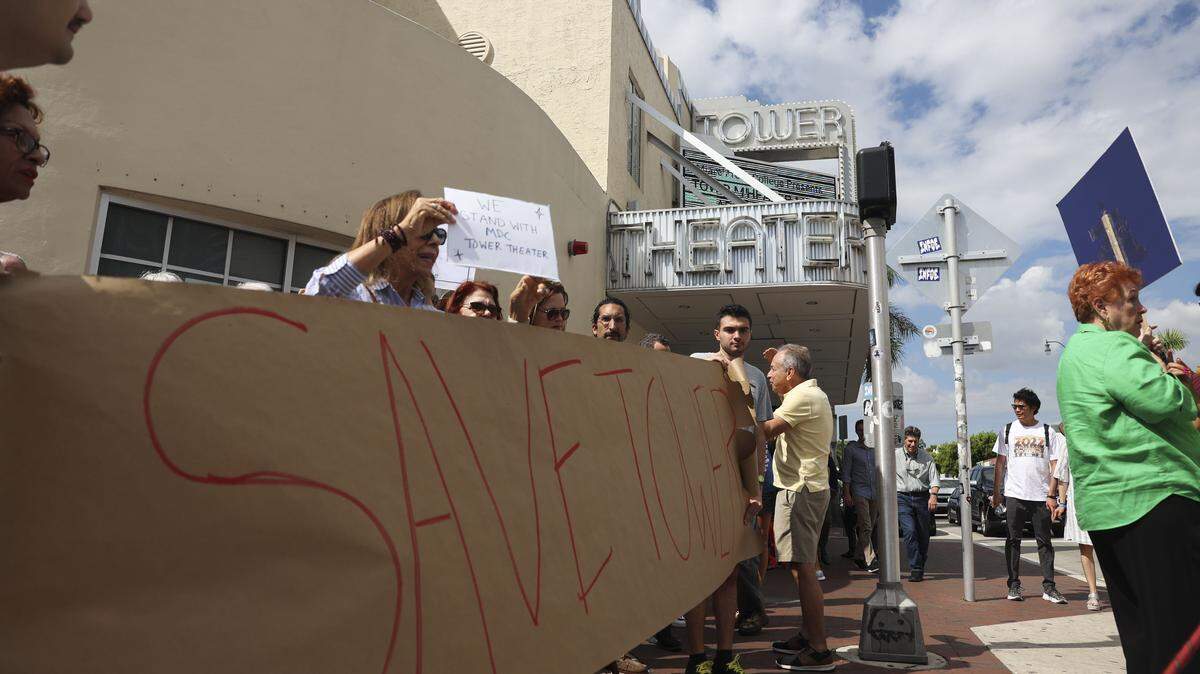
Miami’s takeover of the 100-year-old Tower Theater on Calle Ocho in 2023 made no sense and sparked protest. Finally, last week, the city commission unanimously reversed that decision, getting Miami out of the theater management business and giving the property back to Miami-Dade College.
The commission gave no reasonable explanation in 2022 for not renewing its lease with the college, which had managed the venue for 20 years as one of the few places showing Spanish-language movies.
Then-Commissioner Joe Carollo, who left office in December, argued very few people were attending the venue — though his critics contested that claim. Under the management of his office and City Hall, however, the space was under used and nearby businesses complained about the loss of foot traffic from theater patrons, WLRN reported last year.
Running the Tower Theater appears to have been a waste of time for Miami taxpayers. We’re glad the city realized that.
BEHIND THE STORY
MOREWhat's an editorial?
Editorials are opinion pieces that reflect the views of the Miami Herald Editorial Board, a group of opinion journalists that operates separately from the Miami Herald newsroom. Miami Herald Editorial Board members are: opinion editor Amy Driscoll and editorial writers Isadora Rangel and Mary Anna Mancuso. Read more by clicking the arrow in the upper right.
What's the difference between an op-ed and a column?
How does the Miami Herald Editorial Board decide what to write about?
The Editorial Board, made up of experienced opinion journalists, primarily addresses local and state issues that affect South Florida residents. Each board member has an area of focus, such as education, COVID or local government policy. Board members meet daily and bring up an array of topics for discussion. Once a topic is fully discussed, board members will further report the issue, interviewing stakeholders and others involved and affected, so that the board can present the most informed opinion possible. We strive to provide our community with thought leadership that advocates for policies and priorities that strengthen our communities. Our editorials promote social justice, fairness in economic, educational and social opportunities and an end to systemic racism and inequality. The Editorial Board is separate from the reporters and editors of the Miami Herald newsroom.
How can I contribute to the Miami Herald Opinion section?
The Editorial Board accepts op-ed submissions of 650-700 words from community members who want to argue a specific viewpoint or idea that is relevant to our area. You can email an op-ed submission to oped@miamiherald.com. We also accept 150-word letters to the editor from readers who want to offer their points of view on current issues. For more information on how to submit a letter, go here.