
Trump made a risky calculation leaving Maduro’s VP in power | Opinion
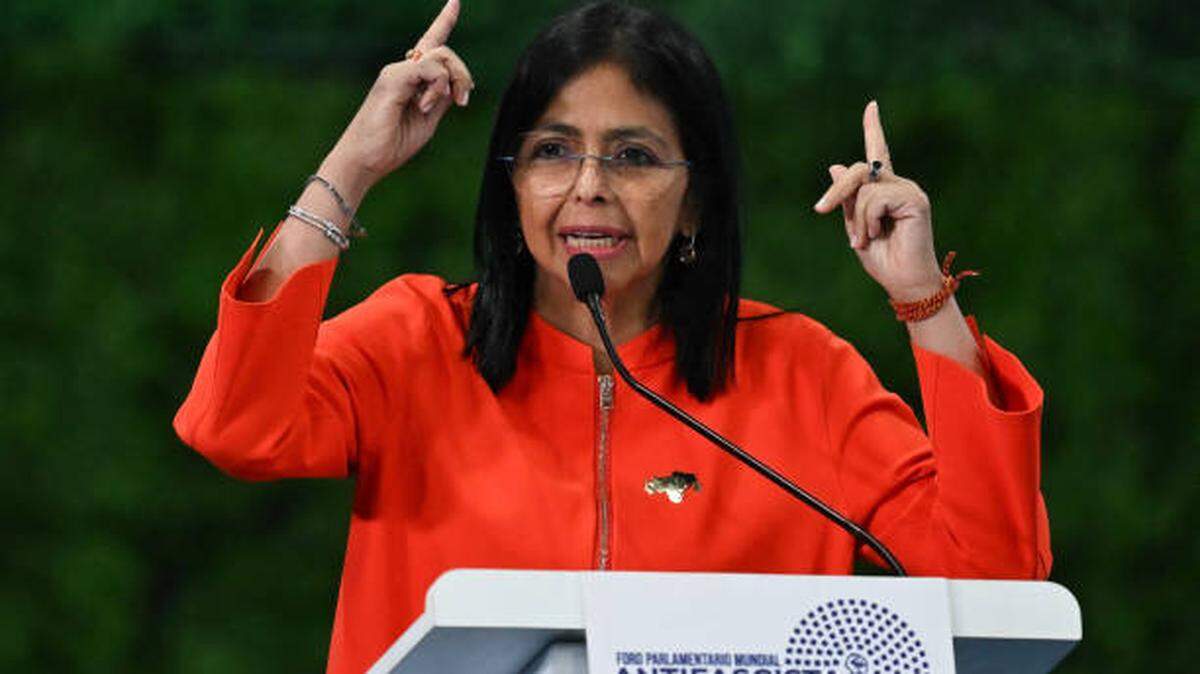
It should have come as no surprise that Nicolás Maduro’s vice president, Delcy Rodriguez, wound up holding the reins of power in Venezuela, despite the hopes of many in Miami’s Venezuelan community that opposition leader Maria Corina Machado would the next head of state.
As far back as April and September of last year, Rodriguez and her brother, Jorge, who holds a senior governmental role as president of the National Assembly, floated a plan to the U.S. of a potentially less-objectionable government — “Madurism without Maduro” — according to reporting by the Herald in October.
The back-channel overtures came through intermediaries in Qatar, as the U.S. pressure campaign on Venezuela intensified, and even had Maduro’s approval, according to the Herald.
Rodriguez was sworn in as interim president on Monday, with the U.S. saying that she is in place to stabilize the government until a peaceful transition of power can be accomplished.
But temporary governments run the risk of becoming permanent, especially when it’s unclear whether Trump truly cares about restoring Venezuelan democracy. So far, he seems more focused on oil.
Trump announced in a Truth Social post late Tuesday that Venezuela would “turn over” 30 million to 50 million barrels of oil to the U.S. Trump said the oil will be controlled by him, to benefit “the people of Venezuela and the United States.” If that’s the case, it sounds like Rodriguez is playing ball.
According to the Associated Press, Rodriguez — who has been described as a practical ideologue — has been courting Trump for years, including by directing a $500,000 donation from Citgo (a U.S. subsidiary of Venezuela’s state-owned oil company) to his inauguration back in 2017.
As we sort through the implications of the United States’ Saturday attack on Venezuela and the arrest of Maduro and his wife, the early euphoria of the Venezuelan community in Miami has been tempered by the growing worry that leaving Maduro’s circle of power in place may not actually change much.
The consolidation of power in Venezuela is continuing. A report Wednesday by Reuters said the Trump administration has warned Interior Minister Diosdado Cabello, one of the most feared members of the country’s governing elite and a potential rival of Rodriguez, that he must fall in line or face the same fate as Maduro.
Hopes were high among many Venezuelans in South Florida that Nobel Prize winner Machado would be the next leader of the country. Though she’d been excluded from the ballot by Maduro during the 2024 presidential election, her handpicked replacement, Edmundo González, won the election by a landslide — the U.S. and other countries said — even though Maduro refused to cede power.
The administration has been quick to push Machado aside, with President Trump on Saturday characterizing her as “a very nice woman, but she doesn’t have the respect” from within the country to become its leader.
Florida Republican members of Congress, meantime, have been walking a fine line. They’ve been pushing for Machado, especially right after the raid, but they’re also trying not to oppose Trump.
U.S. Rep Carlos Gimenez said on social media on Saturday that it was time to uphold the results of the 2024 election. Then, on Monday, he said the election was “a year and a half ago. Now we have a new reality. Let’s have free Democratic elections with no impediment to who’s going to be the candidates and then let’s see who the Venezuelan people elect.”
When those elections could be held is still unknown. Secretary of State Marco Rubio has been making the case for working with Rodriguez, for now. “We don’t believe that this regime in place is legitimate via an election,” Rubio said on ABC’s This Week Sunday. “But we understand that there are people in Venezuela today who are the ones that can actually make changes.”
Machado, for her part, seems to be playing a long game, which could pay off. On Fox News on Monday, she said Venezuelans were grateful to Trump “for his courageous mission.” She said she and the Venezuelan people want to “share” the Nobel Prize with Trump — an acknowledgment that he covets the prize.
And she promised to return to her country, where she said the opposition would win an election.
Venezuelans must get the chance, and soon, to make that decision for themselves.
BEHIND THE STORY
MOREWhat's an editorial?
Editorials are opinion pieces that reflect the views of the Miami Herald Editorial Board, a group of opinion journalists that operates separately from the Miami Herald newsroom. Miami Herald Editorial Board members are: opinion editor Amy Driscoll and editorial writers Isadora Rangel and Mary Anna Mancuso. Read more by clicking the arrow in the upper right.
What's the difference between an op-ed and a column?
How does the Miami Herald Editorial Board decide what to write about?
The Editorial Board, made up of experienced opinion journalists, primarily addresses local and state issues that affect South Florida residents. Each board member has an area of focus, such as education, COVID or local government policy. Board members meet daily and bring up an array of topics for discussion. Once a topic is fully discussed, board members will further report the issue, interviewing stakeholders and others involved and affected, so that the board can present the most informed opinion possible. We strive to provide our community with thought leadership that advocates for policies and priorities that strengthen our communities. Our editorials promote social justice, fairness in economic, educational and social opportunities and an end to systemic racism and inequality. The Editorial Board is separate from the reporters and editors of the Miami Herald newsroom.
How can I contribute to the Miami Herald Opinion section?
The Editorial Board accepts op-ed submissions of 650-700 words from community members who want to argue a specific viewpoint or idea that is relevant to our area. You can email an op-ed submission to oped@miamiherald.com. We also accept 150-word letters to the editor from readers who want to offer their points of view on current issues. For more information on how to submit a letter, go here.