
Reality sets in for Miami’s Venezuelans and prospect of democracy looks fuzzy | Opinion
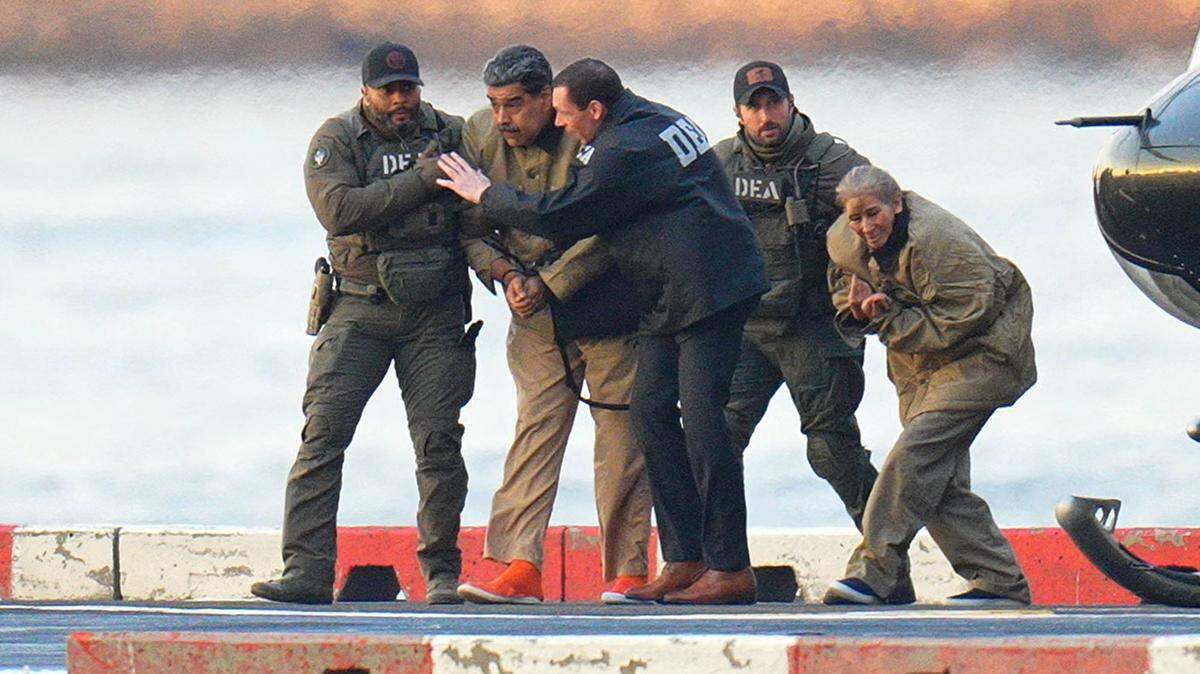
The removal of Nicolás Maduro was a development many Venezuelans exiled in South Florida never thought they would see. The pictures of him and his wife in handcuffs surrounded by U.S. law enforcement officers in New York are being celebrated by those who escaped his regime.
But as the joy of his ouster wears off and reality sets in, there’s a concern: Maduro’s capture has yet to end Chavismo in the South American country. His vice president, Delcy Rodríguez, has been sworn into office as acting president. His inner circle remains intact.
As the Herald reported this week, talks of democracy in Venezuela seem to be taking a backseat as the Trump administration plans to run the nation — with the focus on oil — until a transition takes place, as President Trump vowed to do Saturday.
Opposition leader and Nobel Peace Prize winner Maria Corina Machado has been sidelined, and her whereabouts are unknown. The U.S. administration is open to working with Rodríguez, a hardcore figure in the Maduro regime. After initially defying the U.S., Rodriguez struck a more conciliatory tone in follow-up remarks. So, which version of her will the U.S. get?
For the Venezuelan exile community, many living in South Florida, these are troubling developments.
President Trump and U.S. Secretary of State Marco Rubio, a Miami native who’s spoken for years about bringing democracy back to Venezuela, might be afforded a short grace period. Working with Rodriguez may be the pragmatic path to avoid a vacuum of power that could lead to violence. But, as experts told the Herald, stabilizing Venezuela without the participation of the opposition could backfire.
The Trump administration must prove that its actions aren’t merely intended to secure American interests in the country’s vast oil reserves, but that they will also benefit the Venezuelan people. In the end, Venezuelans — not Washington, D.C. — must choose their own fate through free and fair elections.
Venezuela will be a great test of Rubio’s ability to influence what happens next. In his news conference on Saturday, Trump essentially ignored the issue of restoring democracy, which was not surprising given his own attempts to subvert American democracy. He struck a transactional tone, an apparent attempt to appease an American First political base that’s skeptical of involvement in other countries. He has also not mentioned whether elections will be held and if there’s a role for Edmundo González, the opposition candidate widely believed to have won last year’s presidential election.
It will be up to Rubio to stand by years of anti-authoritarian advocacy in Latin America. He said over the weekend that it is “premature” to talk about holding elections.
“... We care about elections, we care about democracy. We care about all of that. But the number one thing we care about is the safety, security, well-being and prosperity of the United States,” Rubio told NBC News on Sunday.
Rubio also seemed to walk back Trump’s remarks suggesting the U.S. would control Venezuela’s oil industry, telling ABC News, “this is not about securing the oilfields.”
The somewhat different messages coming from the president and the secretary of state create confusion — if the U.S. is actually going to “run” Venezuela, what does that mean? Trump’s penchant for changing the script or repeating the last thing one of his advisors told him makes it harder to predict whether a Venezuela without Maduro will lead to real change for its people.
During this important moment in the world order, Rubio must be the adult in the room and oppose the forces within Trump’s circle pushing to extract as much as possible for the U.S. without guaranteeing the end of Chavismo. America’s history of ousting dictators — but failing to follow through until a new, functioning democratic system is in place — looms large.
Thanks to America’s military might, capturing Maduro and bringing him to face charges in the U.S. may have been the easier part. Now, the Venezuelan community is watching. Democracy should be the end goal and botching it will fall heavily on Trump and, especially, Rubio.
BEHIND THE STORY
MOREWhat's an editorial?
Editorials are opinion pieces that reflect the views of the Miami Herald Editorial Board, a group of opinion journalists that operates separately from the Miami Herald newsroom. Miami Herald Editorial Board members are: opinion editor Amy Driscoll and editorial writers Isadora Rangel and Mary Anna Mancuso. Read more by clicking the arrow in the upper right.
What's the difference between an op-ed and a column?
How does the Miami Herald Editorial Board decide what to write about?
The Editorial Board, made up of experienced opinion journalists, primarily addresses local and state issues that affect South Florida residents. Each board member has an area of focus, such as education, COVID or local government policy. Board members meet daily and bring up an array of topics for discussion. Once a topic is fully discussed, board members will further report the issue, interviewing stakeholders and others involved and affected, so that the board can present the most informed opinion possible. We strive to provide our community with thought leadership that advocates for policies and priorities that strengthen our communities. Our editorials promote social justice, fairness in economic, educational and social opportunities and an end to systemic racism and inequality. The Editorial Board is separate from the reporters and editors of the Miami Herald newsroom.
How can I contribute to the Miami Herald Opinion section?
The Editorial Board accepts op-ed submissions of 650-700 words from community members who want to argue a specific viewpoint or idea that is relevant to our area. You can email an op-ed submission to oped@miamiherald.com. We also accept 150-word letters to the editor from readers who want to offer their points of view on current issues. For more information on how to submit a letter, go here.