
Court shut down Florida AG’s plan to lower the bar for government attorneys. Good | Opinion
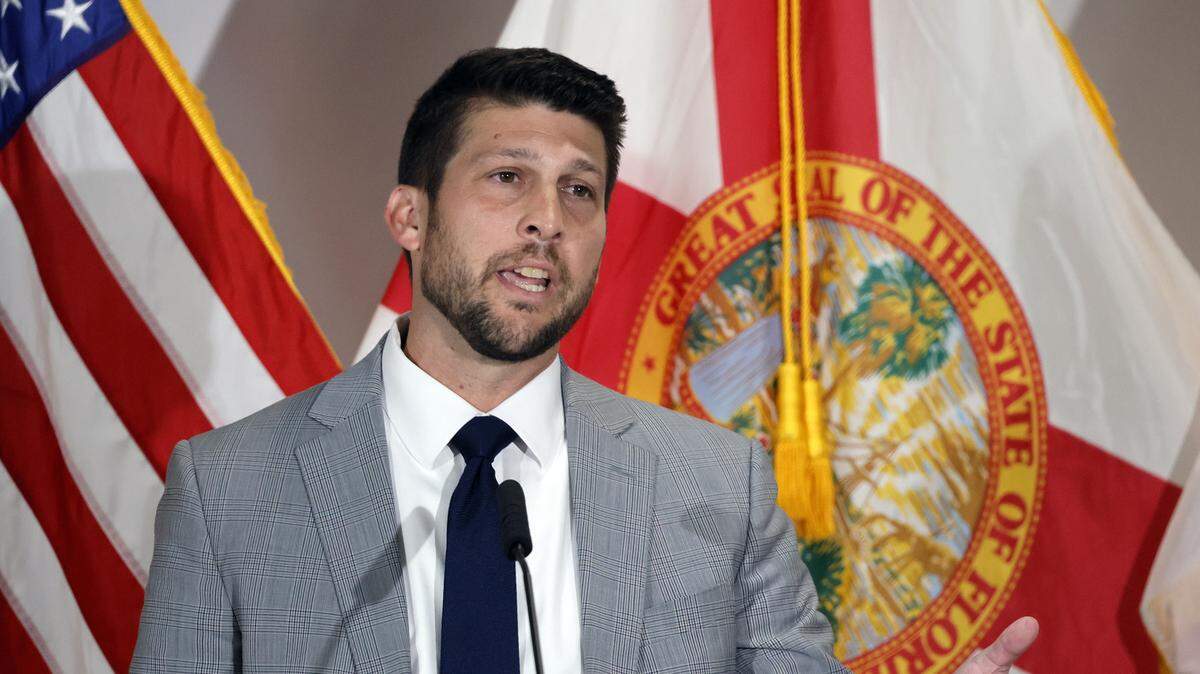
Florida Attorney General James Uthmeier apparently believes there aren’t enough lawyers in Florida who can work for the state. He filed a proposal with the state Supreme Court in August to allow attorneys from out of state to practice in some Florida government offices for up to three years — without taking the state bar exam.
Lawyers from out of state, sans bar exam, helping run the state government? What could possibly go wrong?
Fortunately, it seems Uthmeier’s proposal wasn’t given much credence by the court or by the Florida Bar. On Monday, after the Bar had filed paperwork opposing the idea, the court rejected the proposal.
Uthmeier’s reasoning, according to the petition he filed, was that changing the rules to allow lawyers from other states to become temporary Florida Bar members and practice in Florida without having to pass the bar exam would help “attract and encourage experienced, well-qualified lawyers from around the country to serve in Florida government.”
“In many cases, those lawyers forgo or leave much more lucrative employment in private practice to serve the public. Importantly, moving to Florida and taking the Florida Bar examination is often a key impediment because of the timing of their government appointment and the dates the bar examination is given,” Uthmeier wrote in his petition.
But wouldn’t we want to be sure that lawyers working for the state have a deep knowledge of Florida laws? Passing the state bar exam would seem to be the likeliest way to achieve that important goal.
The court’s ruling was unanimous, and it didn’t waste words, issuing its finding in just one paragraph. The court said a current certification program, one that “requires a certified government lawyer to have applied for admission to The Florida Bar and to take the next available bar examination, strikes the appropriate balance between accommodating the government’s workforce needs and ensuring that those authorized to practice law in Florida possess the requisite knowledge of Florida law, technical skill, and moral character to do so.”
One thought: If Uthmeier is struggling to find qualified attorneys to work in state government, it could be due to low salaries. That’s been an issue for years. Back in 2022, the Miami Herald reported that approximately 80 prosecutors left their jobs at the Miami-Dade State Attorney’s office in a single year because they couldn’t afford to make ends meet. At the time, starting salaries were between $34,000 and $40,000, though Gov. Ron DeSantis later that year approved a budget that included a 5.38% pay raise for state workers.
In the debate over Uthmeier’s proposal, the Florida Bar raised a number of well-founded objections. Among them: allowing out-of-state attorneys to work without being licensed in Florida would violate a portion of the Florida Constitution that gives the state Supreme Court “exclusive jurisdiction to regulate the admission of persons to the practice of law.”
And there was another: out-of-state attorneys would be able to practice without undergoing the Florida Board of Bar Examiners’ “character and fitness evaluation.“
You read that right. Florida would be able to hire lawyers from out of state who didn’t pass the Bar and also didn’t undergo the standard character evaluation. If you know Florida at all, you know that is a bad idea.
Uthmeier pushed back, saying, “an experienced attorney from out of state, however, poses far less risk to the public than a newly minted JD (juris doctor) who just passed the bar.”
We’re not buying it. Passing the bar and being licensed to practice in one state doesn’t translate to competency in another state, whether that’s Pennsylvania or Florida.
Instead of trying to temporarily lower standards for out of state lawyers to work in Florida, Uthmeier should focus on attracting qualified and licensed Florida lawyers to do the people’s work.
BEHIND THE STORY
MOREWhat's an editorial?
Editorials are opinion pieces that reflect the views of the Miami Herald Editorial Board, a group of opinion journalists that operates separately from the Miami Herald newsroom. Miami Herald Editorial Board members are: opinion editor Amy Driscoll and editorial writers Isadora Rangel and Mary Anna Mancuso. Read more by clicking the arrow in the upper right.
What's the difference between an op-ed and a column?
How does the Miami Herald Editorial Board decide what to write about?
The Editorial Board, made up of experienced opinion journalists, primarily addresses local and state issues that affect South Florida residents. Each board member has an area of focus, such as education, COVID or local government policy. Board members meet daily and bring up an array of topics for discussion. Once a topic is fully discussed, board members will further report the issue, interviewing stakeholders and others involved and affected, so that the board can present the most informed opinion possible. We strive to provide our community with thought leadership that advocates for policies and priorities that strengthen our communities. Our editorials promote social justice, fairness in economic, educational and social opportunities and an end to systemic racism and inequality. The Editorial Board is separate from the reporters and editors of the Miami Herald newsroom.
How can I contribute to the Miami Herald Opinion section?
The Editorial Board accepts op-ed submissions of 650-700 words from community members who want to argue a specific viewpoint or idea that is relevant to our area. You can email an op-ed submission to oped@miamiherald.com. We also accept 150-word letters to the editor from readers who want to offer their points of view on current issues. For more information on how to submit a letter, go here.