
Miami election was a ‘shot in the arm’ for Dems but careful calling it a comeback | Opinion
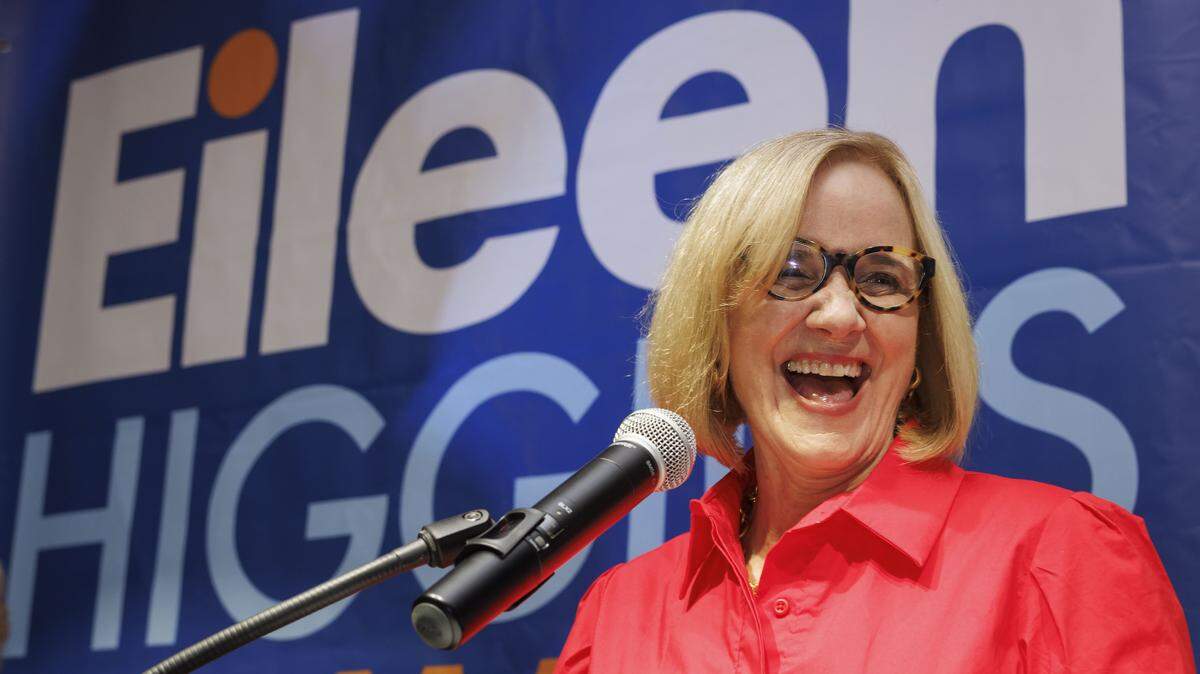
The analysis and punditry of the results of Miami’s Tuesday night election started even before Eileen Higgins, a Democrat, won the mayoral race.
There’s no doubt this was a good — even great — night for Democrats. The nonpartisan race turned into a red-versus-blue contest with President Donald Trump’s endorsement of Emilio Gonzalez, a Republican, and the infusion of resources Higgins got from national Democrats. But does this mean Florida — and Miami-Dade County, which Trump easily carried in 2024 — are back in play for the Democratic Party?
Without doubt, Higgins made history as the first woman to lead Miami and the first elected mayor to run as a Democrat since the 1990s. But we should be careful with extrapolations, especially when turnout in city elections are embarrassingly low: fewer than 38,000 Miamians voted Tuesday — out of 176,000 registered voters.
We wish this election had remained nonpartisan. But in today’s politically polarized climate, it was only a matter of time before local races— where issues such as affordability, infrastructure and public transportation shouldn’t be partisan — became embroiled in party politics.
Alas, that ship has sailed.
The mayoral race became a test for two things: whether Democrats can crawl their way out of the electoral hole they dug for themselves in South Florida, and whether a Trump endorsement sinks or elevates candidates in a general election.
Gonzalez lost by nearly 20 points. The fact that Trump’s support did not get him elected is no surprise. The president’s endorsement may work in a GOP primary but a general election in a city that Kamala Harris carried, albeit by a slim margin, in 2024 is a different story. Trump’s support also failed to get several candidates elected in important U.S. Senate and gubernatorial races across the country in 2022. Trump has also lost support among Hispanic voters, a key demographic in Miami.
In hindsight, would Gonzalez have been better off running only on his résumé as a former city manager and retired Army colonel who reversed in court the city commission’s decision to move the 2025 elections to next year without voter approval? Even that might not have been enough to close the gap on Higgins’ advantage.
The Tuesday election was a “shot in the arm” for Democrats, Fernand Amandi, a Miami Democratic pollster, told the Herald Editorial Board.
“I think, for the first time, they have something they can start to build on,” he said.
Higgins’ win will encourage Democratic donors to take a second look at Florida, a state the party has essentially written off in recent elections, and it’s an indicator they should not ignore the state anymore, Amandi said. But even the most optimistic Democrats are probably not saying this suddenly means Florida is back in play for them. The 2026 elections will still be a challenge for the party that has been hemorrhaging voters and has ceded control to the GOP, including in former blue bastions like South Florida.
Now that Higgins has won two competitive races — for mayor and Miami-Dade County commissioner in 2018 — consultants will inevitably begin looking at her next political move (she gave up her county seat less than halfway through her second term to run for mayor). But Higgins must focus on implementing an ambitious agenda that includes streamlining the city’s slow permitting system, building more affordable housing and improving public transit.
Above all, Higgins’ legacy will be defined by whether she can change the image of Miami from a city hall where scandals and bad behavior are the status quo. She will have to accomplish all of that with the limited powers Miami’s charter gives her position. Unlike the mayors of Miami-Dade County and other cities, she will not have administrative powers, which are delegated to a city manager she can appoint. Higgins, however, should be strategic with her existing powers to veto legislation and whip votes on the commission on issues she cares about.
Miami’s mayoral election was a good night for the Democratic Party, but the real measure of success will be if the next four years are better for the residents of the city.
BEHIND THE STORY
MOREWho decides the political endorsements?
In advance of local and state elections, Miami Herald Editorial Board members interview political candidates, as well as advocates and opponents of ballot measures. The Editorial Board is composed of experienced opinion journalists and is independent of the Herald’s newsroom. Members of the Miami Herald Editorial Board are: Amy Driscoll, editorial page editor; and editorial writers Isadora Rangel and Mary Anna Mancuso. Read more by clicking the arrow in the upper right.
What does the endorsement process look like?
The Miami Herald Editorial Board interviews political candidates to better understand their views on public policy and how their policies will affect their constituents. Board members do additional reporting and research to learn as much as possible about the candidates before making an endorsement. The Editorial Board then convenes to discuss the candidates in each race. Board members seek to reach a consensus on the endorsements, but not every decision is unanimous. Candidates who decline to be interviewed will not receive an endorsement.
Is the Editorial Board partisan?
No. In making endorsements, members of the Editorial Board consider which candidates are better prepared to represent their constituents — not whether they agree with our editorial stances or belong to a particular political party. We evaluate candidates’ relevant experience, readiness for office, depth of knowledge of key issues and understanding of public policy. We’re seeking candidates who are thoughtful and who offer more than just party-line talking points.