
A Venezuela without Maduro is reason to celebrate — but no guarantee of democracy | Opinion
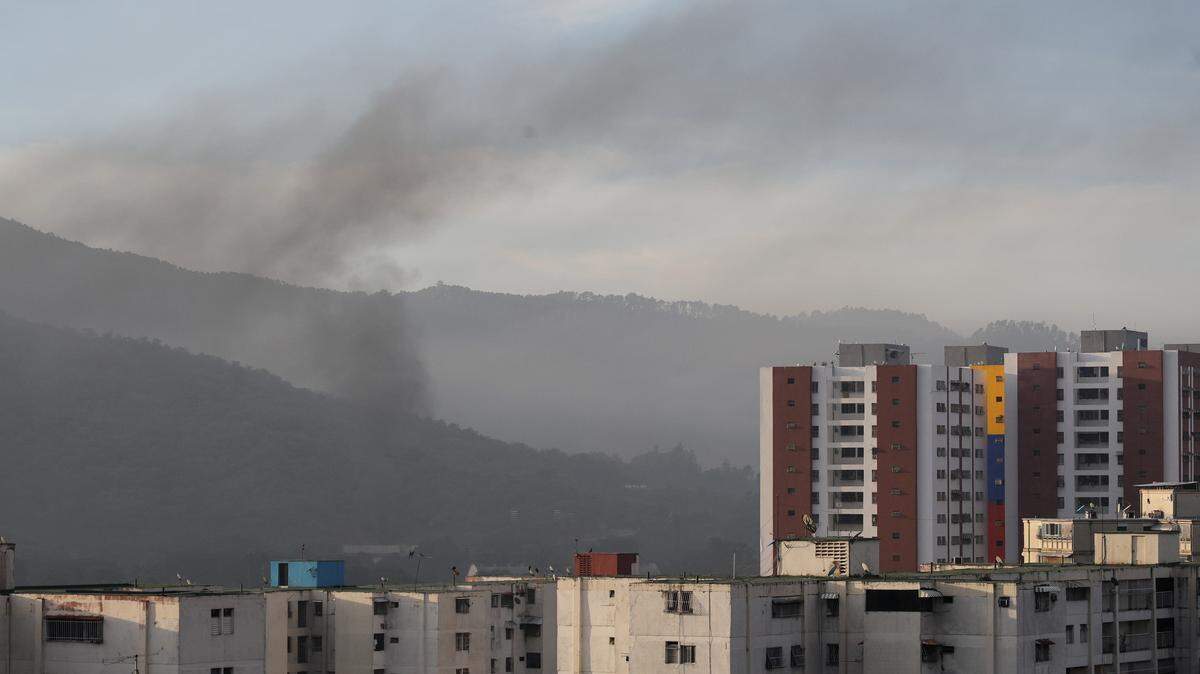
What happens now? Will democracy really prevail in Venezuela?
In Doral on Saturday, decades of pent-up fear and frustration spilled onto the streets. The news that the United States had “captured” — the word used by President Trump — Venezuelan leader Nicolás Maduro and his wife during the night after a months-long pressure campaign by the U.S. caused a burst of pre-dawn dancing and flag-waving and shouts of “Si, se pudo” — yes, we did it.
Maduro has destabilized Venezuela, stealing an election, ruining its economy and forcing millions to migrate to the U.S. and other countries. But a Venezuela without Maduro is not a guarantee for democracy. The U.S. has learned this lesson after decades of interfering in other countries’ affairs and helping oust its leaders, from Iraq to Chile. Will Venezuela be different?
The prospect of a Venezuela no longer under the thumb of Maduro’s authoritarian regime — a “narco-terrorist enterprise,” as the U.S. Justice Department called it — is obviously cause for enormous joy. Nowhere is that truer than here in Miami — and especially in “Doral-zuela.”
But a Venezuela run by the U.S. — which Trump said, during a rambling speech on Saturday, will happen until a “transition” can take place — is a risky proposition. Trump did not rule out keeping troops in the country, saying “we’re not afraid” of it.
Is Trump’s true interest to see democracy in Venezuela — or to install a new leader who’s more friendly to the U.S. and its interests in the nation’s oil reserves?
Regardless, in Miami, where so many of our neighbors and friends have found refuge from oppressive governments, this moment carries enormous resonance.
The suffering in Venezuela has gone on for so long, starting with Hugo Chavez in 1999 and followed by Maduro, who has stayed in power since 2013. In 2020, the U.S. indicted Maduro and others on charges of drug trafficking and money-laundering.
But this is also Washington’s most direct intervention in Latin America since the Panama invasion of 1989 that removed Manuel Noriega. It will certainly — and rightfully — receive a mixed reaction abroad. America has a long history of propping up authoritarian regimes in Latin America.
There are obvious concerns that the U.S. is motivated by hunger for the massive oil reserves of Venezuela. Another fear is that this action, ostensibly based on a war on drugs, could embolden countries like China or Russia to go after their neighbors.
On Saturday, it was clear where Miami’s Republican members of Congress fell. U.S. Rep Carlos Gimenez compared the action in Venezuela to the fall of the Berlin Wall. U.S. Rep. Mario Diaz-Balart said the Maduro regime had represented “an unprecedented national security threat.”
Democrats, on the other hand, raised concern about Trump bypassing Congress. “Congress must be properly informed and hold hearings on this invasion,” U.S. Rep. Debbie Wasserman Schultz of Broward County wrote on X. We agree.
No doubt Secretary of State Marco Rubio played a decisive role in the drive to rid Venezuela of Maduro. He has consistently pushed for action against the Venezuelan leader.
The spotlight will once again be on Miami’s Rubio. Will Edmundo González, the candidate backed by opposition leader Maria Corina Machado in the 2024 elections, take office? With Trump vowing greater involvement by the U.S., the Venezuelan people must be allowed to control their own fate. And what will happen with immigration? People may begin to return to Venezuela — or perhaps the instability will fuel more desire to leave if the rebuilding process is too shaky.
Many Venezuelans, while rejoicing the removal of Maduro, are wary of prolonged U.S. influence in their country. Many Americans, too, don’t want to see the U.S. involved overseas. That’s something Trump campaigned on.
It doesn’t help that there are big questions in the U.S. about the legality of the boat strikes the U.S. has been conducting in the waters off Venezuela. And Congress has not authorized a war on Venezuela.
Supposedly, this is all really about drugs. Trump’s critics, though, argue his focus on Venezuela is misguided because most of the fentanyl that has claimed many American lives enters the U.S. from Mexico.
A president whose approval ratings are lower than ever is leading the U.S. down a path that risks destabilizing an entire region. We’re not wasting tears on Maduro, but there is a difficult path ahead.
BEHIND THE STORY
MOREWhat's an editorial?
Editorials are opinion pieces that reflect the views of the Miami Herald Editorial Board, a group of opinion journalists that operates separately from the Miami Herald newsroom. Miami Herald Editorial Board members are: opinion editor Amy Driscoll and editorial writers Isadora Rangel and Mary Anna Mancuso. Read more by clicking the arrow in the upper right.
What's the difference between an op-ed and a column?
How does the Miami Herald Editorial Board decide what to write about?
The Editorial Board, made up of experienced opinion journalists, primarily addresses local and state issues that affect South Florida residents. Each board member has an area of focus, such as education, COVID or local government policy. Board members meet daily and bring up an array of topics for discussion. Once a topic is fully discussed, board members will further report the issue, interviewing stakeholders and others involved and affected, so that the board can present the most informed opinion possible. We strive to provide our community with thought leadership that advocates for policies and priorities that strengthen our communities. Our editorials promote social justice, fairness in economic, educational and social opportunities and an end to systemic racism and inequality. The Editorial Board is separate from the reporters and editors of the Miami Herald newsroom.
How can I contribute to the Miami Herald Opinion section?
The Editorial Board accepts op-ed submissions of 650-700 words from community members who want to argue a specific viewpoint or idea that is relevant to our area. You can email an op-ed submission to oped@miamiherald.com. We also accept 150-word letters to the editor from readers who want to offer their points of view on current issues. For more information on how to submit a letter, go here.
This story was originally published January 3, 2026 at 10:55 AM.