
Miami and developers appear to be rushing big land deal before a change of guard | Opinion
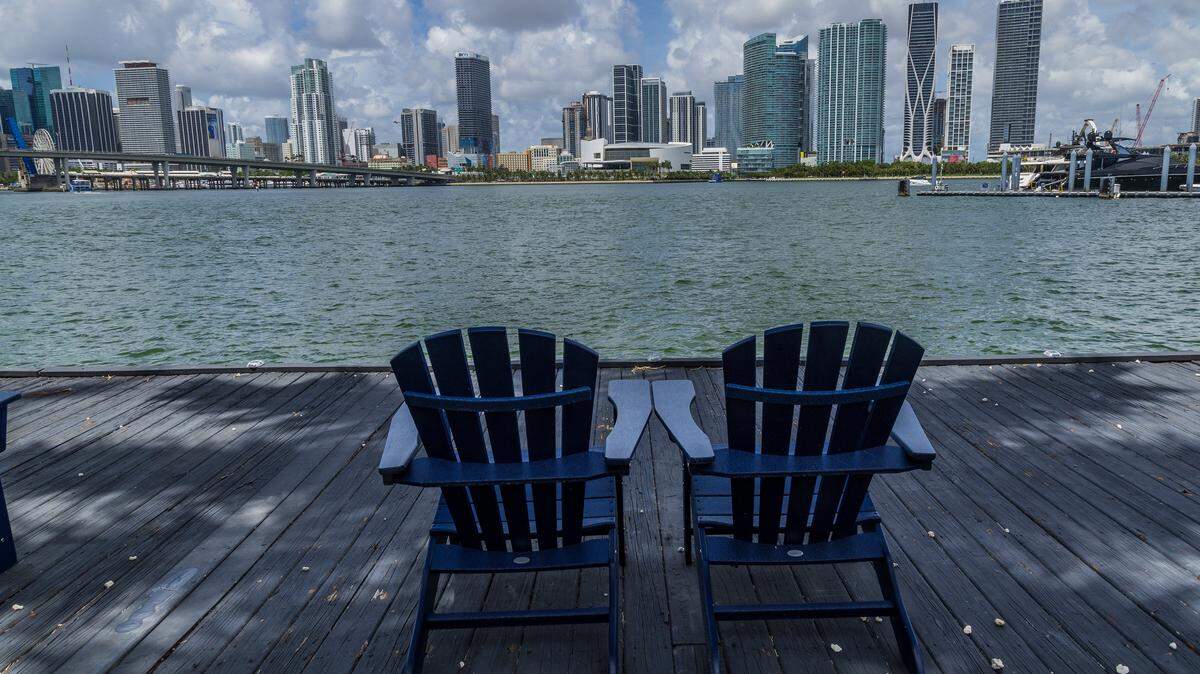
It was clear from watching the Miami City Commission’s Thursday meeting that commissioners were confused about the proposed sale of public waterfront land on Watson Island to developers.
The commission did the wise thing: postpone the vote on the $29 million deal with IG Luxury, a subsidiary of developer BH3 Merrimac, which plans to build two luxury high-rise hotel and condo towers. The project was approved by voters in a 2024 referendum, so the question isn’t whether to sell the land but whether taxpayers are getting a fair price for real estate overlooking Biscayne Bay.
And there are reasons to wonder. Critics are calling the transaction a “giveaway.” From what the Herald has reported, they might be right. Thankfully, on Thursday, some of the commissioners also felt that might be the case as they peppered developers with questions. The new vote is expected on Dec. 11.
We question why this sale came up for approval just weeks before a new mayor, who can veto the deal, and a new District 3 commissioner are set to be elected in a Dec. 9 runoff. They will be sworn in the following week, the Herald reported — and after Dec. 11. The new mayor, whether it’s candidate Eileen Higgins or Emilio Gonzalez, will appoint a new city manager whose administration will be responsible for overseeing the agreement with developers.
The timing is probably not happenstance and gives the appearance of an attempt to rush the proposal through the commission. Gonzalez told the Herald Editorial Board that he has concerns about the sale, and that, if elected, “I’m going to take a look” at it.
“What’s the rush? There’s going to be a new mayor in two weeks,” Gonzalez said.
Higgins said via a statement to the Editorial Board that “the commissioners made the right choice by asking for more time and more information. Voters made clear we must safeguard our public lands...”
This is not the first transfer of a Miami public asset that’s been criticized for its timing. Gonzalez and other candidates blasted the controversial sale of the historic Olympia Theater to a charter-school operator before a new mayor could take office.
The 2024 Watson Island ballot referendum called for the sale price of the city’s 3.2-acre site to be determined later, but stipulated that it must be fair market value and no less than $25 million. Developers contend that their $29 million offer “far exceeds” that $25 million floor and that they have already spent more than $110 million buying the lease rights from another group and improving the property, the Herald reported. But a city appraisal found the property could be worth way more than that.
The appraisal estimated the land’s value between $257 million and $342 million, depending on the level of restrictions on development. The $257 million valuation was based on the development plans requiring the property to include “hotel and hotel residence units,” the Herald reported.
More importantly, the appraisal concluded that an existing long-term lease between the city and the developer is valued at $28.9 million. In other words, rather than paying for the land itself, the $29 million sale price would effectively buy the city out of the lease and transfer ownership to IG Luxury, according to the Herald. That doesn’t look good. Isn’t the waterfront land worth something, too?
“I need to be sure that what this really is worth because I don’t want history to say that, ‘Hey, I was part of approving a real bad deal for this city,’ what some would call a giveaway,” Commissioner Joe Carollo said during the Thursday meeting.
He’s right. Carollo was among the four commissioners who voted to defer the vote. Chair Christine King was the only “no” vote.
King said about the sale that, “We have been going through this for years. We’ve negotiated an extensive community benefits package. And, fun fact, the voters voted for this.” That community benefits package is a $9 million contribution from developers for affordable housing.
Voters did approve the much-needed redevelopment of Watson Island last year (and the Editorial Board recommended it). But they also trusted the city to come up with the best price for the taxpayers. With that in mind, the city commission should do its due diligence. And that should only happen when a new mayor and new commissioners are sworn in.
What’s the problem with allowing more deliberation? The biggest harm would probably be for those who want this deal approved ASAP.
BEHIND THE STORY
MOREWhat's an editorial?
Editorials are opinion pieces that reflect the views of the Miami Herald Editorial Board, a group of opinion journalists that operates separately from the Miami Herald newsroom. Miami Herald Editorial Board members are: opinion editor Amy Driscoll and editorial writers Isadora Rangel and Mary Anna Mancuso. Read more by clicking the arrow in the upper right.
What's the difference between an op-ed and a column?
How does the Miami Herald Editorial Board decide what to write about?
The Editorial Board, made up of experienced opinion journalists, primarily addresses local and state issues that affect South Florida residents. Each board member has an area of focus, such as education, COVID or local government policy. Board members meet daily and bring up an array of topics for discussion. Once a topic is fully discussed, board members will further report the issue, interviewing stakeholders and others involved and affected, so that the board can present the most informed opinion possible. We strive to provide our community with thought leadership that advocates for policies and priorities that strengthen our communities. Our editorials promote social justice, fairness in economic, educational and social opportunities and an end to systemic racism and inequality. The Editorial Board is separate from the reporters and editors of the Miami Herald newsroom.
How can I contribute to the Miami Herald Opinion section?
The Editorial Board accepts op-ed submissions of 650-700 words from community members who want to argue a specific viewpoint or idea that is relevant to our area. You can email an op-ed submission to oped@miamiherald.com. We also accept 150-word letters to the editor from readers who want to offer their points of view on current issues. For more information on how to submit a letter, go here.