
DeSantis lambasts lawmakers but ignores a key reality in plan to end property taxes | Opinion
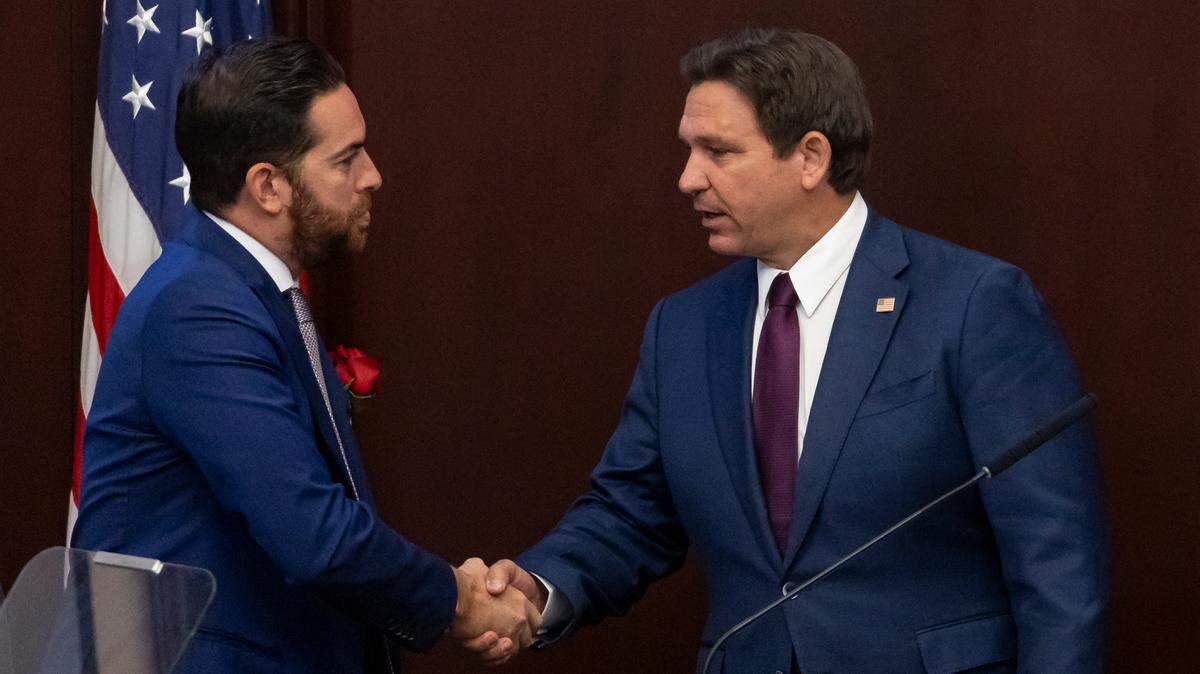
Gov. Ron DeSantis hasn’t come up with any specific plans to slash property taxes in Florida or spent much time talking about the impact those cuts would have on the services that local governments provide with those dollars, from schools to road maintenance and public safety.
Instead, he has lambasted what the Legislature has proposed so far. In late October, he called the legislation the Florida House, led by Speaker Danny Perez of Miami, is working on “milquetoast” and “half measures.”
We beg to differ. These proposals would cut up to $10 billion from county and city budgets across the state, WFSU reported. Apparently, that’s not far enough for DeSantis.
DeSantis will have left office if and when these cuts are implemented, so he won’t have to deal with their aftermath. For him, this is a low-risk political win as he looks at running for president again in 2028. Lawmakers and local officials will be left holding the bag, dealing with the repercussions and the complaints when parks, libraries and other services end up defunded.
Plus, the governor has treated property tax cuts as the solution to Florida’s affordability crisis, when it isn’t.
Floridians don’t pay excessively high taxes compared to other states. The state ranks 30th in the nation for property taxes paid as a percentage of owner-occupied housing values. That percentage statewide was 0.74% in 2023, though it was higher in Miami-Dade County at 0.8265%, according to the Tax Foundation, a Washington, D.C.-based nonpartisan think tank. At the same time, Florida has the nation’s highest median property insurance cost for mortgaged homes, though premiums have started to drop, the U.S. Census reported in June.
Cutting property taxes is good in theory, but it ignores big factors in what’s truly driving up costs, especially in South Florida: exorbitant home values and insurance costs. As Rep. Jim Mooney, a Republican who represents southern Miami-Dade and the Keys, told the Florida Trident, “We don’t get a lot of complaints about property taxes... We get a lot of complaints about insurance, which I think honestly should be the bigger debate.”
But, here we are, and the edict is: Cut taxes or else. Under Perez, a Republican, the Florida House appears to be taking a prudent approach. The different bills filed so far propose cuts to the taxes paid by homesteaded properties (a homeowner’s primary residence), wouldn’t touch school property tax districts and protect law enforcement funding. Any proposal the Legislature agrees to would have to be approved by at least 60% of Florida voters in 2026.
Perez hasn’t spared words on the governor, suggesting his criticism of lawmakers is “small and petty.”
“The House has proposed eliminating all non-school homestead property taxes. The Governor weirdly called that ‘milquetoast.’ That can only mean the Governor has just announced that he will be proposing to abolish all property taxes including school taxes. I look forward to seeing the Governor’s proposed budget where he makes up for the $21 billion for schools that he plans to cut,” Perez wrote in a statement in response to the governor’s remarks.
Perez’s tough words aside, we agree. The House proposals appear to go far enough, if not too far.
Miami Republican Rep. Juan Carlos Porras filed a resolution to exempt people over 65 from paying non-school homestead property taxes. This would soften the blow to local governments’ budget while providing a break to seniors who are usually on a fixed income.
Other lawmakers want to end all of Florida’s non-school taxes on homesteaded properties, or phase them out over a decade, which would have much greater impacts to local services. There’s also legislation to create a non-school homestead exemption equal to 25% of the assessed value of a home, and another to create a $100,000 non-school homestead tax exemption for those who have property insurance.
These reforms wouldn’t impact all Florida homeowners the same. Thanks to the Save Our Homes program, taxes paid by longtime homeowners have been kept artificially low. The program caps the annual increase of a homestead property’s assessed value at 3% or inflation, whichever is lower. That means that any tax break would be more significant to people who bought their homes more recently.
This is what DeSantis’ slash-and-burn approach is missing: the nuance. It is the job of legislators to consider all these details. Next, it will be up to voters to decide whether the trade-off of cutting taxes is worth it.
BEHIND THE STORY
MOREWhat's an editorial?
Editorials are opinion pieces that reflect the views of the Miami Herald Editorial Board, a group of opinion journalists that operates separately from the Miami Herald newsroom. Miami Herald Editorial Board members are: opinion editor Amy Driscoll and editorial writers Isadora Rangel and Mary Anna Mancuso. Read more by clicking the arrow in the upper right.
What's the difference between an op-ed and a column?
How does the Miami Herald Editorial Board decide what to write about?
The Editorial Board, made up of experienced opinion journalists, primarily addresses local and state issues that affect South Florida residents. Each board member has an area of focus, such as education, COVID or local government policy. Board members meet daily and bring up an array of topics for discussion. Once a topic is fully discussed, board members will further report the issue, interviewing stakeholders and others involved and affected, so that the board can present the most informed opinion possible. We strive to provide our community with thought leadership that advocates for policies and priorities that strengthen our communities. Our editorials promote social justice, fairness in economic, educational and social opportunities and an end to systemic racism and inequality. The Editorial Board is separate from the reporters and editors of the Miami Herald newsroom.
How can I contribute to the Miami Herald Opinion section?
The Editorial Board accepts op-ed submissions of 650-700 words from community members who want to argue a specific viewpoint or idea that is relevant to our area. You can email an op-ed submission to oped@miamiherald.com. We also accept 150-word letters to the editor from readers who want to offer their points of view on current issues. For more information on how to submit a letter, go here.