
A Miami-Dade deputy died during a routine part of his job. This is ‘not OK’ | Opinion
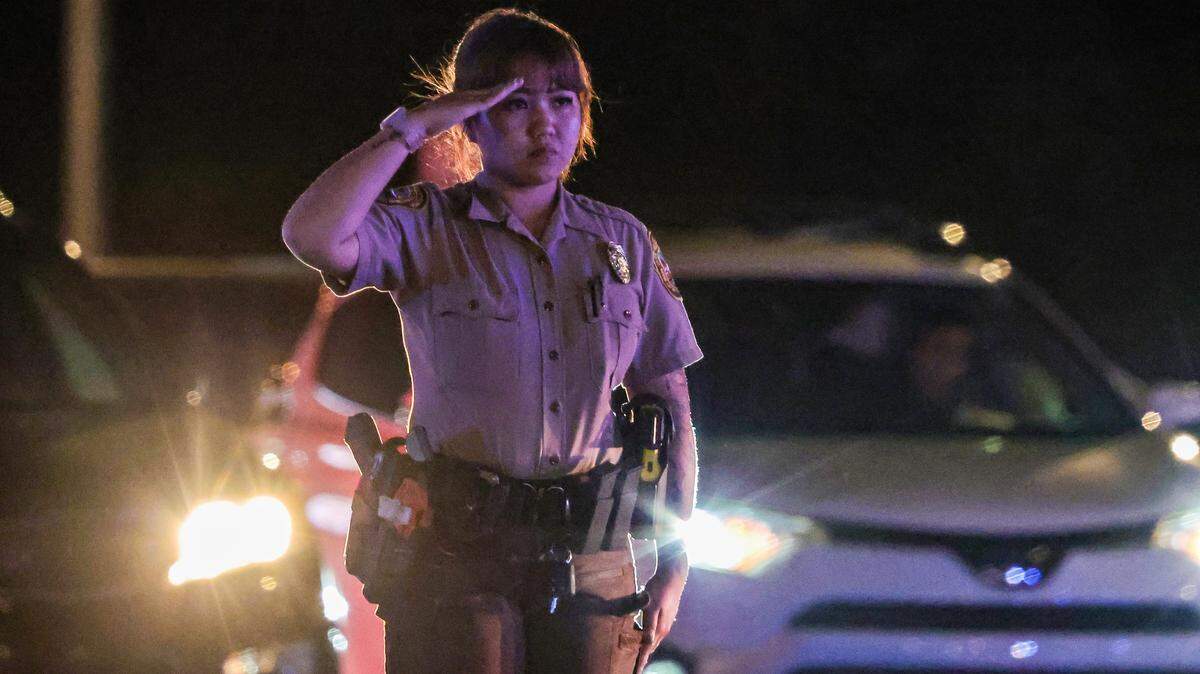
The death of Miami-Dade Deputy Devin Jaramillo in the line of duty has left the community reeling from an unspeakable act of violence and asking how a routine traffic crash ended in what the Sheriff’s Office has described as a “random” moment of chaos.
It’s infuriating. No law enforcement officer should die simply for performing their job.
His death is also a reminder of the danger law enforcement officers face even when performing what should be mundane functions of their job. Jaramillo, 27, responded to a “minor traffic crash” in the Kendall area around 3:50 p.m. Friday and was the only deputy on scene, as is typical for collisions with minor damage, Miami-Dade Sheriff Rosie Cordero-Stutz said during a Saturday press conference. He was working the crash when a 21-year-old man involved in it started arguing with Jaramillo. It’s unclear how the situation escalated into a physical scuffle.
A video the Herald obtained showed Jaramillo trying to subdue the man on the ground. The man grabbed Jaramillo’s gun and shot him. After that, the man, Steven David Rustrian, went back to his car and shot himself. A person with the same name was previously involved in a high-speed police chase in New York, the Herald reported.
There were rumors that Jaramillo’s death might have been the result of an ambush or an act of retribution, but Cordero-Stutz later clarified his death was the result of a random encounter, making this incident even more chilling.
How did a traffic crash evolve into a physical fight and the death of a deputy? These are questions we hope will be answered in coming days and weeks.
Interactions like the one that killed Jaramillo happen countless times every day. This is perhaps one of the most community-facing functions of law enforcement: conducting a traffic stop, responding to vehicle accidents and performing other routine part of their jobs that most people assume won’t escalate into violence. However, “...there’s evil lurking over our shoulder wherever we are and whatever we’re doing,” Cordero-Stutz said.
Out of the 148 law enforcement officers who died in 2024, the largest number of them, 52, were shot, followed by those who died of job-related illnesses, according to the National Law Enforcement Officers Memorial Fund.
But let’s not treat Jaramillo only as part of the statistics. Jaramillo’s father was a veteran police officer and he “could have done anything with his professional career, but he chose public service,” Cordero-Stutz said during a news conference. She also called him “an athlete, a football player, smart, strong, handsome and young.”
Cordero-Stutz repeatedly said Jaramillo’s death “is not OK.” We agree. She held back tears, her voice cracking. It’s clear this incident has taken a toll on the office and on Miami-Dade’s first elected sheriff in decades. Cordero-Stutz will have the difficult task of helping her team move forward. Jaramillo’s colleagues at the Kendall District Station where he worked “are destroyed,” she said.
As for the rest of Miami-Dade County, we’re left in shock, saddened that violence has claimed the life of a young deputy.
BEHIND THE STORY
MOREWhat's an editorial?
Editorials are opinion pieces that reflect the views of the Miami Herald Editorial Board, a group of opinion journalists that operates separately from the Miami Herald newsroom. Miami Herald Editorial Board members are: opinion editor Amy Driscoll and editorial writers Isadora Rangel and Mary Anna Mancuso. Read more by clicking the arrow in the upper right.
What's the difference between an op-ed and a column?
How does the Miami Herald Editorial Board decide what to write about?
The Editorial Board, made up of experienced opinion journalists, primarily addresses local and state issues that affect South Florida residents. Each board member has an area of focus, such as education, COVID or local government policy. Board members meet daily and bring up an array of topics for discussion. Once a topic is fully discussed, board members will further report the issue, interviewing stakeholders and others involved and affected, so that the board can present the most informed opinion possible. We strive to provide our community with thought leadership that advocates for policies and priorities that strengthen our communities. Our editorials promote social justice, fairness in economic, educational and social opportunities and an end to systemic racism and inequality. The Editorial Board is separate from the reporters and editors of the Miami Herald newsroom.
How can I contribute to the Miami Herald Opinion section?
The Editorial Board accepts op-ed submissions of 650-700 words from community members who want to argue a specific viewpoint or idea that is relevant to our area. You can email an op-ed submission to oped@miamiherald.com. We also accept 150-word letters to the editor from readers who want to offer their points of view on current issues. For more information on how to submit a letter, go here.