
The nation saw a blue wave. In Miami mayor’s election, it was a ‘change’ wave | Opinion
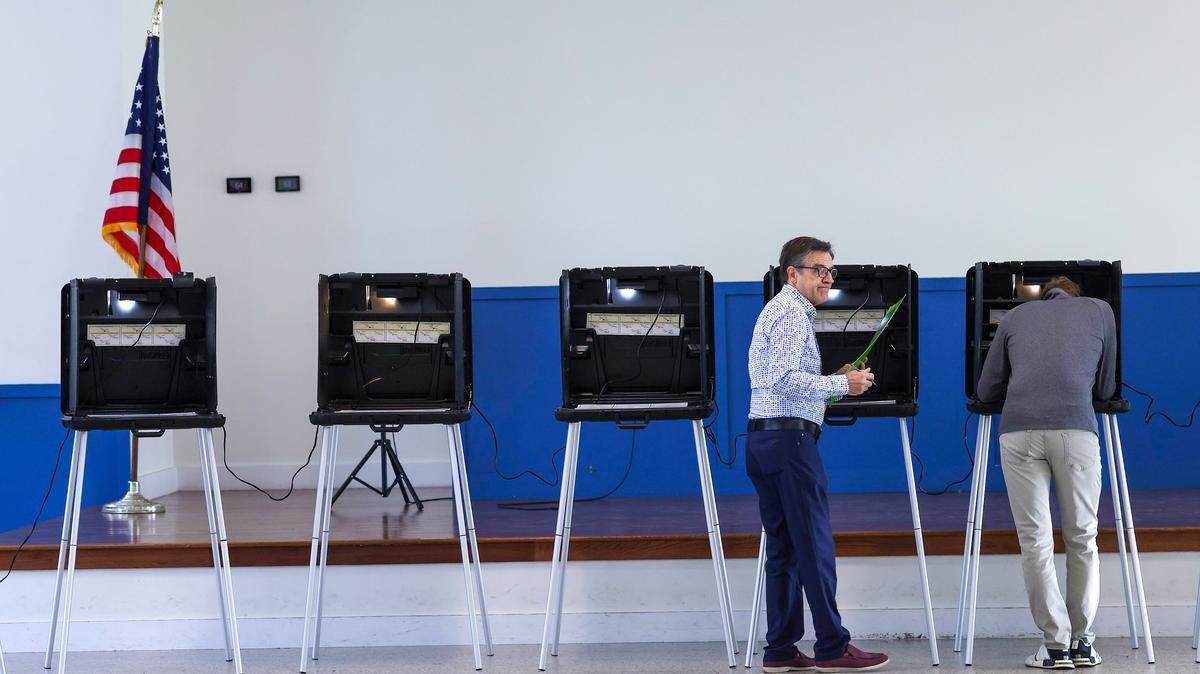
In the Tuesday elections, voters in Miami did something we weren’t sure would materialize: They rejected some of the city’s longtime political players in the race for mayor. In a city that has too often been the butt of Florida jokes about dysfunctional public meetings and constant legal battles, it’s clear voters want change.
There was voter enthusiasm not seen in almost two decades. The turnout, according to unofficial results, was 21.67%, the highest Miami has seen since 2009, when voter participation reached 25.5% in a runoff, according to data from the Miami-Dade Supervisor of Elections office. These are, by no means, good numbers. But Miami’s voter participation has been so abysmally low — that’s why the Herald Editorial Board and others advocate for moving the elections to even years to increase turnout— that we take this as something of a victory.
It’s hard to tell exactly why voters were more inclined to go to the polls. With 13 mayoral candidates on the ballot, it’s possible each candidate activated more supporters. More Democrats voted than Republicans, so was this a reflection of the Democratic wave seen in other parts of the country, such as Virginia?
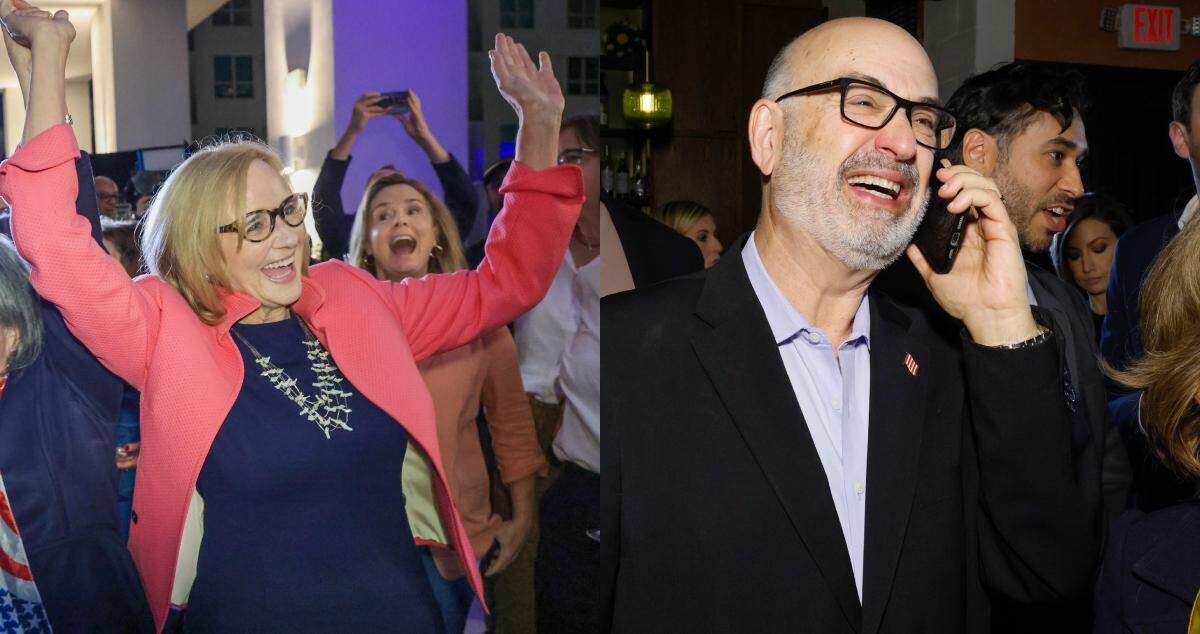
In the end, Miami voters sent a message: They’re ready for an end to embarrassing turmoil on the dais. Eileen Higgins, a former county commissioner, and Emilio Gonzalez, a former Miami city manager, are going to a December runoff. Higgins captured nearly 36% of the vote and Gonzalez came in second with more than 19%, according to unofficial results. Neither is a brand-new face in politics — would we even want a newbie in the role of mayor? — but they aren’t part of the too-well-known Miami political dynasties, either.
Higgins and Gonzalez are diametrically opposed ideologically and in their approach to governing. Although this is a nonpartisan race, Higgins is a Democrat and Gonzalez is a Republican endorsed by Gov. Ron DeSantis. But their messages converged on one point: that Miami needs new leadership.
“It’s just been a lot of chaos” at city hall, Higgins told the Herald Editorial Board on Wednesday. “(Voters) are ready for change and they were ready to go to the polls.” Higgins also said her campaign knocked on about 10,000 doors between the start of early voting and Election Day, which might have helped boost turnout.
Gonzalez told the Board during a candidate interview last month that “voters tell me that we have a severe crisis of governability and legitimacy. People don’t trust their government.” He couldn’t be reached for comment on Wednesday.
The stakes were high in the mayoral contest. Commissioner Joe Carollo, who’s been in and out of office in Miami since the 1970s, was the best-funded candidate. But he also faces a $63.5 million federal judgment stemming from a lawsuit that accused him of using his public office to retaliate against two Little Havana businessmen who supported his 2017 opponent.
Carollo has also been a destabilizing force on the commission, often berating citizens from the dais and antagonizing fellow commissioners. If elected mayor, who’s to say he wouldn’t have super-charged his use of elected office against his political enemies?
In the end, it looks like Carollo’s antics caught up to him. His war chest got him a distant fourth place with 11.4% of the vote, behind former Commissioner Ken Russell, who came in third.
Other well-known names in Miami also did not get far on Tuesday: Former Commissioner Alex Diaz de la Portilla, who was suspended from office in 2023 following an arrest on corruption-related charges that prosecutors later dropped; and former Mayor Xavier Suarez, the father of incumbent Mayor Francis Suarez, who’s term-limited.
Meanwhile, Miami voters also approved three ballot questions, including one to create lifetime term limits for commissioners and mayors, a strong rebuke to Miami’s reputation of having certain political families perpetually in power. This could affect Carollo’s brother, Frank Carollo, who made it to a runoff in District 3, which he already represented for two terms, the limit allowed by the ballot measure.
Voters also passed a charter amendment to prohibit gerrymandering in the redrawing of the commission’s five districts every decade and to establish a citizens’ redistricting committee. This measure was part of a settlement of a lawsuit civic groups filed in 2022 that accused the city of drawing district maps predominantly on the basis of race.
Miami voters are not messing around. Now it will be up to the next mayor, whether it is Higgins or Gonzalez, to prove that they can truly create change in South Florida’s most famous, and sometimes infamous, city.
BEHIND THE STORY
MOREWhat's an editorial?
Editorials are opinion pieces that reflect the views of the Miami Herald Editorial Board, a group of opinion journalists that operates separately from the Miami Herald newsroom. Miami Herald Editorial Board members are: opinion editor Amy Driscoll and editorial writers Isadora Rangel and Mary Anna Mancuso. Read more by clicking the arrow in the upper right.
What's the difference between an op-ed and a column?
How does the Miami Herald Editorial Board decide what to write about?
The Editorial Board, made up of experienced opinion journalists, primarily addresses local and state issues that affect South Florida residents. Each board member has an area of focus, such as education, COVID or local government policy. Board members meet daily and bring up an array of topics for discussion. Once a topic is fully discussed, board members will further report the issue, interviewing stakeholders and others involved and affected, so that the board can present the most informed opinion possible. We strive to provide our community with thought leadership that advocates for policies and priorities that strengthen our communities. Our editorials promote social justice, fairness in economic, educational and social opportunities and an end to systemic racism and inequality. The Editorial Board is separate from the reporters and editors of the Miami Herald newsroom.
How can I contribute to the Miami Herald Opinion section?
The Editorial Board accepts op-ed submissions of 650-700 words from community members who want to argue a specific viewpoint or idea that is relevant to our area. You can email an op-ed submission to oped@miamiherald.com. We also accept 150-word letters to the editor from readers who want to offer their points of view on current issues. For more information on how to submit a letter, go here.
This story was originally published November 5, 2025 at 2:37 PM.