
Masked workers did the state’s dirty work in blacking out Miami Beach’s crosswalk | Opinion
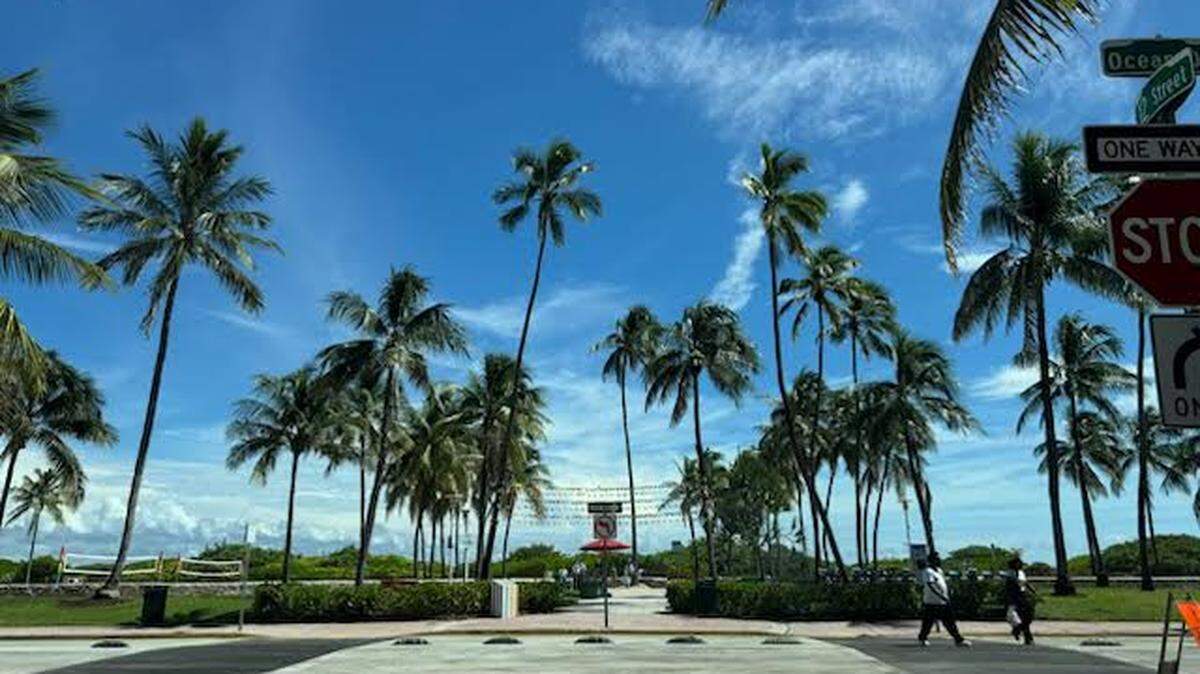
The rainbow crosswalk designed in Art Deco style that long graced the intersection on Miami Beach at Ocean Drive is now a stretch of ugly black tarmac, courtesy of the state of Florida under Gov. Ron DeSantis.
Gone is the intricate design of multicolored terrazzo pavers that was installed in 2018 and featured in guides for tourists who come to see the world-famous Art Deco buildings.
In its place: flat black pavement.
The palm trees are still there. So is the beach. But the visual reminder that Miami Beach is a welcoming place to all has been removed.
Black-masked state workers sent by Tallahassee did the deed, gouging out the colorful pavers with heavy machinery on Sunday. As the Miami Herald reported, one onlooker shouted: “Put a mask on so nobody sees who you are! You’re ashamed!”
The workers, of course, are not the actual problem. No, this is about our leaders turning Florida into a place of intolerance. Removing rainbow crosswalks, widely seen as symbols of inclusion and belonging, is just one more example of state government overreach. The removal of the Miami Beach crosswalk came after a controversial Department of Transportation order that local governments, Fort Lauderdale, Key West and Miami Beach among them, remove pavement art “associated with social, political or ideological messages.”
Municipalities that refuse face the potential for “immediate withholding of state funds” — in other words, if you want bridge maintenance and or state road construction, don’t buck the state. Miami Beach appealed but lost.
Miami Beach Commissioner Alex Fernandez told the Miami Herald Editorial Board that the city was given less than 15 minutes notice about the actual removal before authorities began shutting down traffic on Ocean Drive to make way for workers to start last weekend.
“This crosswalk represented so much to so many — people who over the decades experienced expulsion from the military, workplace descrimination, the stigma of HIV and AIDS, housing inequality and the fight for marriage equality,” Fernandez wrote in a text message.
“These were hard-won battles that took us from being marginalized to being visible,” he wrote.
This is about the state trying to erase marginalized groups. Florida has tried to pretend that this misuse of taxpayer dollars and authority is about making sure that pavement markings for traffic control are standardized, with the implication that rainbow markings make the intersections unsafe.
But that’s a fig leaf of an excuse. This is about culture wars, not safety.
This is not happening in a vaccuum. Remember, this is the same administration that went to battle over drag shows and imposed the “Don’t say gay” law in schools and banned DEI — diversity, equity and inclusion — programs in public colleges and universities.
Was that intersection in Miami Beach somehow more prone to accidents that others without the markings? Fernandez provided crash data for four intersections in Miami Beach on Ocean Drive at 10th, 11th, 12th and 13th streets between January and May, information he said came from the city’s police. The intersection marked by the rainbow intersection had the lowest number of crashes: 15. The highest was 10th and Ocean, with 35.
Rainbow intersections were not the only marking erased by a state that seems determined to cast diversity as a threat to be contained. A “Back the Blue” mural was painted over by the state in Tampa as part of this crackdown, an effort to be consistent.
No doubt Miami Beach will find other ways to remain a visibly inclusive city. But local governments should be allowed to decide what kind of intersection colors they want and whether they should display rainbows.
When the state preempts local governments, as the DeSantis administration has certainly done in the past as well as in this case, it strips the power from local officials and hands it to lawmakers in Tallahassee.
That’s not right. In removing Miami Beach’s crosswalk, along with others, the state has once again shown a complete disregard for home rule. Voters should remember that next year.
BEHIND THE STORY
MOREWhat's an editorial?
Editorials are opinion pieces that reflect the views of the Miami Herald Editorial Board, a group of opinion journalists that operates separately from the Miami Herald newsroom. Miami Herald Editorial Board members are: opinion editor Amy Driscoll and editorial writers Isadora Rangel and Mary Anna Mancuso. Read more by clicking the arrow in the upper right.
What's the difference between an op-ed and a column?
How does the Miami Herald Editorial Board decide what to write about?
The Editorial Board, made up of experienced opinion journalists, primarily addresses local and state issues that affect South Florida residents. Each board member has an area of focus, such as education, COVID or local government policy. Board members meet daily and bring up an array of topics for discussion. Once a topic is fully discussed, board members will further report the issue, interviewing stakeholders and others involved and affected, so that the board can present the most informed opinion possible. We strive to provide our community with thought leadership that advocates for policies and priorities that strengthen our communities. Our editorials promote social justice, fairness in economic, educational and social opportunities and an end to systemic racism and inequality. The Editorial Board is separate from the reporters and editors of the Miami Herald newsroom.
How can I contribute to the Miami Herald Opinion section?
The Editorial Board accepts op-ed submissions of 650-700 words from community members who want to argue a specific viewpoint or idea that is relevant to our area. You can email an op-ed submission to oped@miamiherald.com. We also accept 150-word letters to the editor from readers who want to offer their points of view on current issues. For more information on how to submit a letter, go here.