
Trump Library next to Miami’s Freedom Tower? The irony is hard to miss | Opinion
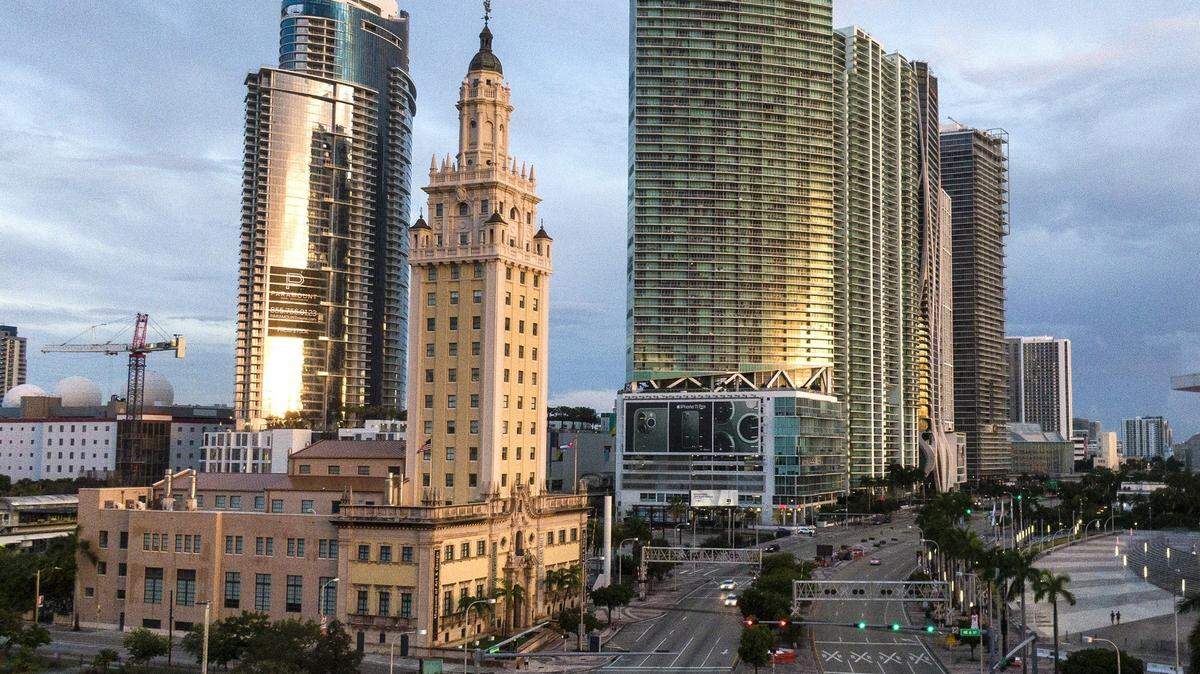
News that President Donald Trump’s presidential library may rise next to Miami’s Freedom Tower is bound to spark bitter debate — and it should. That’s the American way.
After all, this is Trump, a president who has declared war on immigrants and the First Amendment, not to mention the American legacy media as a whole.
We get it. To place Trump’s library next to the Miami Dade College-owned Freedom Tower — a building that has been both a shrine to immigration in Miami and the home of the Miami Daily News — is abhorrent to some, though it is being celebrated by his supporters as the perfect spot. And, yes, there are many proud supporters in Miami’s Cuban exile community.
This library selection reeks of a rush job. There had been talk of Trump’s library opening at Florida International University or Florida Atlantic University in Palm Beach, near his Mar-a-Lago home and resort. That seems to have evaporated, suddenly.
On Tuesday, Miami Dade College’s Board of Trustees quickly approved the transfer of a downtown parking lot to the state, setting the stage for potential library construction, during a lightning-fast meeting with little public notice and no debate, even though the property had once been considered for commercial development, the Miami Herald reported.
Then, Florida Attorney General James Uthmeier just as quickly announced the state would dedicate the property, a prime 2.6-acre tract, to Trump’s presidential library. The Florida Cabinet, led by Gov. Ron DeSantis, scheduled a vote on the matter for Sept. 30. Done deal, in other words.
But transparency should never be an afterthought when expensive public land is being dedicated to any project, presidential or otherwise. No matter where you fall politically, the state cabinet owes Miami residents a full and open discussion before approving this deal.
Here’s the bottom line: Whether you love Trump or loathe him, presidential libraries — like presidencies — belong to history. They are repositories of records, archives of a moment in time in the country’s history, however difficult the times.
Trump’s presidential library is not just another historical archive, though. And placing it beside the Freedom Tower is twisted symbolism. The just-renovated Freedom Tower, now an immigration museum, is sacred ground — the Ellis Island of the Cuban diaspora. Its halls once welcomed hundreds of thousands of people fleeing Fidel Castro’s dictatorship.
And yet Trump has promised to carry out the largest deportation operation in U.S. history, which has led to the detention and deportation of many Cubans, among others. Even immigrants who were here legally under the government designation of Temporary Protected Status have seen their status ripped away under this administration.
It’s ironic also that the Freedom Tower was originally home to the Miami Daily News, a beacon of journalism in Miami’s early years. Trump has been openly hostile to the First Amendment, routinely branding the press as “enemies of the people” and trying to silence those who criticize him, including late-night host Jimmy Kimmel.
Florida Republicans are excited about the prospect of Trump’s presidential library in Miami — because of its location next to the Freedom Tower. Following the college’s vote, Robert Alonso, vice chairman of the board, told CBS News, “How many communities can say that they get to have a presidential library? I think it means a lot to this community that we will be able to host a presidential library here in downtown Miami.”
If the library is built, Miami may benefit in terms of tourism — in a head-spinning way. The Freedom Tower highlights the desperate journeys of immigrants fleeing communism and dictators. Next door, a Trump Presidential Library would likely include his legacy of sweeping deportation proposals and anti-immigration crackdowns.
Presidential libraries do draw visitors from across the country and the globe. Ronald Reagan’s in California, Bill Clinton’s in Arkansas, George W. Bush’s in Texas, and Barack Obama’s under-construction center in Chicago all became civic landmarks.
The Trump Presidential Library Foundation already lists more than $53 million in committed donations — including settlements from Trump’s high-profile defamation lawsuits against the media.
Where does this leave us? Divided, unfortunately. A city that has been built, in large part, by immigrants may be the home of a presidential library for a president whose legacy will include mass deportations. And it’ll be built next to a building that was once home to the free press. If only those walls could talk.
BEHIND THE STORY
MOREWhat's an editorial?
Editorials are opinion pieces that reflect the views of the Miami Herald Editorial Board, a group of opinion journalists that operates separately from the Miami Herald newsroom. Miami Herald Editorial Board members are: opinion editor Amy Driscoll and editorial writers Isadora Rangel and Mary Anna Mancuso. Read more by clicking the arrow in the upper right.
What's the difference between an op-ed and a column?
How does the Miami Herald Editorial Board decide what to write about?
The Editorial Board, made up of experienced opinion journalists, primarily addresses local and state issues that affect South Florida residents. Each board member has an area of focus, such as education, COVID or local government policy. Board members meet daily and bring up an array of topics for discussion. Once a topic is fully discussed, board members will further report the issue, interviewing stakeholders and others involved and affected, so that the board can present the most informed opinion possible. We strive to provide our community with thought leadership that advocates for policies and priorities that strengthen our communities. Our editorials promote social justice, fairness in economic, educational and social opportunities and an end to systemic racism and inequality. The Editorial Board is separate from the reporters and editors of the Miami Herald newsroom.
How can I contribute to the Miami Herald Opinion section?
The Editorial Board accepts op-ed submissions of 650-700 words from community members who want to argue a specific viewpoint or idea that is relevant to our area. You can email an op-ed submission to oped@miamiherald.com. We also accept 150-word letters to the editor from readers who want to offer their points of view on current issues. For more information on how to submit a letter, go here.