
After budget drama, Miami-Dade must ask: Who’s responsible for funding charities? | Opinion
There’s a cliché you often hear that government cannot be all things to all people. Miami-Dade County, which was faced with closing a historic budget shortfall, is learning how true that is.
The county passed two consecutive property tax cuts in recent years, handed out union-negotiated raises to employees, agreed to $46 million in both direct funding and services to host the 2026 World Cup games and boosted funding for charities during the pandemic.
Many groups affected by the budget cuts the mayor proposed months ago made a plea that they didn’t deserve to be on the chopping block.
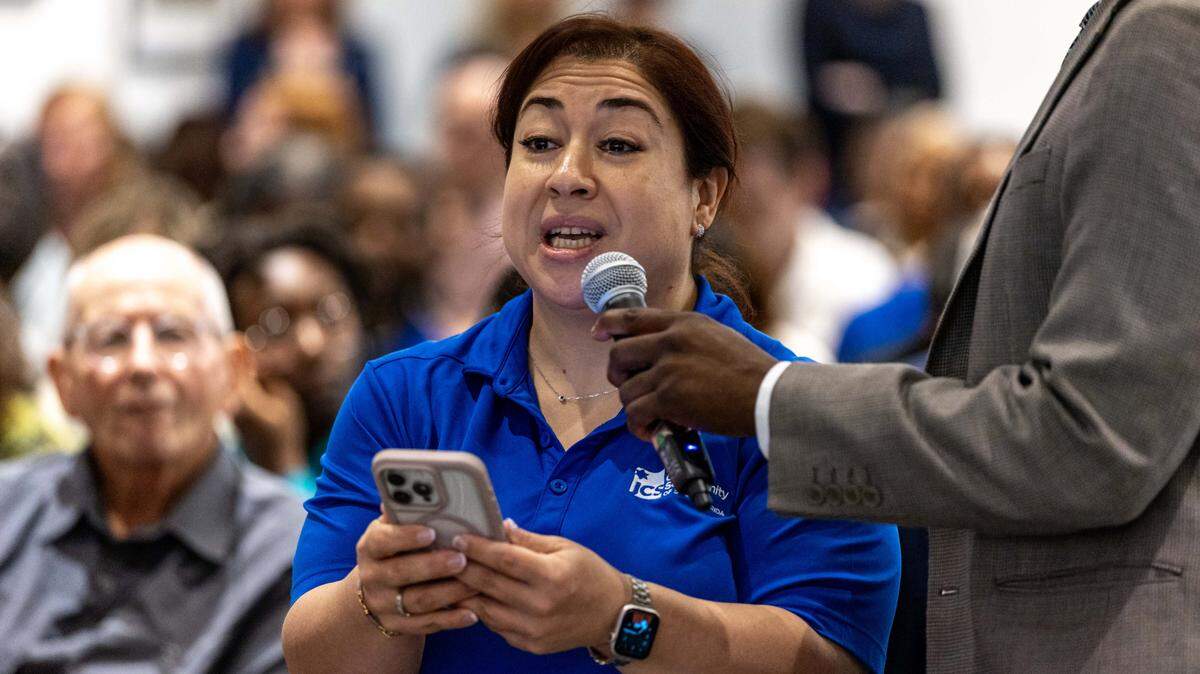
The most compelling arguments came from charities, known as community-based organizations (CBOs), that say that without funding they would not be able to continue to provide crucial services, from elderly home care to feeding the poor and helping abused children. The county listened. Mayor Daniella Levine Cava, who had initially recommended cutting almost all charity funding, issued a memo on Friday restoring those dollars.
It’s hard to argue that Miami-Dade’s most vulnerable people should be left without a safety net. But, as stewards of taxpayer dollars, Miami-Dade officials must ask: To what extent is government responsible for funding charitable work and which organizations should get funded, and which ones shouldn’t?
The answer to that question is not easy, but, at the very least, Miami-Dade must have a uniform, competitive process that charities must go through every time they receive tax dollars that is above political patronage.
“We should really be looking at the return on investment,” Commissioner Raquel Regalado told the Herald Editorial Board.
This matter is especially relevant after Miami-Dade this month rescinded a $5 million payout to the A3 Foundation after reporting by the Miami Herald raised questions about how the politically-connected charity was able to secure millions from both the county and the state with seemingly little scrutiny. The foundation had been selected as part of a Parks Department contract with a vendor, not the county’s regular CBO funding process.
A county spokeswoman told the Editorial Board via email that, “Most of the groups receiving funding this year are those that were previously awarded funding as a result of a prior competitive process,” and that this is “one-time funding that will not be available in following years.”
Regalado said some nonprofits that have had a longstanding contract with the county have gone through a proper vetting process, but others that came onboard later have not. As the Herald has reported, the same organizations mostly get funded each year and efforts to create a competitive bidding process for nonprofit funding have fizzled in the past.
Earlier this month, the County Commission approved a motion by Commissioner Natalie Milian Orbis asking the mayor’s administration to provide information on the process used to select organizations that receive grants in the 2025-26 budget and the types of services they provide.
There are, no doubt, many organizations providing important services to those in need better than government ever could — and that can prove their worth. A group of nonprofit leaders representing more than 60 organizations met with the Editorial Board and said public cuts would be devastating, especially because those organizations leverage public dollars to fundraise from private sources.
Stephen Shelley, CEO of Farm Share, an organization that combats food insecurity, told the Editorial Board his nonprofit can distribute food at a lower cost than the county ever could.
“By the time we match [county funding] and leverage it and everything else, we distribute a fair market value of $83.5 million worth of food in Miami-Dade County alone,” he said.
There is a proposal to create a trust fund to support these charities, but it raises many questions. The ordinance, sponsored by Commissioner Kionne McGhee — who credits Miami-Dade’s nonprofit network for supporting him as a child who was branded “emotionally handicapped” — would use revenue from a 2% fee levied on some county vendor contracts for the purchase of goods and services. This is well-intentioned, but we worry the proposal could lead to vendors increasing their prices, costing taxpayers more money.
The proposal is still in its early stages and, if approved, the trust fund wouldn’t materialize until 2028, leaving those nonprofits without a recurring funding stream in the meantime.
Miami-Dade’s financial woes have raised an important question of what happens to the county’s most vulnerable residents when budget cuts are proposed. It also raises the question of accountability for how we spend tax dollars. Those two concerns must co-exist in officials’ minds.
BEHIND THE STORY
MOREWhat's an editorial?
Editorials are opinion pieces that reflect the views of the Miami Herald Editorial Board, a group of opinion journalists that operates separately from the Miami Herald newsroom. Miami Herald Editorial Board members are: opinion editor Amy Driscoll and editorial writers Isadora Rangel and Mary Anna Mancuso. Read more by clicking the arrow in the upper right.
What's the difference between an op-ed and a column?
How does the Miami Herald Editorial Board decide what to write about?
The Editorial Board, made up of experienced opinion journalists, primarily addresses local and state issues that affect South Florida residents. Each board member has an area of focus, such as education, COVID or local government policy. Board members meet daily and bring up an array of topics for discussion. Once a topic is fully discussed, board members will further report the issue, interviewing stakeholders and others involved and affected, so that the board can present the most informed opinion possible. We strive to provide our community with thought leadership that advocates for policies and priorities that strengthen our communities. Our editorials promote social justice, fairness in economic, educational and social opportunities and an end to systemic racism and inequality. The Editorial Board is separate from the reporters and editors of the Miami Herald newsroom.
How can I contribute to the Miami Herald Opinion section?
The Editorial Board accepts op-ed submissions of 650-700 words from community members who want to argue a specific viewpoint or idea that is relevant to our area. You can email an op-ed submission to oped@miamiherald.com. We also accept 150-word letters to the editor from readers who want to offer their points of view on current issues. For more information on how to submit a letter, go here.