
Trump makes — some — sense on vaccines this time. Florida should listen | Opinion
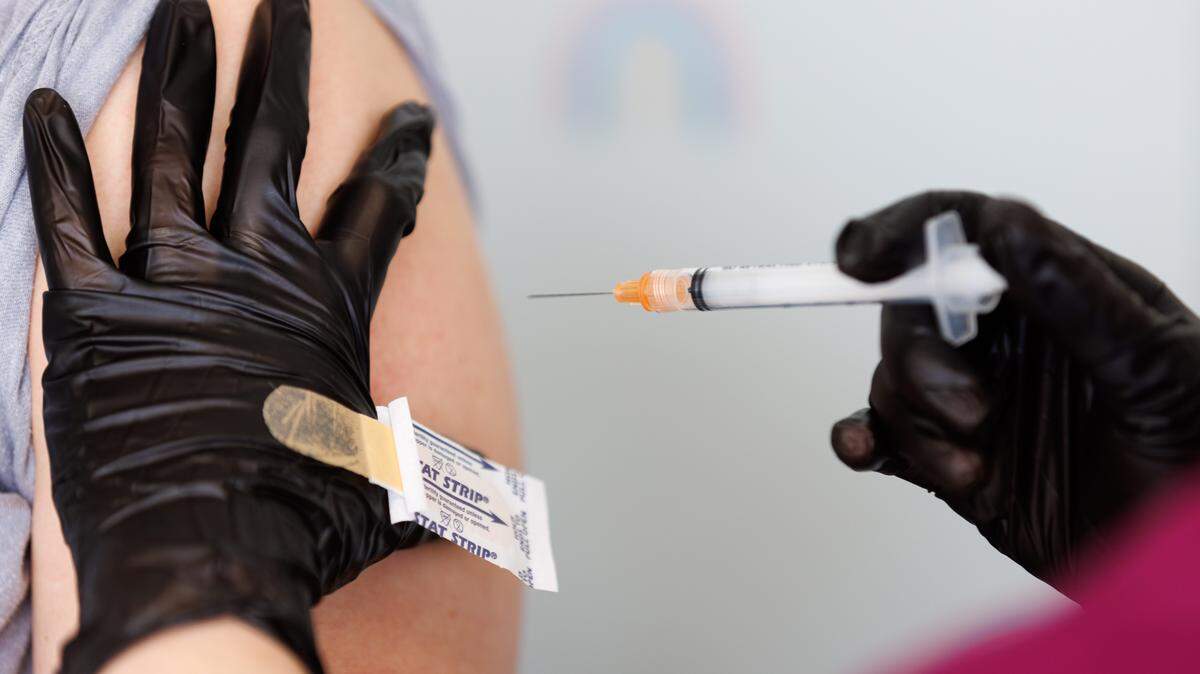
It’s hard to pin down exactly where President Trump falls on the subject of vaccinations. He launched Operation Warp Speed to develop the coronavirus vaccines early in the pandemic and confirmed he received the shots, but he’s also nominated — and continues to stand by — an avowed anti-vaxxer to lead the nation’s public-health efforts.
Occasionally, Trump raises a valid point, as he did last week when asked about Florida’s announcement to end vaccine requirements, including at schools. The new guidelines are endorsed by Gov. Ron DeSantis, who has fought to stay in the president’s good graces.
“I think we have to be very careful,” Trump said Friday about Florida’s decision, the Herald reported.
This should give Florida lawmakers, who must sign off on at least part of DeSantis’ plan, some political cover to tell the governor to go pound sand.
Let’s be realistic: Trump made Robert F. Kennedy Jr. the nation’s health secretary in a move that may set us back decades. But Trump’s words on vaccines may carry more weight than anything a consensus of public-health experts may say. And that may be critical: It may not be enough to plead with politicians to protect school children from easily spreadable viruses like measles; or that, if they rubber stamp what the DeSantis administration’s plan, they will be potentially responsible for future deadly outbreaks like that one that killed two Texas school-aged children this year.
When all else fails, in the Republican-led Legislature, we hope that Trump’s meandering words do the trick:
“Look, you have some vaccines that are so amazing. The polio vaccine, I happen to think is amazing,” Trump told reporters in the Oval Office Friday. “A lot of people think that COVID is amazing. You know, there are many people that believe strongly in that, but you have some vaccines that are so incredible. And I think you have to be very careful when you say that some people don’t have to be vaccinated.”
We cannot put too much stock into what the president says off the cuff. Trump’s beliefs tend to shift based on what he’s heard on TV, what he perceives to be the mood in his base or what the latest person he met may have told him. But, for DeSantis, this may signal that ending vaccination requirements didn’t get the reception he might have expected from the MAGA world.
Just as Florida Surgeon General Joseph Ladapo made the announcement, Kennedy was grilled by senators from both parties during a hearing last week. Even some Republicans are growing dissatisfied with Kennedy’s dangerous anti-vaccine stances, though the White House continues to stand by him.
And a conservative polling firm, Fabrizio/Ward, has privately warned Republicans that three-quarters of Trump’s voters believe vaccines save lives, the Washington Post reported. In other words, some conservatives believe going too far into anti-vax hysteria can cost them votes next year. These finding are in line with polling by KFF and the Washington Post conducted in July and August that found that 82% of Florida parents said public schools should require vaccines for measles and polio, with some health and religious exemptions.
Vaccination requirements are a longstanding American tradition that goes back centuries. Massachusetts enacted the first school requirement in the 1850s to fight the now-eradicated smallpox.
The simplistic “parental rights” argument against these rules ignores that immunization isn’t just a personal choice. As the U.S. Supreme Court wisely wrote in 1905, in a landmark ruling that upheld another Massachusetts vaccine requirement: “There are manifold restraints to which every person is necessarily subject for the common good.”
Communities that have high immunization rates are less likely to have an outbreak of a virus. Vaccines “guard neighbors, classmates, immunocompromised relatives, infants not yet eligible for shots and the elderly whose defenses have faded,” Dr. Aileen Marty, a South Florida expert in infectious disease, wrote in a Miami Herald opinion piece on Friday.
In that 1905 ruling, the Supreme Court rejected the idea of an exemption based on a personal choice because that “would practically strip the legislative department of its function to... care for the public health and the public safety when endangered by epidemics of disease.”
We hope lawmakers keep in mind their duty to preserve public safety. If that’s not enough, we hope Trump’s latest words on the issue steer the Florida Legislature in the right direction.
BEHIND THE STORY
MOREWhat's an editorial?
Editorials are opinion pieces that reflect the views of the Miami Herald Editorial Board, a group of opinion journalists that operates separately from the Miami Herald newsroom. Miami Herald Editorial Board members are: opinion editor Amy Driscoll and editorial writers Isadora Rangel and Mary Anna Mancuso. Read more by clicking the arrow in the upper right.
What's the difference between an op-ed and a column?
How does the Miami Herald Editorial Board decide what to write about?
The Editorial Board, made up of experienced opinion journalists, primarily addresses local and state issues that affect South Florida residents. Each board member has an area of focus, such as education, COVID or local government policy. Board members meet daily and bring up an array of topics for discussion. Once a topic is fully discussed, board members will further report the issue, interviewing stakeholders and others involved and affected, so that the board can present the most informed opinion possible. We strive to provide our community with thought leadership that advocates for policies and priorities that strengthen our communities. Our editorials promote social justice, fairness in economic, educational and social opportunities and an end to systemic racism and inequality. The Editorial Board is separate from the reporters and editors of the Miami Herald newsroom.
How can I contribute to the Miami Herald Opinion section?
The Editorial Board accepts op-ed submissions of 650-700 words from community members who want to argue a specific viewpoint or idea that is relevant to our area. You can email an op-ed submission to oped@miamiherald.com. We also accept 150-word letters to the editor from readers who want to offer their points of view on current issues. For more information on how to submit a letter, go here.