
DeSantis blames census for Florida issues, but we remember what he did (and didn’t) do | Opinion
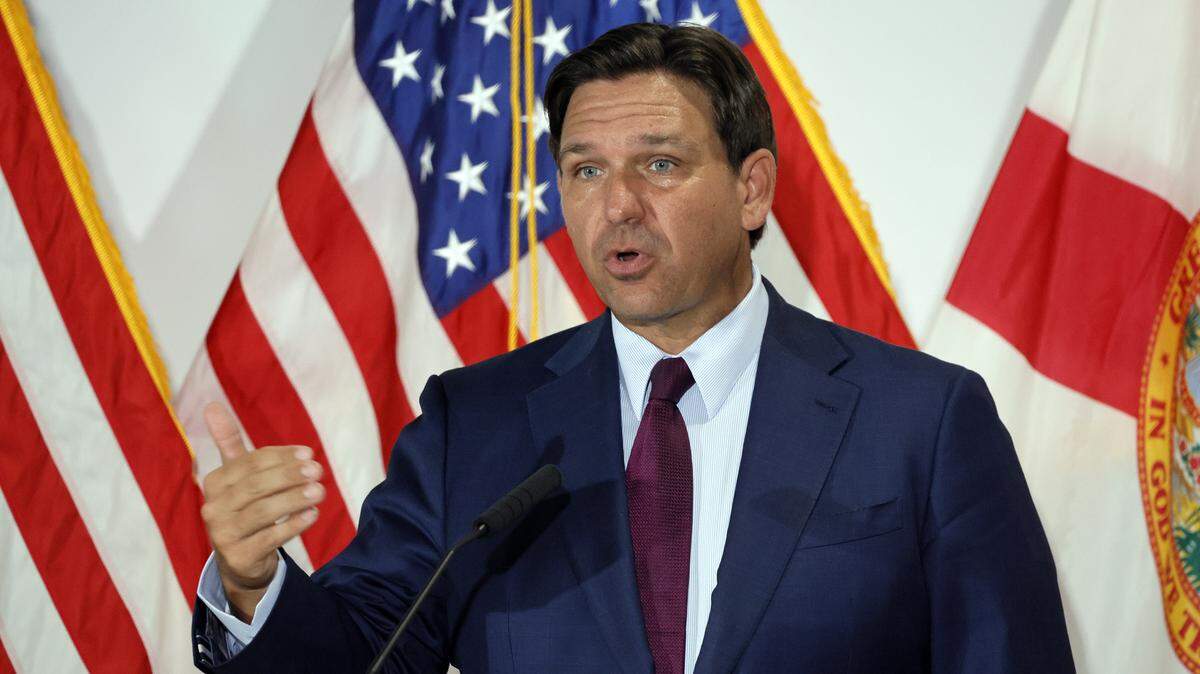
Florida Gov. Ron DeSantis says Florida was undercounted in the 2020 census, and it’s the Biden administration’s fault.
The first part is true. The second? DeSantis should look in the mirror. He may catch a glimpse of President Trump lurking in that reflection, too. That’s because the blame for any undercount — and we’ve known since 2022 that Florida was undercounted by 3.48%, according to a 2022 U.S. Census Bureau report — can be traced right back to DeSantis and the president.
Back in 2019, Florida sat on its hands for too long when the census count was happening, jumped into the game late and underfunded — and then COVID hit. DeSantis is right that there was an undercount but he’s failing to mention how we got here. And using that undercount to justify a mid-term redistricting attempt that would no doubt benefit Republicans? That’s rich.
You have to go back to June 2019. That’s when DeSantis, who has been governor since 2018, insisted that Florida had no role in helping with the U.S. Census, the once-a-decade population count that serves as the basis for deciding how many seats in Congress each state gets and federal funding based on population.
It’s a big deal. So when DeSantis brushed off a question by a reporter in Sarasota about a request from Democratic lawmakers “to form a census committee to ensure that Floridians aren’t miscounted,” his response made headlines. “The federal government does that,” he said. “We don’t have a role in it.”
By January of 2020, he was saying something quite different: “Florida will do its part to support the federal government’s efforts.” He named then-Lt. Gov. Jeanette Nuñez — now president of Florida International University — to lead the state committee on the topic. But that was a half-hearted effort: Florida still wasn’t planning to spend any state dollars to make sure everyone was counted.
Even the creation of the committee was last minute. Responses were due that fall; most counties already had census task forces, including Miami-Dade. (Then-Miami-Dade Commissioner Esteban Bovo Jr., a Republican, chaired the county’s Census Task Force.)
But the state? As Liza McClenaghan, the state chair of Common Cause Florida, a voter advocacy group, said at the time: “The Legislature should have done some funding for this in 2017, 2018, 2019. But there’s no time now.”
All of this was set against a backdrop of what Trump was up to: trying to get a citizenship question on the census form, something that had never been done before and would likely suppress responses.
As former U.S. Rep. Ileana Ros-Lehtinen, a Republican, noted in a September 2019 opinion piece for the Miami Herald, the citizenship question would have been bad for our community: “Thankfully, the U.S. Justice Department reversed the administration’s decision to add a question regarding one’s citizenship to the Census. The question would have discouraged an accurate count in communities like ours in South Florida.”
There was plenty of warning that the count was likely to be wrong. As the Editorial Board wrote as far back as Dec. 29, 2019: “...leaders in Florida, unlike those in most other states, have yet to lift a finger or allocate funding for education and awareness programs to ensure that as many residents as possible are counted.”
It’s clear what was going on. There was a partisan line between states that tried to promote the census and those that didn’t, with red states less inclined than blue ones. As the New York Times reported, California spent $187 million, for example, while the Texas Legislature didn’t dedicate any state funding.
So let’s add it up: Florida dragged its feet on helping with the census. There were ample warnings that the state could be undercounted. The president at the time — Trump, not Biden — tried to politicize the census, ended the 2020 national head count early and unsuccessfully attempted to exclude illegal immigrants from being counted, no doubt reducing participation.
So Florida wound up with one new congressional seat instead of two and missed out on untold federal funding. That was a travesty. Now, with DeSantis’ cynical push to join Texas and other states in a push to redraw congressional district lines to benefit his party — lines Republicans drew up in the first place — the unfairness may get even worse.
The governor is betting we’ve forgotten how we got here. But we remember.
BEHIND THE STORY
MOREWhat's an editorial?
Editorials are opinion pieces that reflect the views of the Miami Herald Editorial Board, a group of opinion journalists that operates separately from the Miami Herald newsroom. Miami Herald Editorial Board members are: opinion editor Amy Driscoll and editorial writers Isadora Rangel and Mary Anna Mancuso. Read more by clicking the arrow in the upper right.
What's the difference between an op-ed and a column?
How does the Miami Herald Editorial Board decide what to write about?
The Editorial Board, made up of experienced opinion journalists, primarily addresses local and state issues that affect South Florida residents. Each board member has an area of focus, such as education, COVID or local government policy. Board members meet daily and bring up an array of topics for discussion. Once a topic is fully discussed, board members will further report the issue, interviewing stakeholders and others involved and affected, so that the board can present the most informed opinion possible. We strive to provide our community with thought leadership that advocates for policies and priorities that strengthen our communities. Our editorials promote social justice, fairness in economic, educational and social opportunities and an end to systemic racism and inequality. The Editorial Board is separate from the reporters and editors of the Miami Herald newsroom.
How can I contribute to the Miami Herald Opinion section?
The Editorial Board accepts op-ed submissions of 650-700 words from community members who want to argue a specific viewpoint or idea that is relevant to our area. You can email an op-ed submission to oped@miamiherald.com. We also accept 150-word letters to the editor from readers who want to offer their points of view on current issues. For more information on how to submit a letter, go here.