
A state rep pressured a tiny Miami-Dade town to oust its attorney. Suspicious much? | Opinion
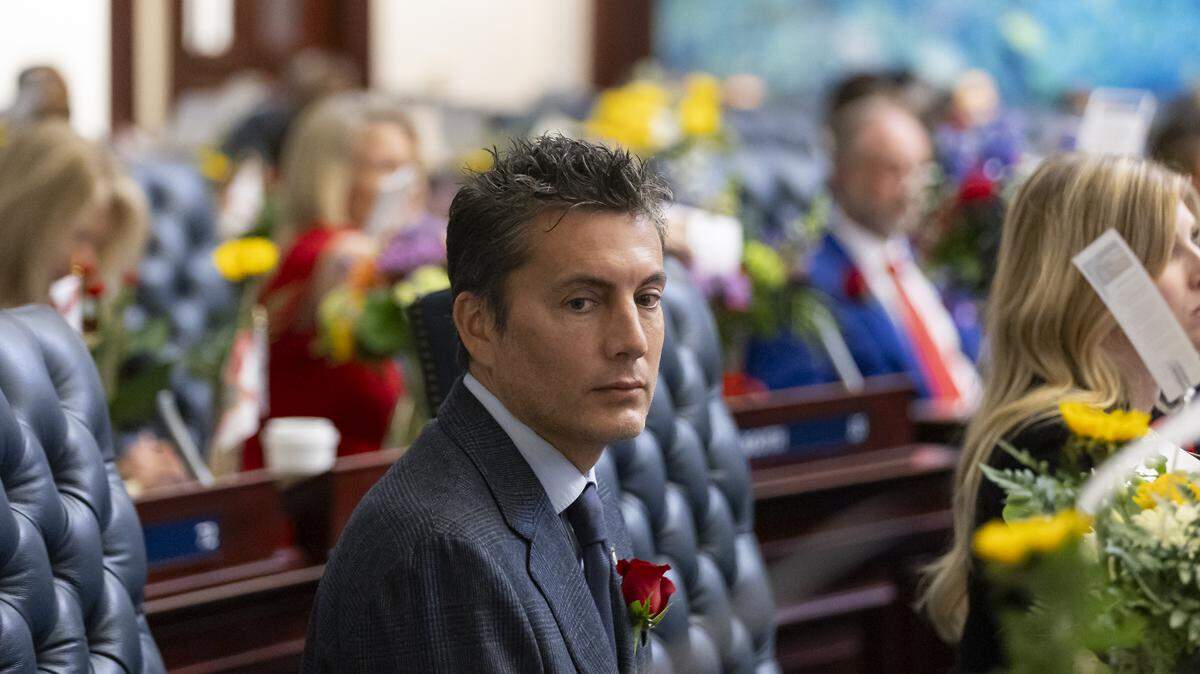
As many officials at the Aug. 13 meeting of the Bay Harbor Islands Town Council contended, the decision to get rid of its legal counsel is up to the town, only.
But it sure didn’t look that way when the council voted to oust the town attorney moments after state Rep. Fabian Basabe made a presentation requesting that happen. A discussion on the topic wasn’t even on the council’s agenda for the meeting, though Basabe had asked for that in a letter sent the week before.
Was this an example of political interference by a state elected official in a local matter, or was Basabe just giving the town the incentive it needed to remove Joe Geller, whose performance as the town’s attorney some council members said was substandard? The town, which contracted with Geller’s firm, Greenspoon Marder — not him directly — is still keeping the firm’s services.
Basabe, a Miami Beach Republican, has influence over state funding and policies that impact many of the municipalities along his coastal Miami-Dade County district (Bay Harbor Islands, population 6,000, is located on the Intracoastal, off the Broad Causeway). And Geller, a Miami-Dade County School Board member, is a former Democratic state representative who has endorsed every single one of Basabe’s opponents.
This small-town drama may appear inconsequential but it illustrates a trend of state and federal elected officials butting into granular matters that local officials traditionally handled. It’s President Trump taking over the D.C. police; Florida forcing cities to paint over rainbow intersections and a state rep telling a town council to get rid of a contractor.
Basabe’s involvement and the hasty decision by the council are puzzling. Not long before ousting Geller, Bay Harbor Islands voted to give his firm more money. The town is allowed to end its relationship with a contractor, but why did it have to be prodded by a state lawmaker?
The town council had a list of work Geller has purportedly not addressed, from ordinances to lease renewals. Basabe said Geller has been late to meetings and failed to juggle his work as an attorney with his school board position. Some council members echoed that sentiment during the meeting, with Vice Mayor Stephanie Bruder saying she’s heard staff complaints about him and council member Teri D’Amico saying she thought Geller would have resigned after his election to the School Board last year.
“I see attorneys who have overwhelmed themselves by compounding multiple city jobs, each one stacked with benefits and pensions, while under-serving the very communities that afford them their lifestyle,” Basabe wrote in a statement to the Herald Editorial Board in response to questions about Geller’s removal. “Joe Geller failed his responsibilities professionally. He is strictly partisan, he protects the machine, and he pushes operatives into government so that establishment interests keep control.”
Geller was on a pre-arranged family vacation in Italy and did not attend the Aug. 13 meeting. He told the Editorial Board, “I thought I’d at least be given the opportunity to be present.” He said he did not have proper internet access to attend the meeting remotely and that the list of his pending work responsibilities wasn’t entirely correct.
“There was some misinformation that was produced in my absence that I’m working to correct, but that doesn’t mean the council can’t have who they want to represent them,” Geller said.
Ahmand R. Johnson, a lawyer with Greenspoon Marder present at the meeting, told the council that Geller’s ousting looked like a “political ambush.”
“I wonder how many times [Basabe] has gotten this granular with other municipalities in his district,” Johnson said.
Mayor Isaac Salver agreed that politics played a role, but said that Geller’s political positions were actually the problem. “My preference would be that my city attorney be agnostic,” he said. It’s worth noting that when Geller became the town’s attorney in 2021, he was still a state representative, a highly political position.
In the grand scheme of the state interfering in local matters, Basabe’s involvement in the business of Bay Harbor Islands is relatively insignificant. The bigger question is, the next time a state lawmaker tells a city council or county commission what to do, what happens if local officials don’t capitulate? Few may want to find out what happens.
BEHIND THE STORY
MOREWhat's an editorial?
Editorials are opinion pieces that reflect the views of the Miami Herald Editorial Board, a group of opinion journalists that operates separately from the Miami Herald newsroom. Miami Herald Editorial Board members are: opinion editor Amy Driscoll and editorial writers Isadora Rangel and Mary Anna Mancuso. Read more by clicking the arrow in the upper right.
What's the difference between an op-ed and a column?
How does the Miami Herald Editorial Board decide what to write about?
The Editorial Board, made up of experienced opinion journalists, primarily addresses local and state issues that affect South Florida residents. Each board member has an area of focus, such as education, COVID or local government policy. Board members meet daily and bring up an array of topics for discussion. Once a topic is fully discussed, board members will further report the issue, interviewing stakeholders and others involved and affected, so that the board can present the most informed opinion possible. We strive to provide our community with thought leadership that advocates for policies and priorities that strengthen our communities. Our editorials promote social justice, fairness in economic, educational and social opportunities and an end to systemic racism and inequality. The Editorial Board is separate from the reporters and editors of the Miami Herald newsroom.
How can I contribute to the Miami Herald Opinion section?
The Editorial Board accepts op-ed submissions of 650-700 words from community members who want to argue a specific viewpoint or idea that is relevant to our area. You can email an op-ed submission to oped@miamiherald.com. We also accept 150-word letters to the editor from readers who want to offer their points of view on current issues. For more information on how to submit a letter, go here.