
Shutting down Alligator Alcatraz: Ending a blight on the Everglades and our humanity | Opinion
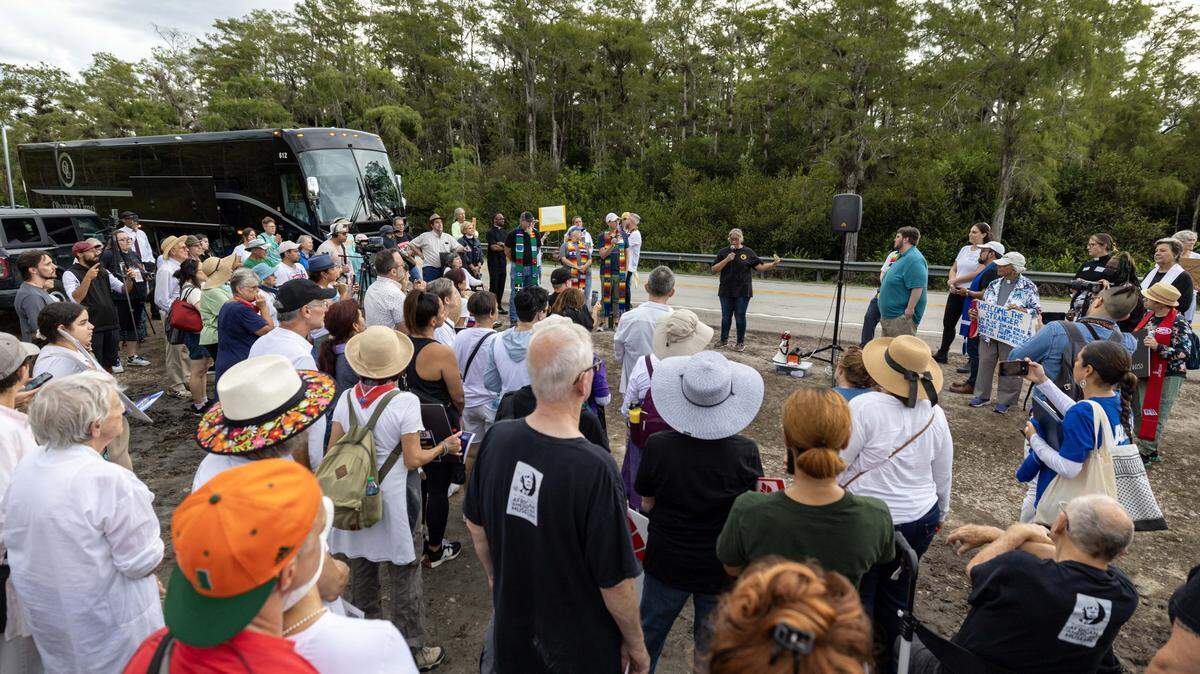
It took a federal judge to say what we all pretty much knew: Alligator Alcatraz was built way too fast, and its presence is jeopardizing the Everglades. And so the South Florida detention center that was built in eight days — something Gov. Ron DeSantis and President Trump bragged about — now has to shut down within 60 days.
This isn’t happening for variety of important reasons, such as the violation of due process for detainees or the slow access to legal counsel or the prospect of a tent city built on a swamp in a hurricane zone or the dehumanizing joking about human beings being guarded by alligators and snakes, a reference to the old racist “gator bait” trope.
The shutdown isn’t even happening because, despite political claims to the contrary, many of the migrants being detained have no U.S. criminal convictions or pending charges, as the Miami Herald has documented.
No, U.S. District Judge Kathleen Williams’ ruling late Thursday was based on environmental concerns raised in a lawsuit filed by environmental groups and the Miccosukee Tribe. It’s a temporary injunction that will hold as the case continues to be litigated.
Fine. We’ll take it. There are many reasons Alligator Alcatraz — a misbegotten place if there ever was one, built with taxpayer money and virtually without oversight — should be wiped off the face of the Everglades. The serious and undeniable impact on the environment is just one of them, but it’s plenty.
In the judge’s order, she said the state must stop accepting detainees at Alligator Alcatraz and start removing generators, gas, sewage and other waste items within 60 days. The second part is important: Removing all of that would certainly make the old airstrip inoperable as a detention center.
In the 82-page ruling, the judge particularly ordered that there be no more expansion of the detention facility including any more industrial lighting or new buildings. Those are important environmental considerations. The light pollution alone — you could see the camp lighting up the sky from far, far away — was no doubt harming the wildlife in the surrounding Everglades.
Williams — the same judge who found Florida Attorney General James Uthmeier in civil contempt of court in June in an immigration case — noted that the detention center is in the Big Cypress National Preserve and the Big Cypress Area, land the Florida Legislature itself “has designated as an ‘area of critical state concern’ with the intention to ‘conserve and protect the [area’s] natural resources and scenic beauty.’”
There’s more: The site is also within an environmentally sensitive ecosystem that is significant to wildlife, she wrote, including threatened wood storks, endangered Florida bonneted bats and Florida panthers.
Proper environmental reviews weren’t done, the plaintiffs argued. And, seriously, how could they be? Eight days doesn’t allow for much due diligence — let alone the kind of careful environmental review that the Everglades deserves.
But that didn’t matter to Florida’s leaders. They were in such a rush to show Trump that they were on board with his anti-immigrant agenda that they completely disregarded any environmental issues. This, from a governor who has proudly promoted his commitment to Everglades restoration. Marjorie Stoneman Douglas might have something to say about that.
The idea of putting a detention center for 3,000 people in the Everglades was always a bad one, made even worse by the callous and careless actions of our leaders in allowing this camp to be constructed. It’s a blight on our humanity — and a blight on the Everglades.
Williams, in her ruling, mentioned President Harry Truman’s dedication of Everglades National Park in 1947 and the proposal, 20 years later, for “the world’s largest jetport” — a project that was rejected, resulting in the creation of the Big Cypress preserve to protect the area. Ever since, she said, every Florida governor, senator, countless officials and many presidents have pledged their “unequivocal support” for protection of the Everglades.
In other words, history won’t look kindly on Alligator Alcatraz.
BEHIND THE STORY
MOREWhat's an editorial?
Editorials are opinion pieces that reflect the views of the Miami Herald Editorial Board, a group of opinion journalists that operates separately from the Miami Herald newsroom. Miami Herald Editorial Board members are: opinion editor Amy Driscoll and editorial writers Isadora Rangel and Mary Anna Mancuso. Read more by clicking the arrow in the upper right.
What's the difference between an op-ed and a column?
How does the Miami Herald Editorial Board decide what to write about?
The Editorial Board, made up of experienced opinion journalists, primarily addresses local and state issues that affect South Florida residents. Each board member has an area of focus, such as education, COVID or local government policy. Board members meet daily and bring up an array of topics for discussion. Once a topic is fully discussed, board members will further report the issue, interviewing stakeholders and others involved and affected, so that the board can present the most informed opinion possible. We strive to provide our community with thought leadership that advocates for policies and priorities that strengthen our communities. Our editorials promote social justice, fairness in economic, educational and social opportunities and an end to systemic racism and inequality. The Editorial Board is separate from the reporters and editors of the Miami Herald newsroom.
How can I contribute to the Miami Herald Opinion section?
The Editorial Board accepts op-ed submissions of 650-700 words from community members who want to argue a specific viewpoint or idea that is relevant to our area. You can email an op-ed submission to oped@miamiherald.com. We also accept 150-word letters to the editor from readers who want to offer their points of view on current issues. For more information on how to submit a letter, go here.