
Will Florida regulators side with FPL or the people? Your power bill is at stake | Opinion
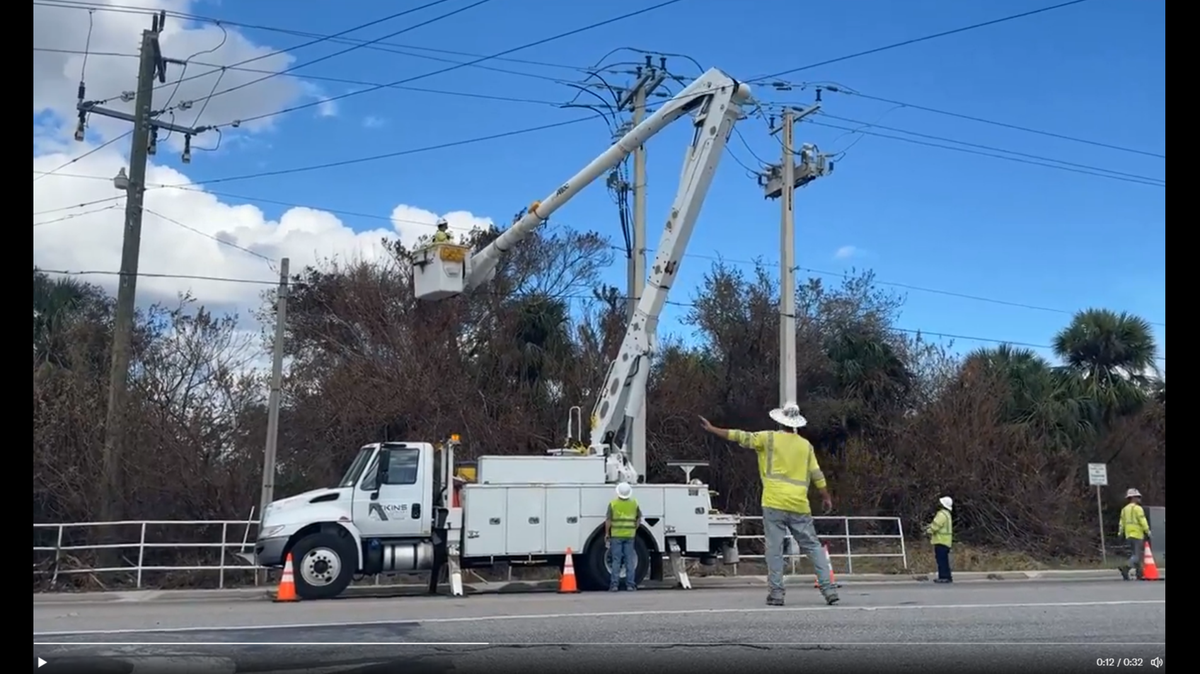
Expect your electricity bill to go up over the next four years.
By how much? That will probably depend on a recent settlement Florida Power & Light reached with Walmart and other groups representing heavy power users in the states. It is a possible resolution to FPL’s proposed $9.8 billion hike, which must be approved by state regulators.
We hope the settlement will also will benefit everyday people, the residential customers already burdened by inflation and the rising cost of housing and property insurance. But advocacy groups representing 12 million FPL residential customers across the state were not part of the settlement, and that’s worrisome. So is the fact that state regulators have typically been lenient toward FPL, drawing criticism from Republican and Democratic lawmakers and even from a Florida Supreme Court justice who likened the state’s Public Service Commission to a “black box” last year.
When it comes to utility rate increases, the odds often seem to be stacked against regular customers. However, until the settlement is submitted to the PSC, which oversees investor-owned utilities, on Wednesday, we won’t know if that’s the case this time. The least the PSC can do is analyze the settlement by keeping in mind all the Floridians struggling to keep up with rising costs, in particular seniors on a fixed income.
With FPL’s current rate base agreement set to expire at the end of this year, the utility in February submitted a four-year request for new power rates. The increase would reportedly be the largest in the country’s history.
Organizations such as senior-rights group AARP, Florida Rising and Floridians Against Increased Rates rallied against FPL. Under the proposal, the electric bill for the average customer who currently pays $134.14 monthly and uses 1,000 kilowatts per month would increase $8.23 monthly in 2026 and go up a total of $17.85 a month by 2029. (Northwest Florida customers, who currently pay more for electricity, would see smaller increases.)
And that’s a lowball estimate, AARP’s Senior Director of Advocacy Zayne Smith told the Herald Editorial Board. With rising temperatures, many “average” customers end up using closer to 1,500 kilowatts monthly, she said.
FPL also wanted to raise the minimum base bill for residential customers from $25 to $30, regardless of how much power they use.
FPL has said that, even with the increases, residential customer bills would remain below the national average. The hikes would help FPL diversify its energy sources, account for Florida’s population growth, which requires building new transmission and distribution infrastructure, and add several solar-energy facilities and new battery storage. The company also told state regulators that its “operational excellence” already saves typical customers more than $24 each month.
However, the Office of Public Counsel, a state entity that represents utility customers and that was not part of the settlement, said in June that FPL was trying to overcharge customers and that only around $105 million of the nearly $10 billion the company was asking for was justified.
Most troubling was FPL’s requested “return on equity,” which is a utility’s allowed rate of profit on shareholder investments. The national average is 9.5%, but FPL is asking for 11.9%, an increase from the 10.6% approved in 2021, according to an analysis by AARP. FPL said in a December filing to the PSC that, “A utility’s ability to earn a fair return rate and maintain a strong balance sheet are crucial in obtaining capital.”
Days before the PSC was scheduled to begin holding hearings on the rate proposal, FPL announced on Aug. 8 that the utility and numerous parties had reached an “agreement in principle.” The commission is expected to hold a hearing this fall that would include testimony on why the deal should be approved or not.
Besides Walmart, the settlement includes the Florida Retail Federation, Florida Industrial Power Users Group, the Southern Alliance for Clean Energy and others.
“A settlement would provide a win for our customers and the state of Florida,” FPL President and CEO Armando Pimentel said in a statement. “Any agreement that we reach should enable FPL to continue to make smart investments on behalf of our customers, ensuring that we can continue to provide reliable electricity to power our fast-growing state while keeping customer bills low.”
Smith with AARP doesn’t have much faith that the PSC will properly scrutinize the agreement given its pro-utility record. We don’t blame her. It’s up to the PSC to prove her — and us — wrong. If we’re going to pay more for electricity, it had better be for a good reason, not just corporate profit.
BEHIND THE STORY
MOREWhat's an editorial?
Editorials are opinion pieces that reflect the views of the Miami Herald Editorial Board, a group of opinion journalists that operates separately from the Miami Herald newsroom. Miami Herald Editorial Board members are: opinion editor Amy Driscoll and editorial writers Isadora Rangel and Mary Anna Mancuso. Read more by clicking the arrow in the upper right.
What's the difference between an op-ed and a column?
How does the Miami Herald Editorial Board decide what to write about?
The Editorial Board, made up of experienced opinion journalists, primarily addresses local and state issues that affect South Florida residents. Each board member has an area of focus, such as education, COVID or local government policy. Board members meet daily and bring up an array of topics for discussion. Once a topic is fully discussed, board members will further report the issue, interviewing stakeholders and others involved and affected, so that the board can present the most informed opinion possible. We strive to provide our community with thought leadership that advocates for policies and priorities that strengthen our communities. Our editorials promote social justice, fairness in economic, educational and social opportunities and an end to systemic racism and inequality. The Editorial Board is separate from the reporters and editors of the Miami Herald newsroom.
How can I contribute to the Miami Herald Opinion section?
The Editorial Board accepts op-ed submissions of 650-700 words from community members who want to argue a specific viewpoint or idea that is relevant to our area. You can email an op-ed submission to oped@miamiherald.com. We also accept 150-word letters to the editor from readers who want to offer their points of view on current issues. For more information on how to submit a letter, go here.