
As Trump targets cities post-D.C. takeover, he’s only looking for ‘blue’ crime | Opinion
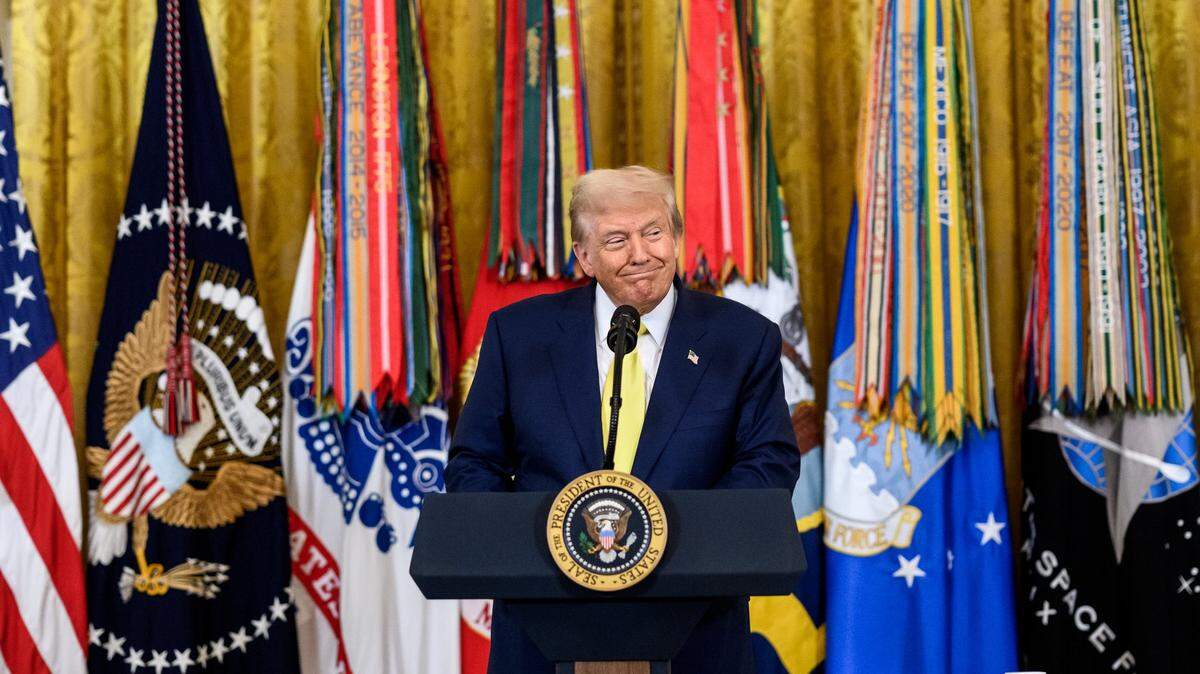
President Donald Trump’s take-over of the Washington, D.C., police and the deployment of the National Guard there are political power moves that he made clear on Monday he will not hesitate to use on other cities.
Let’s be clear — probably on other democratic-leaning cities. Because Trump doesn’t see plain old crime; he sees blue crime, only.
Part of this excessive action is Trump needing to generate a distraction, to turn the focus away from his negative approval ratings, voters’ dissatisfaction with his handling of the economy, his political base’s rebellion over the Jeffrey Epstein case, stubborn inflation and unpopular cuts to Medicaid and food stamps. What’s better than scaring Americans about rampant crime one moment, then purportedly solving it the next?
Certainly, crime has long been an issue in D.C., and the city, in response to large street brawls, has even instituted a teenage curfew. There’s no excuse for the horrendous recent beating of a former federal staffer in an attempted carjacking (two 15-year-old suspects have been arrested in connection with it). But crime rates in D.C., as in most of the U.S., have been trending down since the pandemic, including for violent crimes, which have reached their lowest point in 30 years, the Miami Herald reported.
The crime situation in the nation’s capital looks complex, not easily explainable by Trump’s hyperbole and fearmongering. While saying the city is suffering from “crime, bloodshed, bedlam and squalor and worse,” Trump hasn’t presented any evidence that federal intervention is needed. And he won’t do that the next time he sends the National Guard to another blue city.
“We’re not going to lose our cities over this. And this will go further. We’re starting very strongly with D.C.,” Trump said at a Monday press conference at the White House.
Trump didn’t offer any metrics on what will prompt him to intervene in another city’s policing, the Herald reported. But he suggested what his political calculations will be. On Monday, he focused his ire on blue bastions that didn’t vote for him — New York, Los Angeles, Baltimore, Oakland and Chicago — while ignoring the crime rate in red cities like St. Louis and New Orleans.
Perhaps luckily for South Florida, our largest law-enforcement agency, the Miami-Dade Sheriff’s Office, is run by a Republican endorsed by Trump, and the county has done well managing crime. But who’s to say Trump, egged on by Gov. Ron DeSantis, could not find a reason to intervene in some of the region’s Democratic areas, such as Broward County?
Trump’s point isn’t to lend a hand to a local police department to address crime. If it were, he would look for cooperation with local law enforcement, which the D.C. police chief said Monday is nothing new. This move furthers Trump’s narrative that everything is terrible, crime is awful and he’s the only one who can save us. It tramples on home rule, and it keeps making the federal government bigger, not smaller, the opposite of what Republicans and DOGE claim to be doing, with power more concentrated in his hands.
Trump knows that looking tough on crime is good for his brand and bad for Democrats still trying to find their messaging strategy ahead of the 2026 midterms. By constantly shifting the narrative and creating a new controversy almost daily, Trump forces his opponents to keep up. But they would be fools to take the bait each time.
A large section of the American public, meanwhile, feels overwhelmed with the barrage of presidential actions coming from the White House, many choosing to disengage from the political process. All they probably hear are the sound bites and social media headlines that Trump is saving the nation’s capital from “thugs.”
And that’s exactly what Trump probably wants: not to properly solve issues, but to show Americans he’s the new sheriff in town.
Click here to send the letter.
BEHIND THE STORY
MOREWhat's an editorial?
Editorials are opinion pieces that reflect the views of the Miami Herald Editorial Board, a group of opinion journalists that operates separately from the Miami Herald newsroom. Miami Herald Editorial Board members are: opinion editor Amy Driscoll and editorial writers Isadora Rangel and Mary Anna Mancuso. Read more by clicking the arrow in the upper right.
What's the difference between an op-ed and a column?
How does the Miami Herald Editorial Board decide what to write about?
The Editorial Board, made up of experienced opinion journalists, primarily addresses local and state issues that affect South Florida residents. Each board member has an area of focus, such as education, COVID or local government policy. Board members meet daily and bring up an array of topics for discussion. Once a topic is fully discussed, board members will further report the issue, interviewing stakeholders and others involved and affected, so that the board can present the most informed opinion possible. We strive to provide our community with thought leadership that advocates for policies and priorities that strengthen our communities. Our editorials promote social justice, fairness in economic, educational and social opportunities and an end to systemic racism and inequality. The Editorial Board is separate from the reporters and editors of the Miami Herald newsroom.
How can I contribute to the Miami Herald Opinion section?
The Editorial Board accepts op-ed submissions of 650-700 words from community members who want to argue a specific viewpoint or idea that is relevant to our area. You can email an op-ed submission to oped@miamiherald.com. We also accept 150-word letters to the editor from readers who want to offer their points of view on current issues. For more information on how to submit a letter, go here.
This story was originally published August 11, 2025 at 5:29 PM.