
Alligator Alcatraz construction halted: Not for the reasons you’d expect | Opinion
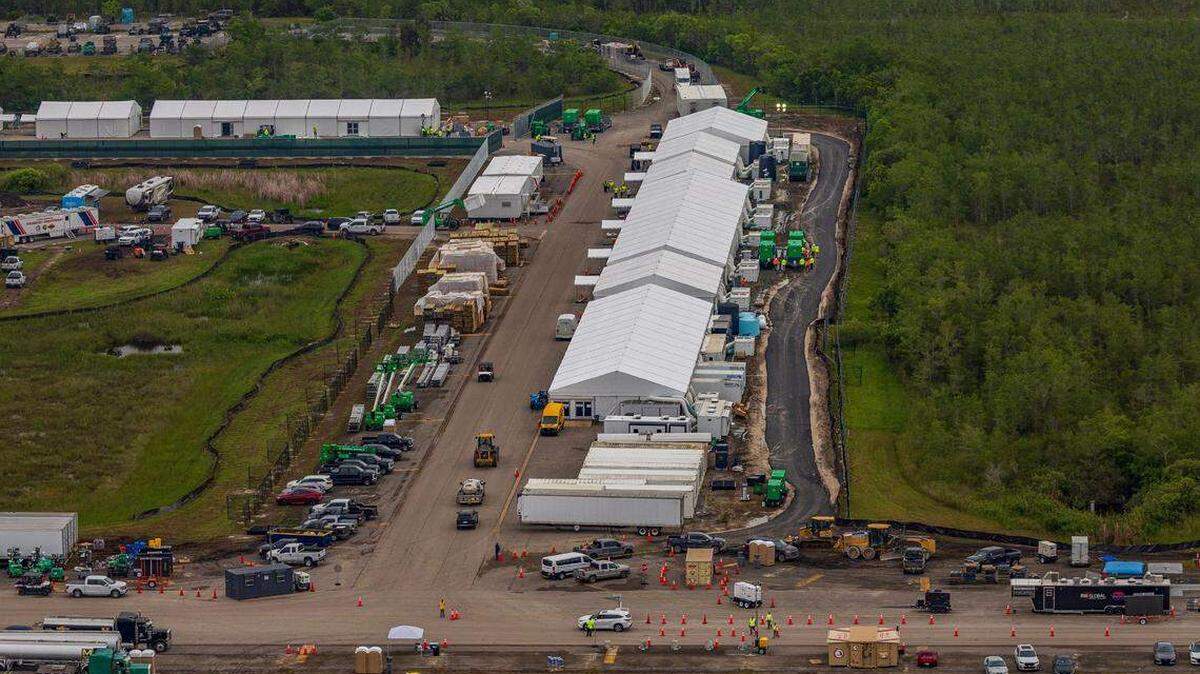
A federal judge has put a temporary but critically important halt on construction at Alligator Alcatraz. It wasn’t for the reasons you might think: lack of due process, detaining immigrants without criminal convictions, limited access to legal counsel and religious services or the fact that the government is housing thousands of people in tents in a hurricane zone.
No, this ruling, issued Thursday, is the result of this center being built in just eight days in the middle of the Everglades. There was no time to consider the threat it may pose to endangered species, clean water, dark skies and the sensitive ecosystem.
Now there is, thanks to a lawsuit brought by the Miccosukee Tribe and environmental advocacy groups Friends of the Everglades, the Center for Biological Diversity and Earthjustice.
The ruling means Florida has to stop construction, paving, filling and other activities — including installing the tall lighting that illuminates the area — for 14 days to allow a court hearing on the environmental issues.
A pause — at the very least — has been sorely needed. The state government, in its unseemly haste to do the president’s bidding on immigration, has trampled on niceties like legal rights or environmental impacts — or just being humane.
Why should it have taken weeks of negotiation for the Catholic Church to get permission to hold services there? Why couldn’t lawyers see their clients easily? Confusion over whether the state or federal government has jurisdiction seems to have been the main reason for these issues, and all of it stems from the speed at which this camp was erected on an airstrip within the Big Cypress National Preserve.
Gov. Ron DeSantis comandeered the land in the Everglades for this tent city, taking it from Miami-Dade County under questionable emergency powers that framed illegal immigration as a state emergency. Florida Attorney General James Uthemier named the camp Alligator Alcatraz, a moniker that spawned tasteless and cruel jokes about possible escapees facing alligators. DeSantis and President Donald Trump toured the place right before it opened, marveling at how quickly the state got the facility running.
Environmental concerns were all but ignored in the frenzy to do Trump’s bidding. Florida, though, loves the Everglades. And DeSantis has made its preservation a priority. Federal Judge Kathleen Williams, by ordering a pause, is giving this fragile ecosystem a chance.
During a two-day court hearing that ended Thursday, experts on the Florida panther and water in the wetlands testified that construction activities — which have continued on the site, according to witnesses in the case — could have harmful effects on the area. More pavement and lighting could drive away wildlife. Runoff after rains could add chemicals to the watery environment.
Now there will be time for an environmental review to be conducted, something that should have already taken place.
The DeSantis administration has said it wants to expand Alligator Alcatraz to house as many as 3,000 people. But all of this has been too rushed from the start, without sufficient consideration on many fronts, environmental and otherwise. It’s a relief that a judge has stepped in to slow the governor’s roll.
As Talbert Cypress, chairman of the Miccosukee Tribe of Indians of Florida, said in a statement after the injunction was announced: “The detention facility threatens land that is not only environmentally sensitive but sacred to our people. While this order is temporary, it is an important step in asserting our rights and protecting our homeland. The Miccosukee Tribe will continue to stand for our culture, our sovereignty, and the Everglades.”