
The Epstein case is uniting Americans and causing problems for Trump. Here’s why | Opinion
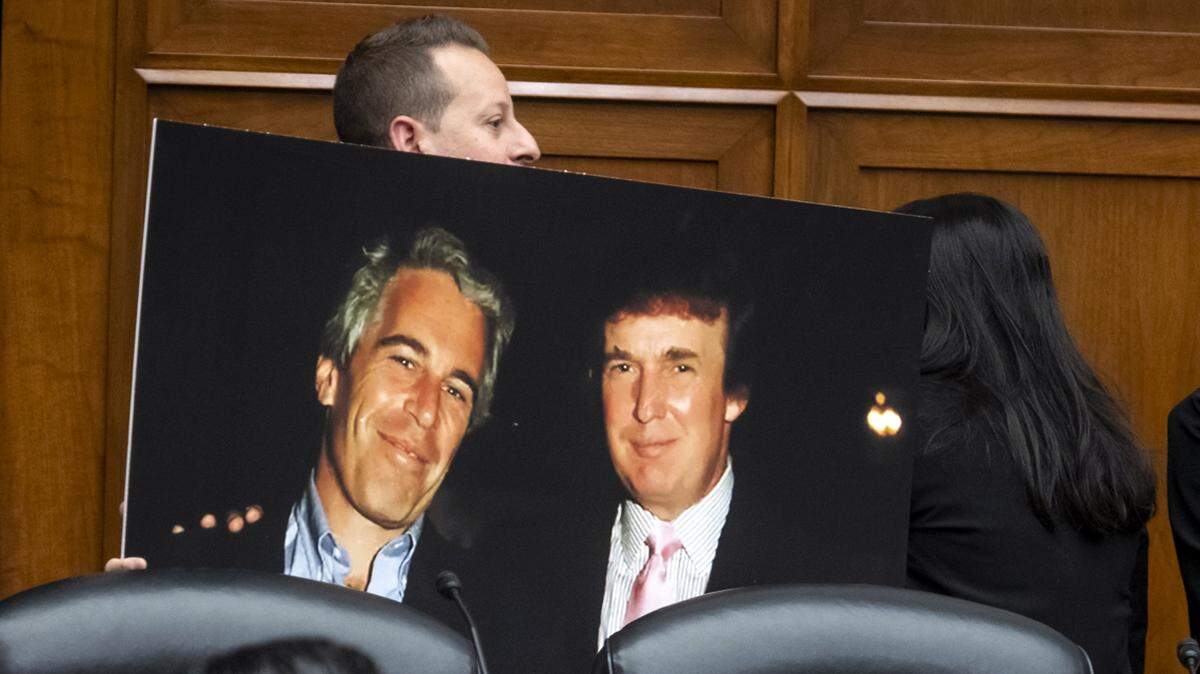
Politics makes strange bedfellows, and the Jeffrey Epstein case has created the most unlikely bipartisan coalition in recent memory.
What began as a campaign promise to release Epstein’s client list has metastasized into a full-scale political crisis that is now stress-testing President Donald Trump’s relationship with his supporters and uniting both parties in a rare call for transparency.
Earlier this month, the Department of Justice and the Federal Bureau of Investigation released a memo stating there wasn’t a client list and Epstein killed himself. Rather than quieting concerns, these findings have ignited a fire storm of demands for transparency from people on both sides of the aisle.
The Wall Street Journal has begun to report new details, including that Trump’s name appeared in the files — a revelation the president has denied. Trump has sued the paper for libel for publishing an article detailing his ties to Epstein, including a racy birthday card Trump says he didn’t write. Nevertheless, public pressure continues to mount. To be clear: Being named in the files does not mean Trump engaged in criminal activity.
In these politically polarizing times, Republicans and Democrats rarely agree on anything. But some of them are now — and they’re demanding answers. The Epstein case has temporarily erased partisan lines, forging political alliances to confront the same question: Is there a cover up?
What some assumed would blow over after the July 11 memo has instead gained momentum. Headlines haven’t stopped and the pressure campaign on Attorney General Pam Bondi and Trump to release the Epstein files is mounting.
But no matter how hard Trump tries to deflect or distract, he can’t shake the public’s demand that he release the files.
And Congress has translated this battle cry into action. The House Oversight Committee Chairman Rep. James Comer, R-Kentucky, issued a subpoena for Epstein’s former girlfriend and convicted child sex trafficker Ghislaine Maxwell to give a deposition at Federal Correctional Institution Tallahassee on Aug. 11.
Meanwhile, Reps. Thomas Massie, R, Kentucky, and Ro Khanna, D-California, have introduced the Epstein Files Transparency Act, a measure that would require Bondi to release all the documents relating to Epstein. As of Wednesday, 11 Republicans and 13 Democrats have signed onto the measure.
Instead of allowing a vote, Speaker Mike Johnson abruptly decided to adjourn the House a day early to avoid further problems for the president.
But Massie isn’t backing down. He plans to file a discharge petition to force a vote on the resolution in September when the House returns. This would require support from 218 members — 11 Republicans and the entire Democratic delegation (212 members).
Discharge petitions are a rare procedural motion used to go around leadership. It is seldom successful, nor is it a go-to tool used by members of the majority.
But this isn’t politics as usual. It reflects a broader public sentiment.
In a recent CBS/YouGov poll, 89% of Americans — including Democrats, Republicans and independents — think the DOJ should release the Epstein files. This is a remarkable level of agreement in today’s divided political climate. The fact that pollsters are asking about Epstein confirms this isn’t just relegated to the fringes of the internet. It’s a mainstream demand for transparency.
Even Trump’s base is showing some cracks. Some supporters are expressing outrage over the perceived lack of transparency and think that Trump may be protecting a sex offender. Instead of trying to quell supporters’ concerns, Trump has lashed out, calling critics “weaklings” and saying he doesn’t want their support anymore.
The fracture highlights how Epstein’s case has become a litmus test for institutional credibility that transcends political loyalty. The central question driving public outrage remains: Is the administration protecting a sex offender?
The bipartisan demand for transparency in the Epstein case isn’t just about one man’s crimes. It’s about whether America’s justice system still applies equally to the powerful and the powerless.
In an era of deep division, the demand for justice and protection of the innocent is proving to still have the power to unite Americans across party lines.
Click here to send the letter.
BEHIND THE STORY
MOREWhat's an editorial?
Editorials are opinion pieces that reflect the views of the Miami Herald Editorial Board, a group of opinion journalists that operates separately from the Miami Herald newsroom. Miami Herald Editorial Board members are: opinion editor Amy Driscoll and editorial writers Isadora Rangel and Mary Anna Mancuso. Read more by clicking the arrow in the upper right.
What's the difference between an op-ed and a column?
How does the Miami Herald Editorial Board decide what to write about?
The Editorial Board, made up of experienced opinion journalists, primarily addresses local and state issues that affect South Florida residents. Each board member has an area of focus, such as education, COVID or local government policy. Board members meet daily and bring up an array of topics for discussion. Once a topic is fully discussed, board members will further report the issue, interviewing stakeholders and others involved and affected, so that the board can present the most informed opinion possible. We strive to provide our community with thought leadership that advocates for policies and priorities that strengthen our communities. Our editorials promote social justice, fairness in economic, educational and social opportunities and an end to systemic racism and inequality. The Editorial Board is separate from the reporters and editors of the Miami Herald newsroom.
How can I contribute to the Miami Herald Opinion section?
The Editorial Board accepts op-ed submissions of 650-700 words from community members who want to argue a specific viewpoint or idea that is relevant to our area. You can email an op-ed submission to oped@miamiherald.com. We also accept 150-word letters to the editor from readers who want to offer their points of view on current issues. For more information on how to submit a letter, go here.