
Florida attorney general fans weather conspiracies, at our risk and for his benefit | Opinion
Trafficking in conspiracy theories can be dangerous for politicians. Just look at what’s happening with the Jeffrey Epstein files.
President Donald Trump spent years stoking dark narratives in which he was the only person who could destroy the “deep state,” and now his followers are refusing to accept his word and the word of Attorney General Pam Bondi that there’s “nothing to see here” on the Epstein case. The political blowback, much of it from MAGA, is only intensifying.
We don’t seem to have learned that lesson in Florida, though, at least judging by the actions of Attorney General James Uthmeier. Uthmeier, who first seized his moment in the political sun by gleefully leading the charge on the Alligator Alcatraz, is now going one better: He’s using his office to amplify climate misinformation. He sent out an official warning to the state’s airports telling them they’d better comply with a new Florida law that’s supposed to halt “weather modification” activity.
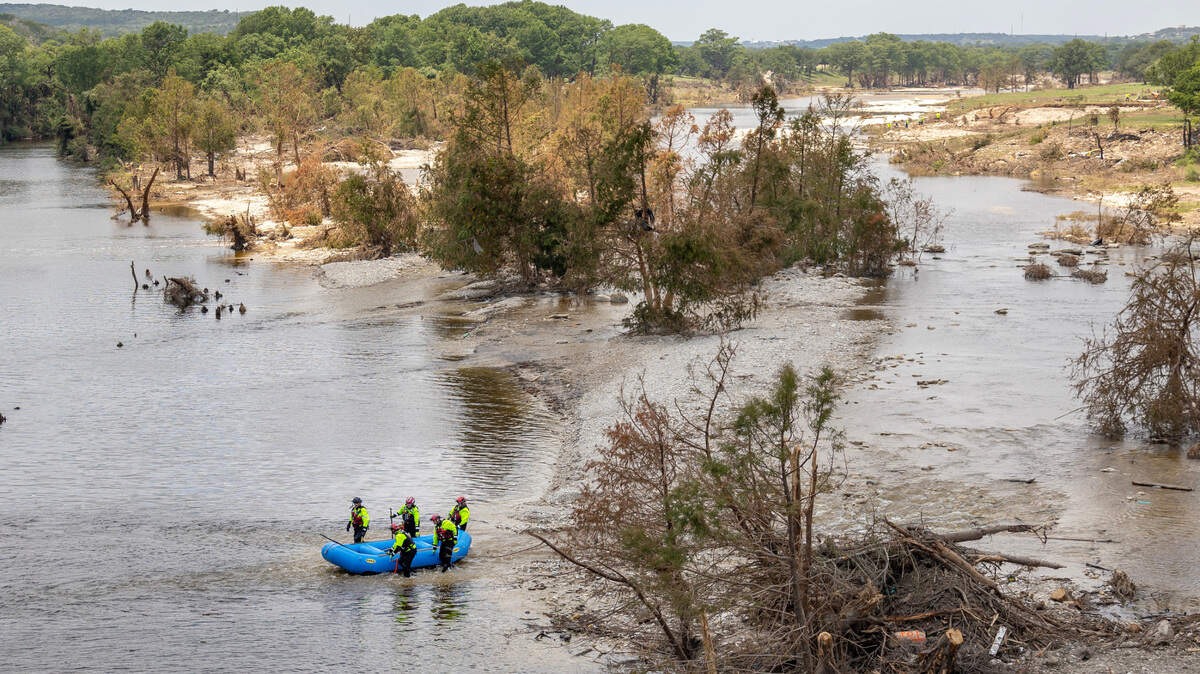
In a letter on state of Florida letterhead that he posted on X this week, the attorney general — the top lawyer in the whole state — said that, starting Oct. 1, all public-use airports have to send monthly reports to the Florida Department of Transportation to notify the government of any aircraft equipped with devices that could disperse “air contaminants.” In the letter, he’s even suggesting that “weather modification” or “cloud seeding” could have played a role in the terrible Texas floods that took the lives of at least 134 people.
Our community felt that pain, too. Among those lost to the floods were twin 8-year-old granddaughters of David Lawrence Jr. , a former Miami Herald publisher and longtime advocate for early childhood education. The wife and daughter of William G. Hardin III, dean of the College of Business at Florida International University, were also among the missing.
Climatologists say practices like cloud seeding — a decades-old, somewhat successful method of wringing more rain or snow from clouds — have nothing to do with increasingly severe weather events. And yet Uthmeier and Gov. Ron DeSantis have played into the fears of those who see manipulating the weather as a potential tool for the military or others to weaponize for nefarious reasons.
Sadly, unfounded conspiracy theories have been spreading on social media ever since the July 4 flash floods in Texas swept away roads, homes and a Christian girls’ summer camp. Some posts attempted to link the floods to “cloud seeding” in a nearby county. Other conspiracy theorists jumped into the discussion focusing on “geoengineering” or widely debunked claims that the condensation streaks left behind by jets, called contrails, are actually “chemtrails” that spread chemicals and are part of some sort of murky government plot.
Even the Trump administration has dismissed the “chemtrails” claims, with the Environmental Protection Agency releasing a “fact check” last week that said, in part: “The federal government is not aware of there ever being a contrail intentionally formed over the United States for the purpose of geoengineering or weather modification.”
So it doesn’t help that Uthmeier wrote in his letter to the airports a week after the floods, while the number of dead was growing: “I can’t help but notice the possibility that weather modification could have played a role in this tragedy. Developing reports show that a weather modification company conducted ‘cloud seeding’ operations just days before the deadly flood. Florida’s new law seeks to prevent something like that from ever happening.”
It’s human nature to want to blame somebody or something for a tragedy like the Texas floods. But meteorologists have said that the rain came from a nearby tropical storm, Barry.
Florida’s new law — introduced by Miami Republican Sen. Ileana Garcia — makes it a third-degree felony to release substances to change temperature, cloud cover or sunlight levels. It does nothing to address the serious issue of burning fossil fuels, the more likely fuel for weather disasters.
By fanning the flames of conspiracy theories, Uthmeier, who has only been in office since February, is using them to his political advantage. Too bad Florida’s leaders aren’t more concerned with stopping destructive conspiracy theories than fomenting them.
Click here to send the letter.
BEHIND THE STORY
MOREWhat's an editorial?
Editorials are opinion pieces that reflect the views of the Miami Herald Editorial Board, a group of opinion journalists that operates separately from the Miami Herald newsroom. Miami Herald Editorial Board members are: opinion editor Amy Driscoll and editorial writers Isadora Rangel and Mary Anna Mancuso. Read more by clicking the arrow in the upper right.
What's the difference between an op-ed and a column?
How does the Miami Herald Editorial Board decide what to write about?
The Editorial Board, made up of experienced opinion journalists, primarily addresses local and state issues that affect South Florida residents. Each board member has an area of focus, such as education, COVID or local government policy. Board members meet daily and bring up an array of topics for discussion. Once a topic is fully discussed, board members will further report the issue, interviewing stakeholders and others involved and affected, so that the board can present the most informed opinion possible. We strive to provide our community with thought leadership that advocates for policies and priorities that strengthen our communities. Our editorials promote social justice, fairness in economic, educational and social opportunities and an end to systemic racism and inequality. The Editorial Board is separate from the reporters and editors of the Miami Herald newsroom.
How can I contribute to the Miami Herald Opinion section?
The Editorial Board accepts op-ed submissions of 650-700 words from community members who want to argue a specific viewpoint or idea that is relevant to our area. You can email an op-ed submission to oped@miamiherald.com. We also accept 150-word letters to the editor from readers who want to offer their points of view on current issues. For more information on how to submit a letter, go here.
This story was originally published July 17, 2025 at 4:17 PM.