
Don’t worry about hurricanes at Alligator Alcatraz. The government has a plan | Opinion
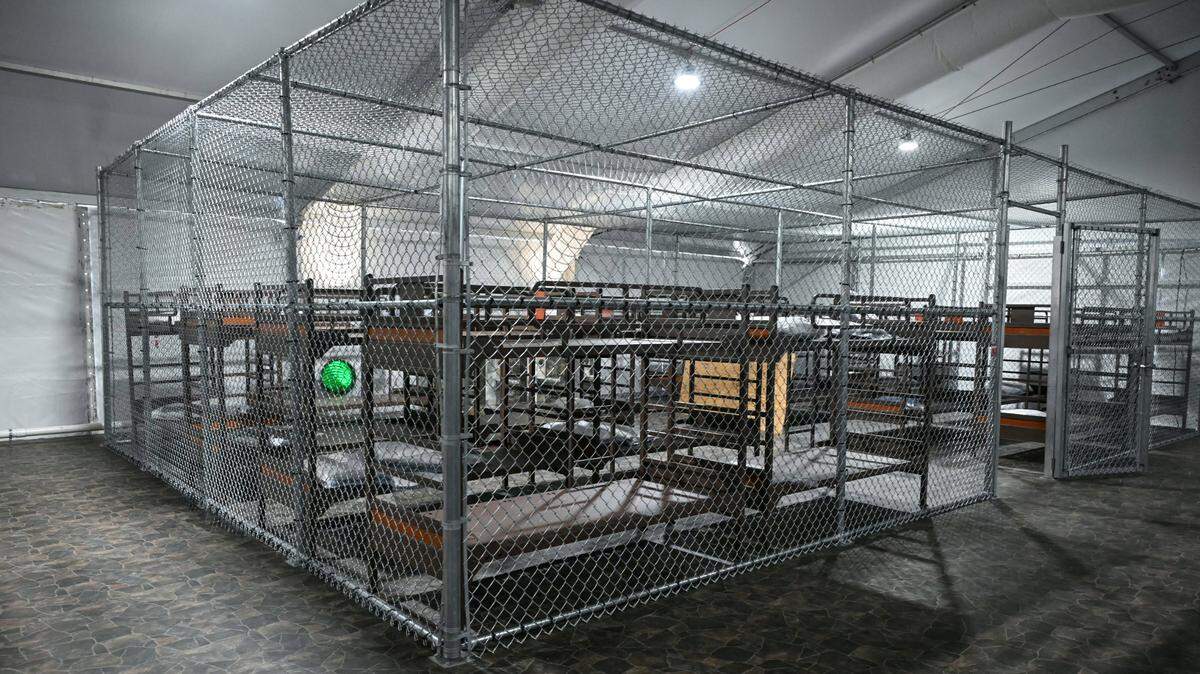
Mother Nature weighed in on Tuesday about the location of the Alligator Alcatraz immigration detention camp that the governor and president are so excited about.
The verdict? Bad idea, Florida. Bad.
It happened while Gov. Ron DeSantis was in full cry, surrounded by TV cameras, proudly describing the virtues of the tent-and-trailer camp his administration has knocked together in eight days to help carry out President Trump’s deportation agenda.
Then the rains came.
It was a simple storm, not a hurricane, and it lasted less than an hour by most accounts. But it was enough to see the truth, captured on video by Spectrum News television reporter Jason Delgado. It was evident in every seeping tent seam, puddle of water, rattling door and waving tent wall. When it comes to weather, Florida doesn’t play.
As the rain continued, water threatened electrical cables and spread beneath the flagpoles holding the state and American flags. Pounding raindrops nearly drowned out DeSantis’ words as he stood in the middle of one of the tents, still talking.
You could almost see the light bulb going off over his head: Perhaps putting a tent-and-trailer detention camp in the middle of a swamp in Florida during hurricane season isn’t very smart.
Naturally, it’s taxpayers footing the bill for this insanity — which, by the way, environmentalists say may damage the Everglades — at a cost of some $450 million a year. That’s money that could be used, say, to help solve real crises in Florida, such as the lack of housing regular people can afford. The expense may be reimbursed by the federal government. But, of course, that’s taxpayer money, too. So we pay for it either way.
Never fear, though, the government is on top of the hurricane threat. Kevin Guthrie, executive director of the Florida Division of Emergency Management, has said the camp, which is next to the Big Cypress National Preserve, can withstand the winds of a Category 2 storm (that’s up to 110 mph).
Never mind that Southwest Florida, where the camp is located, was hit by three major storms — that’s Category 3 or above — in the last three years. And that the hurricane season lasts until the end of November. And that the first detainees were supposed to be brought to the facility on Wednesday.
Cool. Clearly, it’s all under control.
“This is Florida, by the way,” Guthrie reassured reporters in the middle of Trump’s visit to the site, also on Tuesday. “We have a hurricane plan.”
Let’s hope it’s better than their no-hurricane plan.
Click here to send the letter.
BEHIND THE STORY
MOREWhat's an editorial?
Editorials are opinion pieces that reflect the views of the Miami Herald Editorial Board, a group of opinion journalists that operates separately from the Miami Herald newsroom. Miami Herald Editorial Board members are: opinion editor Amy Driscoll and editorial writers Isadora Rangel and Mary Anna Mancuso. Read more by clicking the arrow in the upper right.
What's the difference between an op-ed and a column?
How does the Miami Herald Editorial Board decide what to write about?
The Editorial Board, made up of experienced opinion journalists, primarily addresses local and state issues that affect South Florida residents. Each board member has an area of focus, such as education, COVID or local government policy. Board members meet daily and bring up an array of topics for discussion. Once a topic is fully discussed, board members will further report the issue, interviewing stakeholders and others involved and affected, so that the board can present the most informed opinion possible. We strive to provide our community with thought leadership that advocates for policies and priorities that strengthen our communities. Our editorials promote social justice, fairness in economic, educational and social opportunities and an end to systemic racism and inequality. The Editorial Board is separate from the reporters and editors of the Miami Herald newsroom.
How can I contribute to the Miami Herald Opinion section?
The Editorial Board accepts op-ed submissions of 650-700 words from community members who want to argue a specific viewpoint or idea that is relevant to our area. You can email an op-ed submission to oped@miamiherald.com. We also accept 150-word letters to the editor from readers who want to offer their points of view on current issues. For more information on how to submit a letter, go here.
This story was originally published July 2, 2025 at 2:42 PM.