
DeSantis right to veto property tax study. But not for the reasons he may think | Opinion
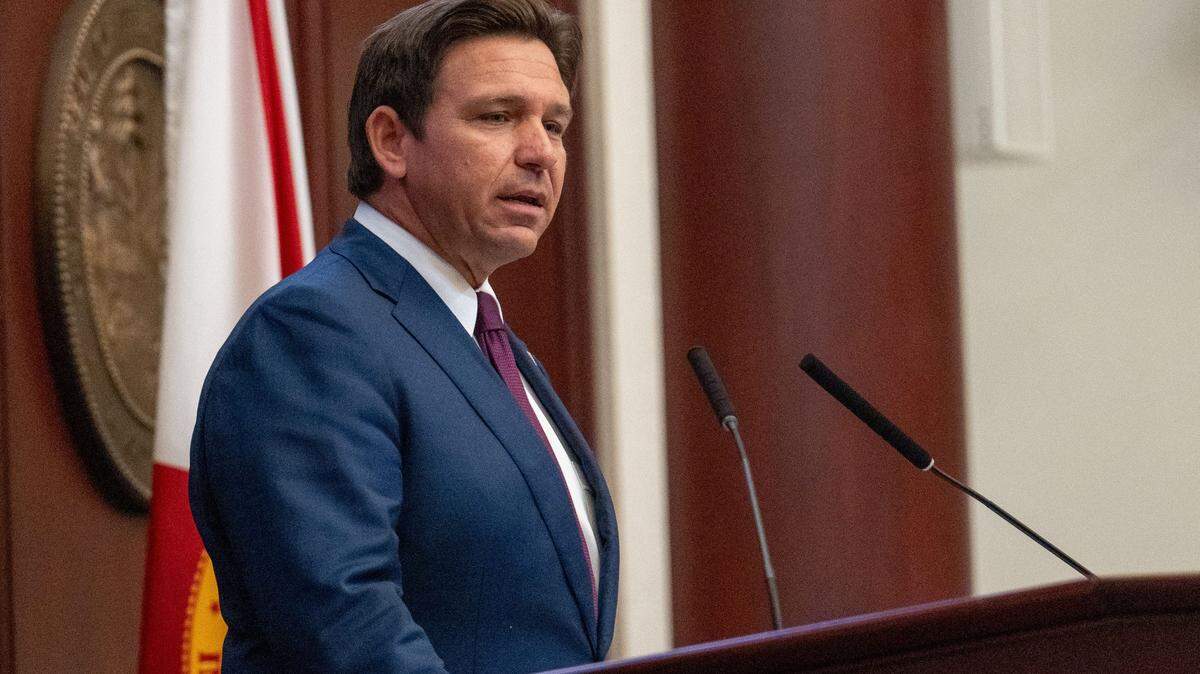
When Gov. Ron DeSantis vetoed a $1 million budget item on Monday for state economists to study the potential impacts of eliminating property taxes in Florida, he made the right decision.
“We don’t need to give a bureaucracy money to study this. We know what needs to be done, so let’s just do it,” he said, as he used his line item veto power to slice $567 million in projects from the state budget before signing it.
What exactly he thinks “needs to be done” isn’t fully clear, but he has proposed eliminating property taxes in Florida, which would create an estimated $43 billion hit on state coffers.
His decision to cut the $1 million study funding was right, not because eliminating property taxes should be a no-brainer, but because no taxpayer money should be spent on an idea that would gut local governments.
DeSantis has been talking about eliminating property taxes for months, saying “taxpayers need relief.” During his State of the State address in March, DeSantis said, “You buy a home, you pay off the mortgage, and yet you still have to write a check to the government every year just for the privilege of living on your own private property. Is the property yours, or are you just renting it from the government?”
But property taxes aren’t payments for your house. They’re investments in community services that keep your property valuable and your community livable, as he no doubt knows.
For city and other local governments, police and firefighters are the biggest expenses, and public schools also rely heavily on property tax funding. These are not luxury services. They’re the backbone of functional communities.
In many parts of Florida, property taxes are the primary source of funding for local government. As Republican Rep. Shane Abbott, R-DeFuniak Springs, noted during a committee meeting in May, eliminating them would result in “a complete defunding of the government” in some counties. The idea that the police and fire departments could continue to operate without reliable and steady funding is pure fantasy.
The nonpartisan Florida Policy Institute recently released a report on the impacts of eliminating property taxes. To make up for the loss of money, lawmakers would probably have to increase the general sales tax to 12%, making Florida the state with the highest sales tax. (State sales tax is currently 6% with any local sales taxes added on.) That means for every $10 consumers spend, they would end up paying another dollar or so in taxes, an increase that would affect low- to middle-income households, businesses and tourists. A large increase in the sales tax would also eat away at any potential property tax relief.
DeSantis’ populist pitch doesn’t necessarily seem to have full voter support. A March poll conducted for the Florida Policy Institute by Mason-Dixon Polling found 68% of Florida voters support keeping property taxes to fund local services if the alternative is doubling the sales tax.
Some fellow Republicans are critical of DeSantis’ veto because they think the state needs a real plan — and a way to measure impacts — if it’s going to offer property tax relief, rather than the governor just insisting it should happen. Former Republican Sen. Jeff Brandes posted on X: “Pretending this isn’t a major policy/fiscal issue is political malpractice. We need research and a plan, not the Governor’s ‘let’s wing it and hope for the best’ strategy. Florida deserves better.”
Brandes is right. It is political malpractice — not because property taxes should be eliminated but because continuing to float the elimination of property taxes as a way to make Florida more affordable isn’t viable.
It’s an appealing idea at face value — who doesn’t want to save on property taxes — but defunding local government is probably worse than doing nothing at all.
And property taxes aren’t the only thing making the state unaffordable, of course. Insurance premiums are still sky high, housing costs keep rising and the overall cost of living remains high.
DeSantis was right to veto the study. Now he should shelve this ill-conceived idea altogether. Florida doesn’t need to eliminate property taxes. It needs to protect the services they fund — and the communities that rely on them.
Click here to send the letter.
BEHIND THE STORY
MOREWhat's an editorial?
Editorials are opinion pieces that reflect the views of the Miami Herald Editorial Board, a group of opinion journalists that operates separately from the Miami Herald newsroom. Miami Herald Editorial Board members are: opinion editor Amy Driscoll and editorial writers Isadora Rangel and Mary Anna Mancuso. Read more by clicking the arrow in the upper right.
What's the difference between an op-ed and a column?
How does the Miami Herald Editorial Board decide what to write about?
The Editorial Board, made up of experienced opinion journalists, primarily addresses local and state issues that affect South Florida residents. Each board member has an area of focus, such as education, COVID or local government policy. Board members meet daily and bring up an array of topics for discussion. Once a topic is fully discussed, board members will further report the issue, interviewing stakeholders and others involved and affected, so that the board can present the most informed opinion possible. We strive to provide our community with thought leadership that advocates for policies and priorities that strengthen our communities. Our editorials promote social justice, fairness in economic, educational and social opportunities and an end to systemic racism and inequality. The Editorial Board is separate from the reporters and editors of the Miami Herald newsroom.
How can I contribute to the Miami Herald Opinion section?
The Editorial Board accepts op-ed submissions of 650-700 words from community members who want to argue a specific viewpoint or idea that is relevant to our area. You can email an op-ed submission to oped@miamiherald.com. We also accept 150-word letters to the editor from readers who want to offer their points of view on current issues. For more information on how to submit a letter, go here.
This story was originally published July 2, 2025 at 12:00 AM.