
DHS acknowledges Haiti’s humanitarian crisis — in its own notice on why to end TPS | Opinion
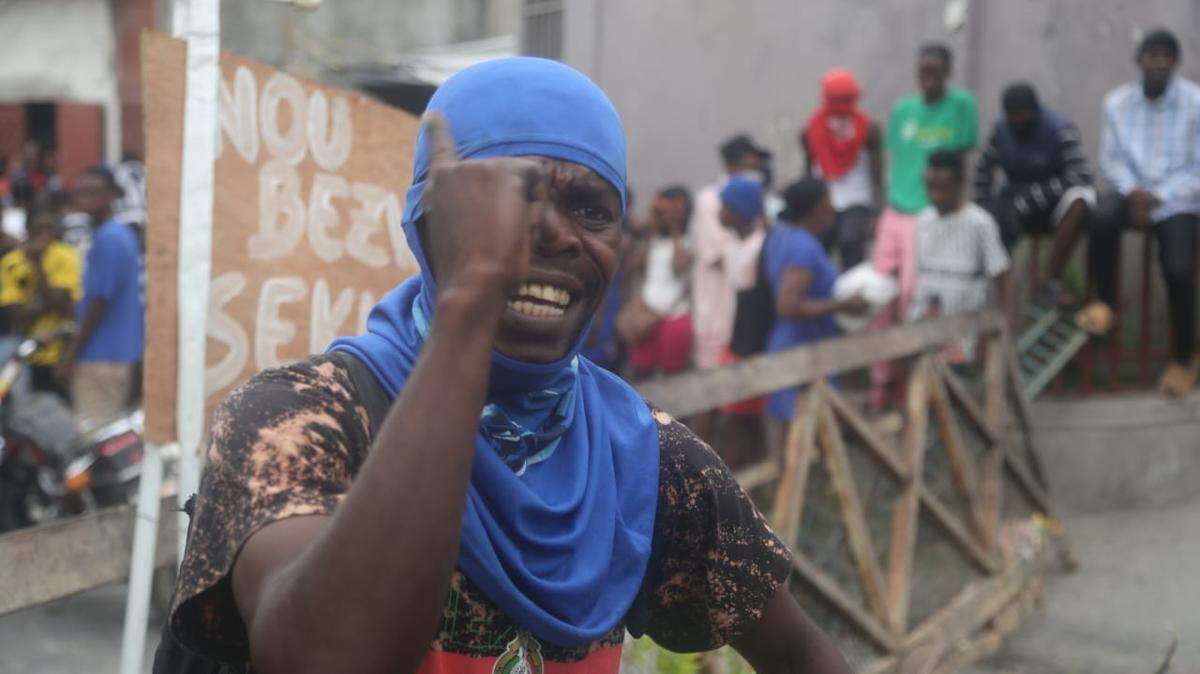
As it turns out, the Trump administration isn’t revoking revoking Temporary Protected Status for Haitians because “it is safe for Haitian citizens to return home,” as a spokesperson said Friday. It’s quite the opposite: The U.S. wants to send hundreds of thousands of people back to the Caribbean country exactly because the situation there has deteriorated so much.
Sound contradictory? Hold on. In President Trump’s world, this makes sense — the only way he can justify deporting about half-million people back to a country where Haitians are being slaughtered in the streets and in churches is by treating them as a threat to the U.S.
In documents to be published in the Federal Registry Tuesday, Department of Homeland Security Secretary Kristi Noem wrote that allowing Haitian TPS holders to remain in the country is “contrary to the national interest.” She highlighted “widespread gang violence” happening in the country as one of the reasons for rescinding temporary deportation protections, the Herald reported. Gangs control 90% of the capital of Port-au-Prince.
Weirdly, Noem quoted Amnesty International in her report, writing that “’Haiti is in the grip of severe humanitarian and human rights crisis. Armed gangs are striking the Port-au-Prince metropolitan area and its surroundings with terror and violence, including rape and other forms of sexual violence.’”
In fact, the acute situation described above is the reason that the Biden administration expanded the TPS designation for Haitians following the assassination of President Jovenel Moïse in July 2021.
But Noem argues that the widespread violence and the “lack of functional government authority” make it hard for the U.S. to properly vet migrants at the border because “Haiti lacks a functioning central authority capable of maintaining or sharing such critical information.” She added: “Haitian gang members have already been identified among those who have entered the United States.”
Noem has made a similar argument for terminating TPS for 350,000 Venezuelans because she said some of them belong to the notorious Tren de Aragua gang.
Her contention about vetting migrants coming from a country enveloped in chaos isn’t far-fetched. We don’t doubt that there are bad actors willing to take advantage of America’s immigration system and exploit the chaos in their own country that makes it hard to check their background. The American public has made it clear that people with gang ties and who have committed serious crimes should be deported. You won’t find many people defending their right to immigrate here.
But the “bad apple” argument only goes so far to sell immigration policy to the public.
What about the TPS holders who are already living in the country, who have been here for years, built lives, found jobs and, more importantly, have committed no crime? The U.S. government has plenty of resources to assess whether they have been a blight to their communities or not.
These are people like Nadine Mallebranche, who was only 5 years old when she came from Haiti — in the 1980s. She’s had TPS for 15 years, which has allowed her to work legally as a store supervisor, the Herald reported.
“The only home that I know is the United States,” she told Herald reporters.
Will Noem tell us that the U.S. has no way to know what people in similar situations have been up to for the past 40 years?
With over 300,000 Haitians living in the Miami metro area, what will happen to the employers who rely on TPS workers?
We never expected Trump to have humanitarian concerns for migrants escaping violence and political instability — the reason that Congress created the TPS program — much less for Haitians, whom he accused on the campaign trail of eating people’s pets in Ohio. But others should, in particular members of South Florida’s delegation in Congress, regardless of party affiliation.
Miami Republicans have pleaded with Noem to look at Venezuelan TPS holders at risk of deportation on a case-by-case basis. Haitians deserve better than this as well. Blanket policies that treat criminals and people just trying to live a better life the same are inherently unfair and bad for this country.

Click here to send the letter.
BEHIND THE STORY
MOREWhat's an editorial?
Editorials are opinion pieces that reflect the views of the Miami Herald Editorial Board, a group of opinion journalists that operates separately from the Miami Herald newsroom. Miami Herald Editorial Board members are: opinion editor Amy Driscoll and editorial writers Isadora Rangel and Mary Anna Mancuso. Read more by clicking the arrow in the upper right.
What's the difference between an op-ed and a column?
How does the Miami Herald Editorial Board decide what to write about?
The Editorial Board, made up of experienced opinion journalists, primarily addresses local and state issues that affect South Florida residents. Each board member has an area of focus, such as education, COVID or local government policy. Board members meet daily and bring up an array of topics for discussion. Once a topic is fully discussed, board members will further report the issue, interviewing stakeholders and others involved and affected, so that the board can present the most informed opinion possible. We strive to provide our community with thought leadership that advocates for policies and priorities that strengthen our communities. Our editorials promote social justice, fairness in economic, educational and social opportunities and an end to systemic racism and inequality. The Editorial Board is separate from the reporters and editors of the Miami Herald newsroom.
How can I contribute to the Miami Herald Opinion section?
The Editorial Board accepts op-ed submissions of 650-700 words from community members who want to argue a specific viewpoint or idea that is relevant to our area. You can email an op-ed submission to oped@miamiherald.com. We also accept 150-word letters to the editor from readers who want to offer their points of view on current issues. For more information on how to submit a letter, go here.