
‘Alligator Alcatraz’ is a new low for Florida — and fear-mongering at its worst | Opinion
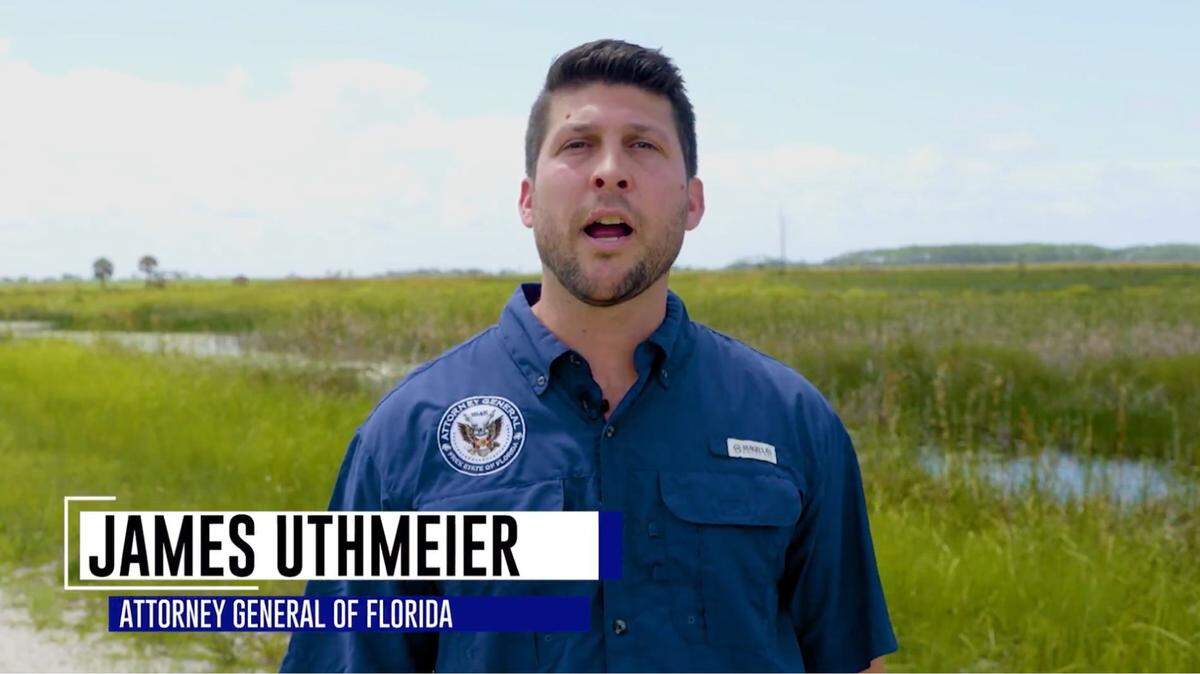
As a scare tactic, construction of “Alligator Alcatraz” — the nickname bestowed by Florida Attorney General James Uthmeier on a tent-and-trailer immigrant detention camp the state is suddenly building deep in the Everglades — will probably work.
The nickname is clearly a marketing ploy: Alcatraz, a former federal prison in California, conjures up images of notorious criminals and a place that’s impossible to escape. And Uthmeier, in a video announcing the construction on an old airstrip in western Miami-Dade County, leans into that: “You don’t need to invest that much in the perimeter. If people get out, there’s not much waiting for them other than alligators and pythons. Nowhere to go, nowhere to hide.”
“Alligator Alcatraz — we’re ready to go,” he concludes in a chamber-of-commerce voice, the camera catching him as he strides across the property flanked by two law enforcement officers, a soundtrack blaring in the background.
The vision of alligator-infested swampland as a sort of barbaric moat — cost efficient, too! — is just the kind of no-holds-barred, anti-immigrant PR stunt that our governor, Ron “shoot them stone cold dead” DeSantis, and president, Donald “they’re eating the dogs... they’re eating the cats” Trump embrace.
But this has real world consequences: It’s inhumane to ship people — many of whom are in the country illegally but have not committed any crimes nor do they represent a threat to Americans — out to a tent city nowhere near services in the sweltering summer. The camp is being built on environmentally sensitive lands with no public discussion of the impact. And the property was seized from Miami-Dade County by DeSantis’ administration using years-old, questionable emergency powers and no notice.
For those reasons and more, Floridians have every reason to be appalled and horrified by this latest attempt from DeSantis to demonize immigrants on our doorstep in his efforts to carry out Trump’s immigration agenda.
But there’s also a bigger message here, too, and it’s not just aimed at immigrants. Creation of this detention center in South Florida, way out in the middle of nowhere with its hardcore nickname, is supposed to instill fear in the general public: Remember, this is what happens if you cross the government.
The rush to create this monstrosity — “build” seems like a stretch, since it’s supposed to be mainly heavy-duty tents and trailers and, no doubt, portable toilets — is just one of many puzzling things about this idea. The state has said the facility could be open in July — that’s next week. Does the state really need another 1,000 beds to detain people, part of a goal of 5,000 more beds across Florida?
Then there’s the fact that Miami-Dade County owns this property, but state law enforcement officers seized it, using powers granted to the governor under a declared state of emergency over illegal immigration in 2023. State contractors were already on the site Sunday.
Under Florida law, the governor has the power to commandeer or use any private property if it is deemed necessary to “cope” with an emergency. But the only crisis here is government made, as the crackdown on immigration continues to widen.
DeSantis owes taxpayers a full explanation of why this is needed. It’ll cost Florida about $450 million a year to run, though the state can seek reimbursement from the federal government. How much it will cost to build remains unknown.
How many more people is the government planning on detaining? First, the purge was aimed at undocumented immigrants who commit crimes, a proposal many people backed. Then it was holders of Temporary Protected Status from Venezuela and Haiti. Then it expanded again to include those who are here on humanitarian parole from Cuba, Haiti, Nicaragua and Venezuela. Are more groups going to be targeted? When will it stop?
And then there’s the actual location. This massive holding pen will be located on land that straddles Miami-Dade and Collier counties. In a letter to the state’s Division of Emergency Management on Monday, Miami-Dade Mayor Daniella Levine Cava asked the administration for “more details... particularly in regard to environmental safeguards” for using the land. She notes that “the impacts to the Everglades ecosystem could be devastating.”
Having the state come in and take Everglades land is an astonishing power grab, though the state and county are now negotiating a purchase price. And having this action come from DeSantis, who has always made Everglades restoration a priority, is doubly shocking.
Alligator Alcatraz will be a blight on the Everglades and a blight on the state.

Click here to send the letter.
BEHIND THE STORY
MOREWhat's an editorial?
Editorials are opinion pieces that reflect the views of the Miami Herald Editorial Board, a group of opinion journalists that operates separately from the Miami Herald newsroom. Miami Herald Editorial Board members are: opinion editor Amy Driscoll and editorial writers Isadora Rangel and Mary Anna Mancuso. Read more by clicking the arrow in the upper right.
What's the difference between an op-ed and a column?
How does the Miami Herald Editorial Board decide what to write about?
The Editorial Board, made up of experienced opinion journalists, primarily addresses local and state issues that affect South Florida residents. Each board member has an area of focus, such as education, COVID or local government policy. Board members meet daily and bring up an array of topics for discussion. Once a topic is fully discussed, board members will further report the issue, interviewing stakeholders and others involved and affected, so that the board can present the most informed opinion possible. We strive to provide our community with thought leadership that advocates for policies and priorities that strengthen our communities. Our editorials promote social justice, fairness in economic, educational and social opportunities and an end to systemic racism and inequality. The Editorial Board is separate from the reporters and editors of the Miami Herald newsroom.
How can I contribute to the Miami Herald Opinion section?
The Editorial Board accepts op-ed submissions of 650-700 words from community members who want to argue a specific viewpoint or idea that is relevant to our area. You can email an op-ed submission to oped@miamiherald.com. We also accept 150-word letters to the editor from readers who want to offer their points of view on current issues. For more information on how to submit a letter, go here.
This story was originally published June 24, 2025 at 2:43 PM.