
Miami ex-Proud Boy got a get-out-of-jail-free pass. Now he wants to cash in? | Opinion
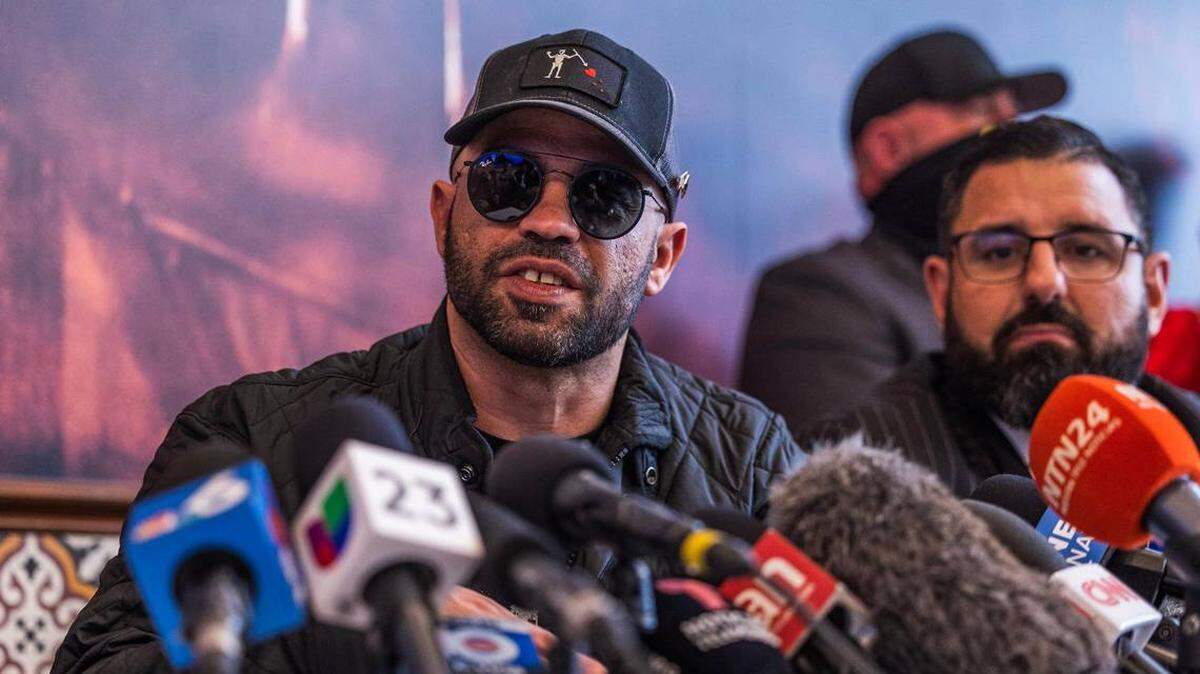
Let’s get this straight. The ex-Proud Boy leader from Miami, Henry “Enrique” Tarrio, was convicted of seditious conspiracy in the Jan. 6 assault on the U.S. Capitol and then pardoned by President Trump. And now he’s turning around and suing the government, along with four other J6-ers, for $100 million?
That certainly puts Trump in an awkward spot. His administration has to either defend the decision made by the Biden administration to prosecute Tarrio and the others, or hand over a hefty wad of cash to settle the case.
The timing is lousy, too, with the lawsuit coming just as the president is trying to make the case in Congress for all of those controversial DOGE spending cuts, like cutting food stamps for the poor. Would the government be taking food off the table for the poor while giving money to those who ransacked our Capitol in an attempt to overturn the election?
Even worse, what happens in this lawsuit is part of the continuing push by the Trump administration and the Jan. 6 rioters to rewrite the damning history of that day. Maybe they have forgotten, but we cannot: the appalling sight of lawless mobs smashing their way into the Capitol and battling police, erecting a gallows and chanting, “Hang Mike Pence.” There were at least seven deaths, including suicides, tied to the attack and over 140 police officers were injured. There was damage to the Capitol, where members of Congress fled in fear for their lives. And yet Trump has called the rioters “political prisoners” and “hostages.”
The lawsuit was filed Friday in Orlando. Tarrio and four others from the far-right militant group claim in their complaint that they were the victims of “egregious and systemic abuse of the legal system and the United States Constitution to punish and oppress political allies of President Trump.” The suit claims the men were arrested with insufficient probable cause, the Associated Press said.
Rather than simply walking away with the undeserved get-out-of-jail-free passes they received from Trump, who pardoned nearly all of the 1,500 people who stormed the Capitol, Tarrio and the others are trying to cash in. And they’re doing it at our expense as taxpayers.
Don’t forget that Tarrio was convicted of seditious conspiracy and other crimes on grounds he helped to orchestrate the riot that sought to stop Congress from certifying former U.S. President Joe Biden’s win over Trump in 2020. He was sentenced to 22 years in prison, the longest sentence for anyone tried for the events of Jan. 6.
The other four in the suit are Joseph Biggs, Zachary Rehl, Ethan Nordean and Dominic Pezzola. They each were sentenced to between 10 and 18 years in prison. Biggs, Rehl and Nordean were all convicted of seditious conspiracy. Pezzola, acquitted on the conspiracy charge, was convicted of stealing a police officer’s riot shield and using it to smash a window. Trump pardoned Tarrio and commuted the sentences of the others.
This legal action comes on the heels of the settlement in the Ashli Babbitt case. The Trump administration has agreed to pay a $4.975 million settlement to the family of the Jan. 6 rioter, who was killed by a Capitol police officer. She was shot while attempting to enter the Speaker’s Lobby through a shattered window.
That brings up another question: If other rioters seek legal recourse for their prosecutions, how many more suits will the country face? If the U.S. settles the Proud Boy case, how many more cases will be in the pipeline after this? Potentially hundreds.
A settlement would also set a bad example in other ways. If other extremists see a lawsuit payout as proof that they have the backing of the Department of Justice or the president, that could embolden them to commit other acts of political violence. And if that happens, so much for Republicans’ claim on the label of the “law and order” party.
The rioters broke our precious tradition of the peaceful transfer of power, a critical component of a democracy. We cannot reward that behavior, especially not with hard-earned taxpayer dollars.

Click here to send the letter.
BEHIND THE STORY
MOREWhat's an editorial?
Editorials are opinion pieces that reflect the views of the Miami Herald Editorial Board, a group of opinion journalists that operates separately from the Miami Herald newsroom. Miami Herald Editorial Board members are: opinion editor Amy Driscoll and editorial writers Isadora Rangel and Mary Anna Mancuso. Read more by clicking the arrow in the upper right.
What's the difference between an op-ed and a column?
How does the Miami Herald Editorial Board decide what to write about?
The Editorial Board, made up of experienced opinion journalists, primarily addresses local and state issues that affect South Florida residents. Each board member has an area of focus, such as education, COVID or local government policy. Board members meet daily and bring up an array of topics for discussion. Once a topic is fully discussed, board members will further report the issue, interviewing stakeholders and others involved and affected, so that the board can present the most informed opinion possible. We strive to provide our community with thought leadership that advocates for policies and priorities that strengthen our communities. Our editorials promote social justice, fairness in economic, educational and social opportunities and an end to systemic racism and inequality. The Editorial Board is separate from the reporters and editors of the Miami Herald newsroom.
How can I contribute to the Miami Herald Opinion section?
The Editorial Board accepts op-ed submissions of 650-700 words from community members who want to argue a specific viewpoint or idea that is relevant to our area. You can email an op-ed submission to oped@miamiherald.com. We also accept 150-word letters to the editor from readers who want to offer their points of view on current issues. For more information on how to submit a letter, go here.
This story was originally published June 10, 2025 at 1:54 PM.