
By cracking down on international students, Trump ignores this reality | Opinion
President Donald Trump has used legitimate concerns Americans had about the large number of migrants crossing the border at one point during the Biden administration as the excuse for a nativist agenda that denies the realities on the ground and the contributions of immigrants to this country.
Do we want safe borders? Yes. Do we need proper vetting of people the U.S. allows to enter the country on visas and as immigrants? Of course.
What Americans should reject is the use of the country’s visa and immigration system for retribution, as is the case in the Trump administration’s decision — blocked for now by a federal judge — to ban Harvard University from enrolling international students. Harvard has balked at pressure from Trump to eliminate diversity, equity and inclusion programs and has seen billions in federal funding frozen.
Think of the uproar if former Presidents Joe Biden or Barack Obama canceled student visas at conservative American religious universities.
The Trump administration seems to be saying that foreigners, by default, should be treated as a danger to Americans, until proven otherwise.
That ignores some important points: international students pay full tuition at American universities, represent a majority of researchers in some fields, according to the New York Times, and contributed $44 billion to the U.S. economy in the 2023-2024 school year, according to the Association of International Educators. Florida’s 44,767 international students contributed $1.5 billion and created or supported 12,555 jobs, according to the nonprofit.
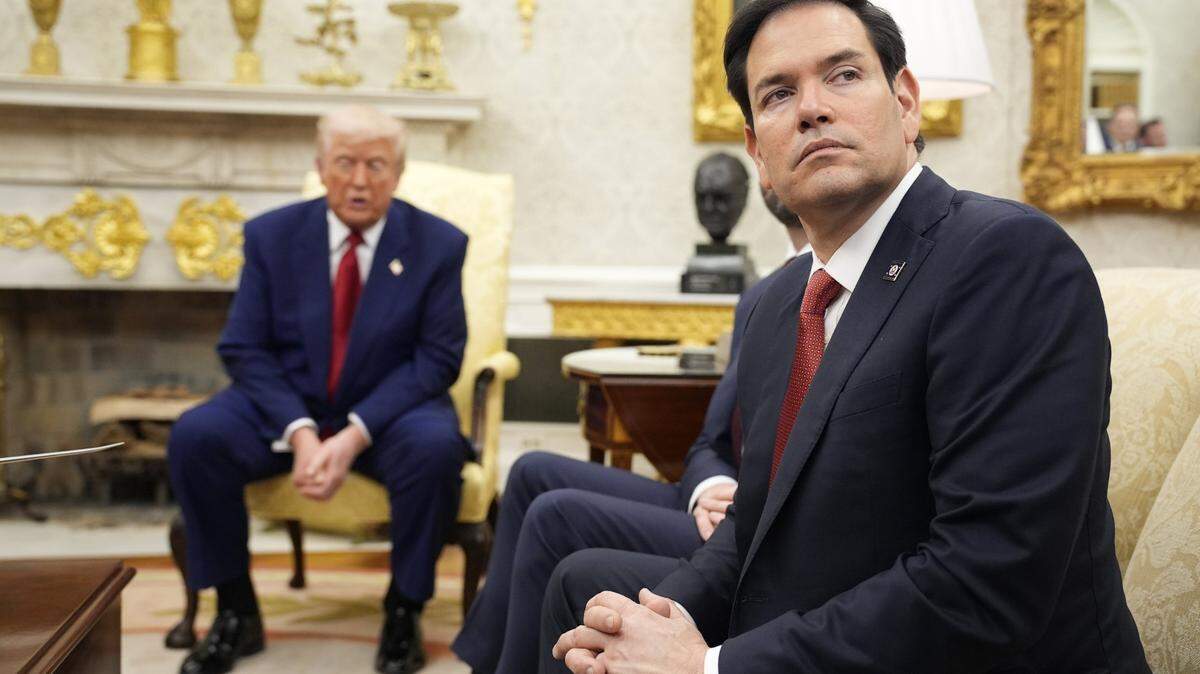
In a country founded on values of freedom of speech, we should be wary of Secretary of State Marco Rubio’s decision to pause student and exchange visa interviews and to revoke them from Chinese students. The agency is preparing to expand screening of applicants’ social media posts and said in a statement that, “We use all available information in our visa screening and vetting,” the New York Times reported.
It’s unclear what could flag an applicant for rejection under the new social media policy. Of course, if a prospective international student writes “death to America” in an Instagram post they should be turned away. The problem is: Can we trust government, especially one that has not hidden its desire to impose a specific point of view on higher education, to decide what’s proper speech? Will foreigners be denied entry because they wrote something critical of the president?
The social media policy comes on the heels of the Trump administration accusing Harvard and other colleges of allowing antisemitic speech on campus during protests against the war in Gaza. Antisemitism is a horrendous, hateful problem we must take seriously, especially after the recent murder of a young couple outside the Capital Jewish Museum in Washington, D.C. The suspect shouted “free, free Palestine” after the attack, according to police. But is the Trump administration going to reject visa applicants simply for expressing support for Palestinians? Who draws the line between what’s acceptable or not?
From another perspective, what if it was the Biden administration denying visas to foreigners who spread misinformation about the COVID-19 pandemic or vaccinations?
Any immigrant or visitor to the country should be deported if they commit crimes. Likewise, we support efforts to crackdown on what the FBI described in a January memo, reported by el Nuevo Herald on Thursday, as a systematic effort by Venezuela’s oppressive regime to use gang members to destabilize the U.S. But is the answer revoking Temporary Protected Status for some 350,000 Venezuelans, including those without ties to the notorious Tren de Aragua criminal organization?
Painting foreigners and immigrants as threats is an age-old tactic that works because the solution becomes simple: Close our doors to most people, with a few exceptions — i.e. white South Africans. But even if a closed-off society was what we wanted, it won’t make us safer: People born in the U.S. commit more crimes than immigrants, studies show.
When a majority of voters elected Trump, they wanted solutions to immigration. What he’s offering is not sensible policy, but a broad-brush approach plays up our fears but isn’t based on reality.
Click here to send the letter.
BEHIND THE STORY
MOREWhat's an editorial?
Editorials are opinion pieces that reflect the views of the Miami Herald Editorial Board, a group of opinion journalists that operates separately from the Miami Herald newsroom. Miami Herald Editorial Board members are: opinion editor Amy Driscoll and editorial writers Isadora Rangel and Mary Anna Mancuso. Read more by clicking the arrow in the upper right.
What's the difference between an op-ed and a column?
How does the Miami Herald Editorial Board decide what to write about?
The Editorial Board, made up of experienced opinion journalists, primarily addresses local and state issues that affect South Florida residents. Each board member has an area of focus, such as education, COVID or local government policy. Board members meet daily and bring up an array of topics for discussion. Once a topic is fully discussed, board members will further report the issue, interviewing stakeholders and others involved and affected, so that the board can present the most informed opinion possible. We strive to provide our community with thought leadership that advocates for policies and priorities that strengthen our communities. Our editorials promote social justice, fairness in economic, educational and social opportunities and an end to systemic racism and inequality. The Editorial Board is separate from the reporters and editors of the Miami Herald newsroom.
How can I contribute to the Miami Herald Opinion section?
The Editorial Board accepts op-ed submissions of 650-700 words from community members who want to argue a specific viewpoint or idea that is relevant to our area. You can email an op-ed submission to oped@miamiherald.com. We also accept 150-word letters to the editor from readers who want to offer their points of view on current issues. For more information on how to submit a letter, go here.
This story was originally published May 29, 2025 at 3:53 PM.