
Is a Louis Vuitton purse worth stealing from Miami’s indigent and uninsured? | Opinion
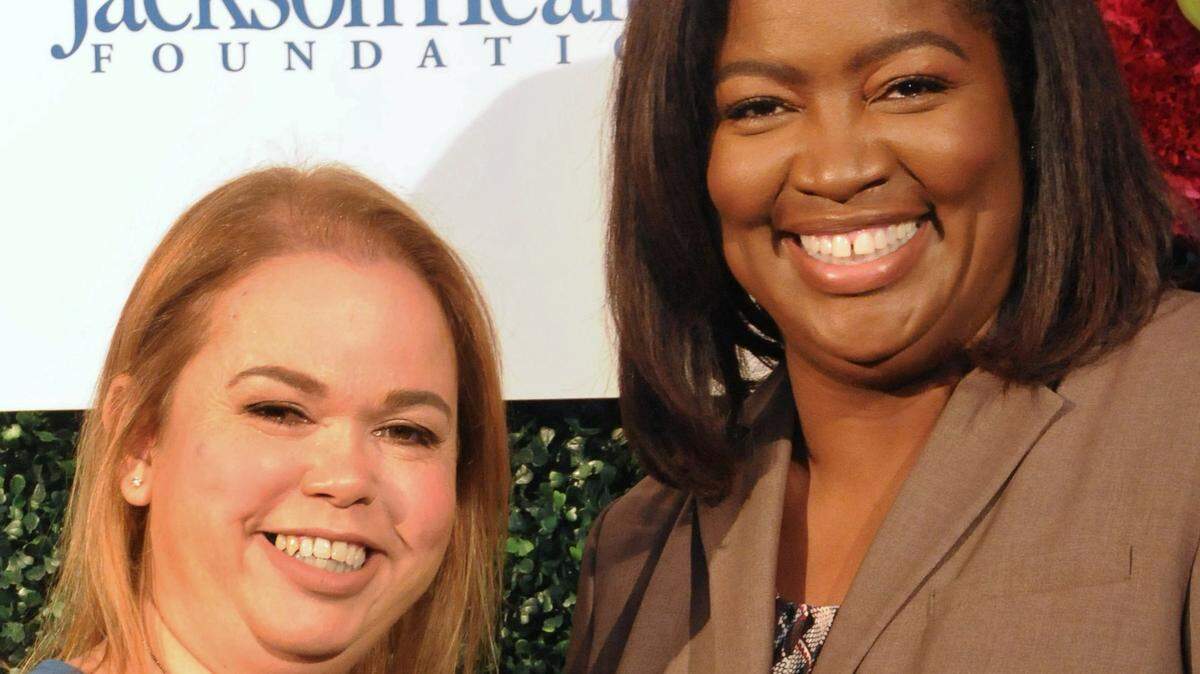
The crimes people will commit for a $4,350 Louis Vuitton purse or a $15,600 rose gold-colored golf cart.
At least, those are the allegations in a blistering federal indictment unsealed this week in Miami that accuses former Jackson Health Foundation Chief Operating Officer Charmaine Gatlin, 52, of using her decade-long position to help herself to at least $3.6 million of the foundation’s funds meant for the needy in our community.
According to the indictment, Gatlin didn’t just skim — she schemed. Carlos Migoya, the head of Jackson Health System, called Gatlin’s actions, if true, “despicable.”
The foundation, governed by a volunteer board of directors, helps raise money to support Jackson Health System, the county’s public safety-net hospital system, a taxpayer-supported community institution that provides care to everyone, regardless of their ability to pay and whether they have insurance.
That worthy mission was apparently lost on Gatlin, though, who was arrested Wednesday in Georgia. She worked for the Jackson foundation from 2014 to 2024, and allegedly approved $2 million in fake invoices from a Georgia-based audio visual company for services that were never rendered. The company, in turn, kicked back $1 million directly to Gatlin, who used it to pay off her personal credit cards. Prosecutors said she even coached the vendor on how to fake the paperwork.
In another instance, the feds say Gatlin arranged for vendors to buy luxury goods for her — Louis Vuitton, Gucci and Apple products — with foundation money. There’s more: The indictment charges that she submitted a fake invoice to get that rose gold-colored golf cart delivered right to her Weston home — a $15,600 purchase paid for with funds meant to support the critical Jackson mission.
As the U.S. Attorney’s Office in Miami noted in a press release about the case, as COO, Gatlin’s base salary was between $185,000 and $290,000. She even signed a conflict-of-interest form banning her from making decisions that resulted in personal gain.
You almost have to admire the gall. Except you don’t. Because this is not a victimless crime — the money she allegedly siphoned off was meant to support Jackson’s patient care and other parts of the mission.
It’s not just morally wrong; it’s criminal if true — and not a moment of weakness, either. Gatlin allegedly pulled this off for 10 years — a sustained, calculated betrayal of her job.
The indictment notes Gatlin moved from Weston to Atlanta after resigning from the foundation in November. She was indicted on one count of conspiracy to commit wire fraud, 26 counts of wire fraud and five counts of money laundering.
Red flags came up in the annual financial report sent in January to the Public Health Trust, the volunteer board appointed by the county to oversee the public hospital system.
But the obvious question: Where were the controls on all that money flowing out the door?
If the feds are right, Gatlin ran a one-woman fraud operation under the nose of a major public institution. Jackson Health spokeswoman Lidia Amoretti-Morgado told the Herald in January that the system had “implemented additional financial controls and administrative oversight of the Foundation, which included the restructuring of its staff.” Better late than never.
We should be demanding more answers for the citizens of Miami-Dade — not just about Gatlin but about how a system this vital to Miami-Dade’s well-being failed to catch millions of dollars vanishing into designer handbags and golf carts.
Sadly, Gatlin’s story is part of a familiar Miami-Dade pathology: Public servants who get power all too often act as though “public service” equals a personal ATM.
Prosecutors are throwing the book at her, and they should, based on their indictment. If convicted, Gatlin faces up to 20 years for each count of wire fraud, plus another 10 for money laundering. That might finally send a message. She should also be made to return every penny if she’s found guilty.
But that’s not enough. Miami-Dade’s public institutions — especially those tasked with caring for our most vulnerable — must show the public through complete transparency how they have implemented stronger oversight and protections. This indictment should be a turning point.
Click here to send the letter.