
Really? Deleted body cam video of deadly boat crash raises more questions | Opinion
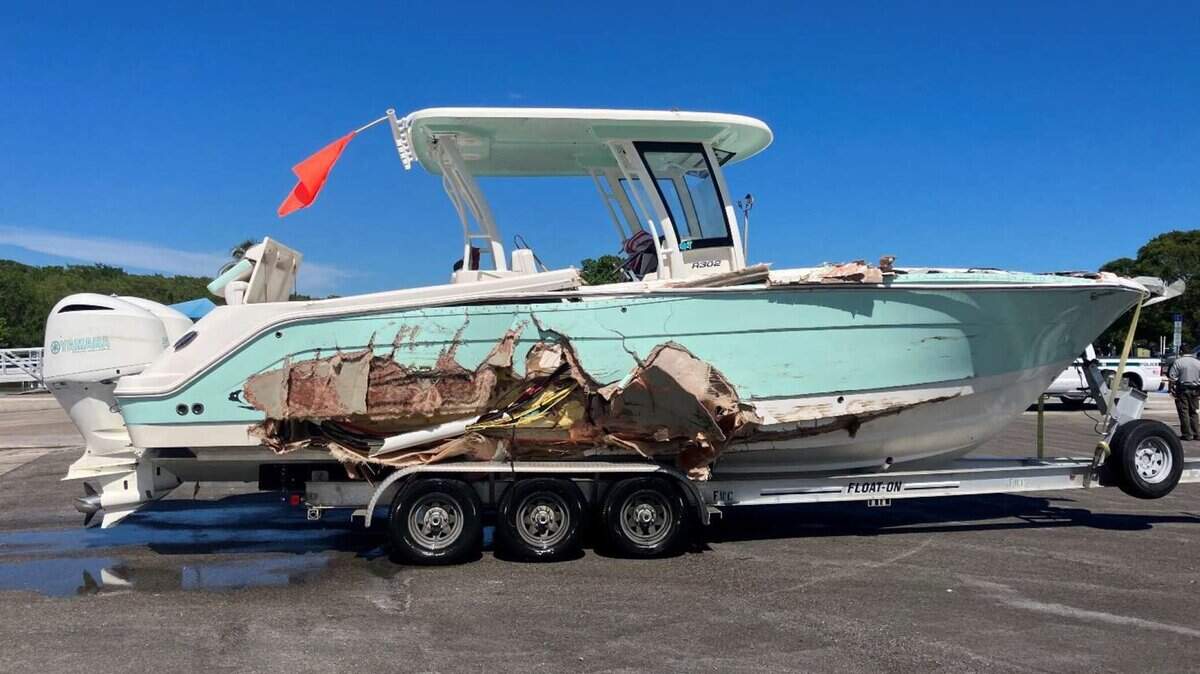
This one is hard to believe: Body camera video footage was deleted for four Florida Fish and Wildlife Conservation Commission officers on the scene of the deadly Jorge Pino boat crash on Labor Day in 2022.
The Miami Herald had previously reported that body cam footage was deleted for two FWC officers — that was bad on its own. But now there are two others, the Herald reported Tuesday. That brings us to a grand total of four FWC officers whose body cam footage was deleted in a case that involved one death, numerous injuries and questions about whether the driver was impaired with alcohol.
How could this happen? And what could the video have told us? A lot, potentially.
Video from officers’ body cams could have given the courts critical evidence on whether Pino was impaired. At least some of the officers were in close proximity to Pino, the Herald reported.
But the footage from four officers was deleted, apparently as part of the normal video process — at least, that’s what the FWC contends. When the officers uploaded the video, it was classified as “incidental,” not “criminal,” an FWC spokesperson told the Herald. Incidental footage is deleted after 90 days; video in a criminal investigation is retained for five years in the case of a misdemeanor and 13 years for a felony charge.
But there’s more: According to the Herald’s reporting, FWC investigators were considering whether to charge Pino with a criminal charge — felony reckless boating — just days after the crash.
It’s not like officers didn’t know this was a serious crash. It was terrible. A 17-year-old South Florida girl, Luciana “Lucy” Fernandez, was killed when the 29-foot boat being driven by Pino, a real estate mogul, slammed into a fixed channel marker. All 14 people on board, celebrating the 18th birthday of Pino’s daughter, were at least injured. The impact of the crash shredded the hull and threw all of the passengers into the Biscayne Bay.
The FWC did not give Pino a sobriety test, even though police said he told them he’d had two beers. The agency has said it lacked probably cause to get a warrant to force the issue. Maybe — but as the Miami Herald’s reporting has pointed out, the agency’s own policies list significant injuries and deaths as probable cause to do a blood test.
One FWC officer on the scene said Pino had bloodshot eyes and a “flustered demeanor,” and smelled of alcohol. Another officer said in a sworn statement that he didn’t notice any signs of drunkenness. But that officer’s body cam footage was among those deleted.
The FWC quickly ruled out alcohol as a factor. And yet officers found empty alcohol bottles and cans on the boat when they pulled it from the water the day after the crash — Pino’s attorney has said the empty containers were from five boats tied up in the bay. The Herald also interviewed key eyewitnesses that investigators didn’t initially talk to — including three who said Pino was dazed and clinging to the hull.
Despite all of that, the video from the body cams worn by four FWC officers on the scene was allowed to disappear from the FWC’s computer system.
That’s shocking. And it hurts. The emotional cost of this crash was enormous. One young woman who survived the crash is still re-learning how to walk. The parents of Fernandez helped to push a new boating safety bill through the Florida Legislature this year. It awaits the governor’s signature.
Pino, initially charged with three misdemeanors, now faces vessel homicide charges after a Miami Herald investigation and new witness testimony.
The FWC, which at first told the Herald the footage erased in the first two officers’ case was due to “human error” by the officers, later said the agency’s policy on body cam footage “lacks clear guidance” for officers who are there in a support role.
That may be true but it doesn’t explain why the FWC didn’t realize that potentially critical video sitting in the FWC’s computer system for 90 days should have been saved for the criminal investigation. It’s time for answers.

Click here to send the letter.
BEHIND THE STORY
MOREWhat's an editorial?
Editorials are opinion pieces that reflect the views of the Miami Herald Editorial Board, a group of opinion journalists that operates separately from the Miami Herald newsroom. Miami Herald Editorial Board members are: opinion editor Amy Driscoll and editorial writers Isadora Rangel and Mary Anna Mancuso. Read more by clicking the arrow in the upper right.
What's the difference between an op-ed and a column?
How does the Miami Herald Editorial Board decide what to write about?
The Editorial Board, made up of experienced opinion journalists, primarily addresses local and state issues that affect South Florida residents. Each board member has an area of focus, such as education, COVID or local government policy. Board members meet daily and bring up an array of topics for discussion. Once a topic is fully discussed, board members will further report the issue, interviewing stakeholders and others involved and affected, so that the board can present the most informed opinion possible. We strive to provide our community with thought leadership that advocates for policies and priorities that strengthen our communities. Our editorials promote social justice, fairness in economic, educational and social opportunities and an end to systemic racism and inequality. The Editorial Board is separate from the reporters and editors of the Miami Herald newsroom.
How can I contribute to the Miami Herald Opinion section?
The Editorial Board accepts op-ed submissions of 650-700 words from community members who want to argue a specific viewpoint or idea that is relevant to our area. You can email an op-ed submission to oped@miamiherald.com. We also accept 150-word letters to the editor from readers who want to offer their points of view on current issues. For more information on how to submit a letter, go here.