
Designating Haiti’s gangs as terrorists risks humanitarian aid | Opinion
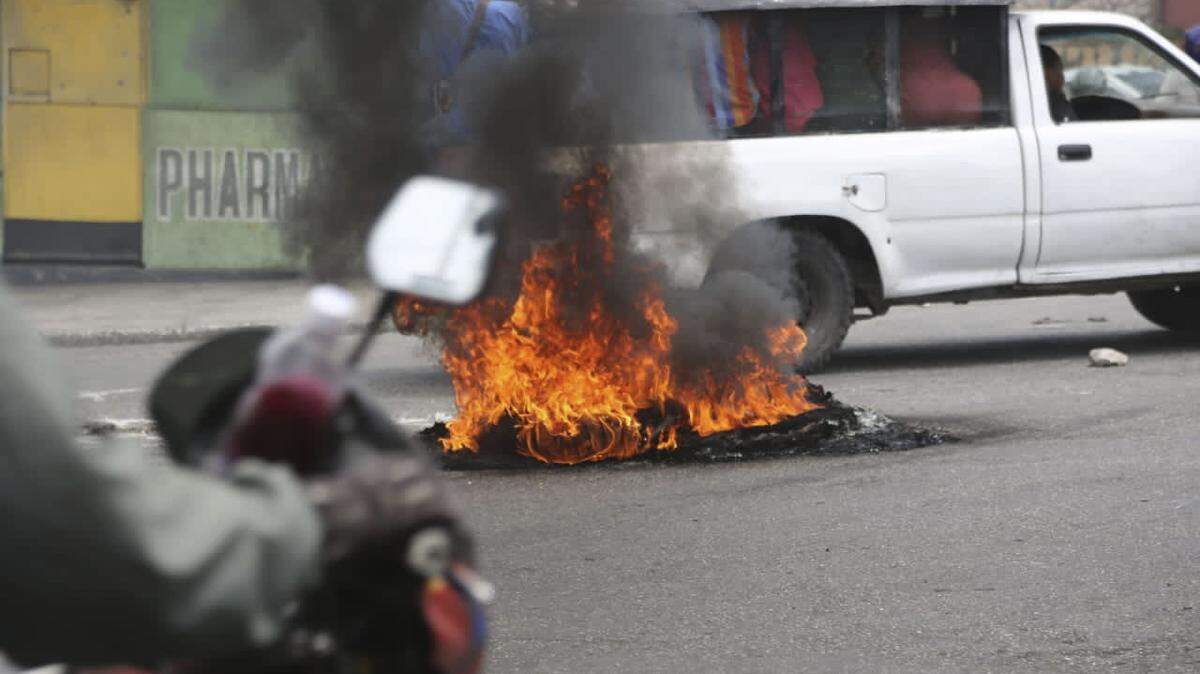
The Trump administration’s decision to designate Haiti’s most powerful armed gangs as Foreign Terrorist Organizations and Specially Designated Global Terrorists may project strength. Still, it risks triggering a catastrophic humanitarian collapse just as the need for aid intensifies and international support is stretched thin.
Secretary of State Marco Rubio announced the designations last week, targeting the Viv Ansanm coalition, which controls up to 90% of Port-au-Prince, and its ally, the Gran Grif gang in the Artibonite region. These gangs have undeniably unleashed terror: more than 1,600 Haitians were killed in the first three months of 2025, and over five million face acute hunger. But branding them as terrorists is a blunt instrument where a scalpel is needed.
The implications go far beyond symbolism. Under U.S. law, providing “material support” to designated groups becomes a federal crime, a broad definition that can include food, fuel or medical supplies.
This could criminalize humanitarian workers who must negotiate access with gangs or pay tolls to deliver aid. Already operating under dangerous conditions, many aid groups may now pull out entirely — tightening the gangs’ grip on neighborhoods and deepening the suffering of those trapped inside them.
Broward U.S. Rep. Sheila Cherfilus-McCormick, co-chair of the Haiti Caucus, warns the move could push Haiti further into isolation. Disrupting remittances and aid — economic lifelines for millions — would devastate a country already teetering on the edge. Haitian families rely on those funds for food, education, and survival.
The gangs’ dominance is not just a law enforcement issue; it’s a symptom of institutional collapse. The Trump administration may view the designation as a show of resolve, but it lacks a strategic endgame, or even a path to prosecuting gang leaders. Without U.S. troops on the ground or a viable Kenyan-led force, what’s the plan to dismantle these armed groups?
There’s also a critical deadline looming. In June, the contractor managing the U.S.-constructed base for nearly 1,000 Kenyan-led multinational troops needs assurance that the administration will continue the $200 million in funding. Without a firm commitment before the contract expires in September, the limited mission could withdraw this summer, leaving a dangerous power vacuum. In that case, gangs will operate unchecked, and more than a million displaced Haitians will be left to fend for themselves amid spiraling chaos.
Experts warn the designation could also complicate future peace-building and gang demobilization efforts. It might even be used as justification for deporting Haitians from the U.S., including those tenuously linked to violence. State Rep. Dotie Joseph, a Haitian American leader, cautions that the terrorist label could be weaponized against Haitian immigrants, just as similar labels have been used against others, including Venezuelans targeted over tattoos or clothing.
“In practice, I am concerned that the administration may use such a designation as an additional tool to mistreat Haitian immigrants in the U.S.,” Joseph told the Editorial Board.
The administration’s next steps must include clear safeguards, guidance for aid groups and donors, and a strategy focused on weakening gang finances, not humanitarian access. The goal must be to choke off gang resources, not the flow of food and medicine.
Labeling gangs as terrorists may play well politically, but the real cost could be paid in lives lost to hunger, disease and violence. Haiti doesn’t need more punitive gestures. It needs protection, support and a coordinated international response. If the Trump administration won’t back the U.N.-authorized Kenyan-led force, there must be a credible Plan B.
Port-au-Prince is on the brink of state collapse. Declaring gangs as terrorists may feel decisive, but it won’t stop the violence, and it could sever the last remaining lifelines for millions.
This is a moment for nuanced diplomacy, not slogans. Haiti needs sustained, strategic engagement and a plan to dismantle the criminal networks Rubio himself says pose a threat to U.S. and regional interests.
Haiti deserves better than an empty gesture dressed up as strategy.
Click here to send the letter.
BEHIND THE STORY
MOREWhat's an editorial?
Editorials are opinion pieces that reflect the views of the Miami Herald Editorial Board, a group of opinion journalists that operates separately from the Miami Herald newsroom. Miami Herald Editorial Board members are: opinion editor Amy Driscoll and editorial writers Isadora Rangel and Mary Anna Mancuso. Read more by clicking the arrow in the upper right.
What's the difference between an op-ed and a column?
How does the Miami Herald Editorial Board decide what to write about?
The Editorial Board, made up of experienced opinion journalists, primarily addresses local and state issues that affect South Florida residents. Each board member has an area of focus, such as education, COVID or local government policy. Board members meet daily and bring up an array of topics for discussion. Once a topic is fully discussed, board members will further report the issue, interviewing stakeholders and others involved and affected, so that the board can present the most informed opinion possible. We strive to provide our community with thought leadership that advocates for policies and priorities that strengthen our communities. Our editorials promote social justice, fairness in economic, educational and social opportunities and an end to systemic racism and inequality. The Editorial Board is separate from the reporters and editors of the Miami Herald newsroom.
How can I contribute to the Miami Herald Opinion section?
The Editorial Board accepts op-ed submissions of 650-700 words from community members who want to argue a specific viewpoint or idea that is relevant to our area. You can email an op-ed submission to oped@miamiherald.com. We also accept 150-word letters to the editor from readers who want to offer their points of view on current issues. For more information on how to submit a letter, go here.