
An American pope with dual citizenship in Latin America will resonate deeply in Miami | Opinion
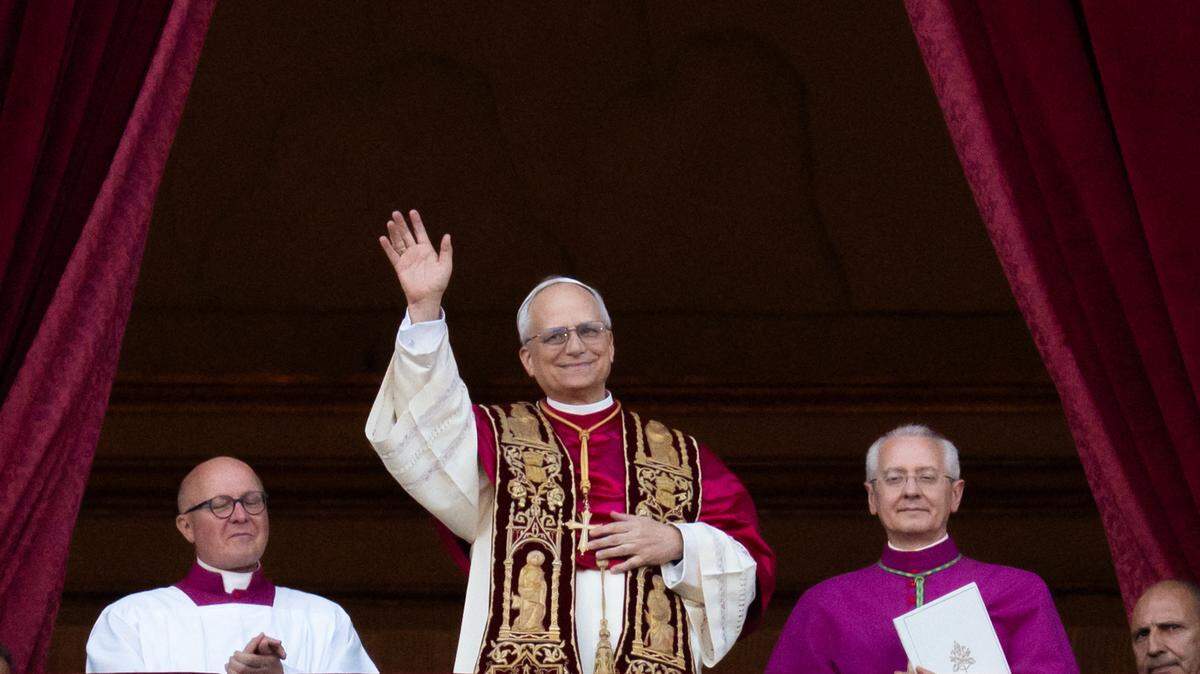
For Miami, known as the gateway to Latin America, the choice of a new multi-lingual, American-born pope who worked for years in Peru has enormous significance.
After at least four rounds of voting, Cardinal Robert Francis Prevost on Thursday was elected the 267th pope, representing over 1.4 billion Catholics around the world and many in South Florida. He’s the first American pope and will be known as Leo XIV.
Born in Chicago, the 69-year-old has dual citizenship in the U.S. and Peru, where he was a missionary and later became bishop of the city of Chiclayo in 2015.
Catholics from both the U.S. and Latin America can claim Leo XIV is one of them. His ability to navigate both cultures and languages couldn’t be more Miami.
Pope Francis appointed him to many top posts within the church and made him a cardinal in 2023.
The question now is whether Leo XIV will be a reformist in Francis’ mold.
Leo XIV is widely seen as a moderate and a pragmatist. We hope he follows Francis’ legacy and uses his experience in Latin America to continue to advocate for those who are marginalized and the immigrants who have built Miami.
Friends of Leo XIV told Reuters that he is committed to social justice issues and expressed concern for the Venezuelans who moved to Peru to escape Nicolás Maduro’s regime and the country’s economic crisis. Before he became pope, a social media account under his name shared posts that were critical of the Trump administration’s approach to immigration.
Francis’ advocacy for addressing climate change was also remarkable, something his successor, we hope, builds upon given the risks that the climate crisis presents to South Florida. During a November seminar in Rome, Leo XIV said it was time to move “from words to action” on environmental degradation, Vatican News reported.
“’Dominion over nature’—the task which God gave humanity—should not become ‘tyrannical.’ It must be a ‘relationship of reciprocity’ with the environment,” the publication reported he said.
It will be almost impossible for the new pope to avoid addressing controversial issues such as whether the church should welcome LGBTQ people. Francis, in a 2023 letter to bishops about same-sex marriages, wrote that, “We cannot be judges who only deny, push back and exclude.”
Leo XIV’s views on the issue appear to be less clear. According reporting by the New York Times, he has not been particularly welcoming to the LGBTQ community. Last year, he said the church should take into account the different views on homosexuality across the world and give more authority on the issue to bishops’ conferences from each country.
“You have to remember there are still places in Africa that apply the death penalty, for example, for people who are living in a homosexual relationship … So, we’re in very different worlds,” he said, according to CBCP News.
He has been been criticized for his handling of sex abuse cases in the church — another big issue he will have to tackle.
Beyond specific issues, Leo XIV’s biggest job will be to welcome more Christians to the church. As Americans become less religious, can he help reverse that trend? He has an even bigger job continuing to expand the church in key places in Africa and Asia.
In a 2023 interview with Vatican News, he said, “I still consider myself a missionary. My vocation, like that of every Christian, is to be a missionary, to proclaim the Gospel wherever one is.”
Leo XIV speaks five languages, and notably addressed a crowd at St. Peter’s Square at the Vatican in both Italian and Spanish during his first remarks after becoming pope. Speaking Spanish will help him connect with many of Miami’s Catholics, just as Francis, born in Argentina, did. He also speaks Portuguese, French and Italian.
During his address to the crowds, Leo XIV called for a church that builds bridges and creates dialogue. We hope that he uses his influence to welcome all sorts of people into the church, especially the most vulnerable.
Click here to send the letter.
BEHIND THE STORY
MOREWhat's an editorial?
Editorials are opinion pieces that reflect the views of the Miami Herald Editorial Board, a group of opinion journalists that operates separately from the Miami Herald newsroom. Miami Herald Editorial Board members are: opinion editor Amy Driscoll and editorial writers Isadora Rangel and Mary Anna Mancuso. Read more by clicking the arrow in the upper right.
What's the difference between an op-ed and a column?
How does the Miami Herald Editorial Board decide what to write about?
The Editorial Board, made up of experienced opinion journalists, primarily addresses local and state issues that affect South Florida residents. Each board member has an area of focus, such as education, COVID or local government policy. Board members meet daily and bring up an array of topics for discussion. Once a topic is fully discussed, board members will further report the issue, interviewing stakeholders and others involved and affected, so that the board can present the most informed opinion possible. We strive to provide our community with thought leadership that advocates for policies and priorities that strengthen our communities. Our editorials promote social justice, fairness in economic, educational and social opportunities and an end to systemic racism and inequality. The Editorial Board is separate from the reporters and editors of the Miami Herald newsroom.
How can I contribute to the Miami Herald Opinion section?
The Editorial Board accepts op-ed submissions of 650-700 words from community members who want to argue a specific viewpoint or idea that is relevant to our area. You can email an op-ed submission to oped@miamiherald.com. We also accept 150-word letters to the editor from readers who want to offer their points of view on current issues. For more information on how to submit a letter, go here.
This story was originally published May 8, 2025 at 2:04 PM.