
Another high-profile Democrat jumps ship, deepening a brand crisis in Florida | Opinion
With President Donald Trump’s trade wars and his waning popularity among voters, this should be the moment for a Democratic Party resurgence after last year’s election. But, in Florida, the party is finding itself in a deeper branding crisis as the third state elected official announced he is leaving the party.
So here’s the dilemma:
How can the Democrats sell themselves as the alternative to Trump’s chaos when the people elected to represent the party’s values in state government are jumping ship?
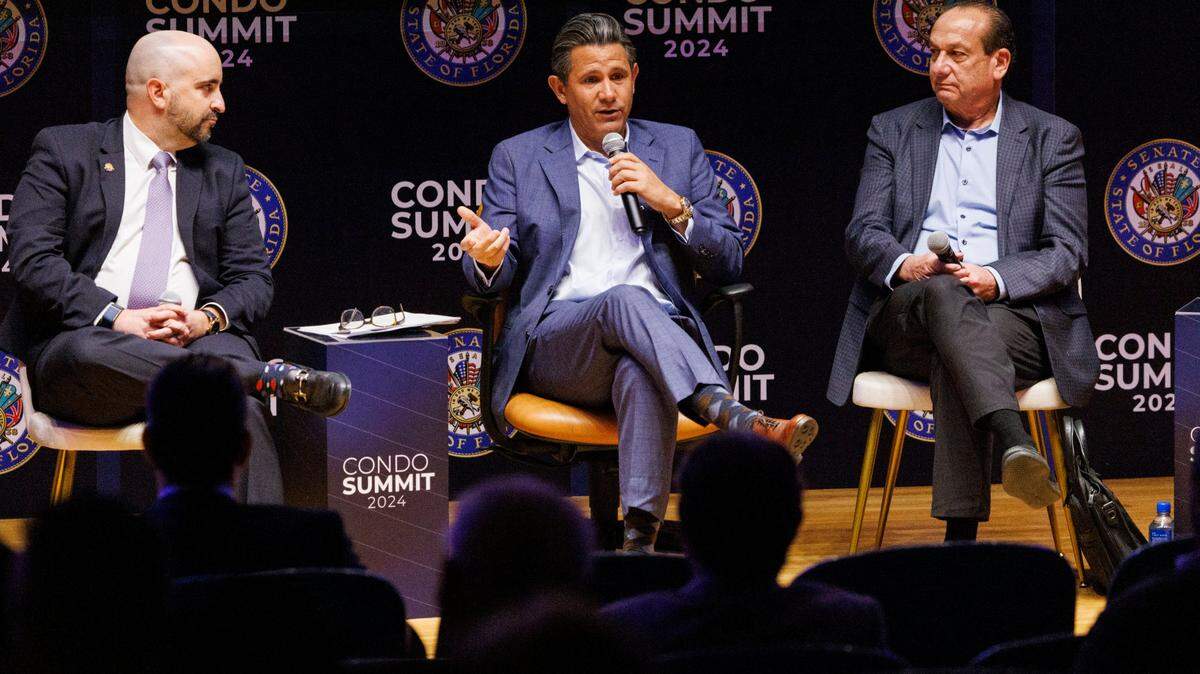
On Thursday, Sen. Jason Pizzo, who represents a sliver of northern Miami-Dade County including Aventura and Sunny Isles Beach, announced he was switching his voter registration from Democrat to no party affiliation.
“Here’s the issue: The Democratic Party in Florida is dead,” Pizzo said during a speech on the Senate floor. Until that point, he was the Senate’s Democratic leader, one of the highest positions a Democrat currently holds in Tallahassee.
Democratic Party leaders quickly denounced Pizzo as looking out for his own aspirations to run for governor next year: “Jason’s failure to build support within our party for a gubernatorial run has led to this final embarrassing temper tantrum,” Party Chair Nikki Fried wrote in a statement.
Indeed, Pizzo’s decision happened on the same day that former Republican U.S. David Jolly said he was “very close” to announcing he’s running for governor as a Democrat in 2026.
If Pizzo runs for governor as an independent and splits votes with the Democratic nominee that will all but guarantee that Republicans win the gubernatorial race. There’s also talk about Pizzo running to be state attorney general, Politico reported.
Ideally, with independents becoming the fastest growing segment of voters in Florida, more politicians should run and serve in office without any party affiliation. Realistically, fundraising and winning a statewide election as an independent still looks like an insurmountable task in a state as big and diverse as Florida.
At the same time, it’s also becoming increasingly hard for someone to win statewide — and even in local elections — as a Democrat.
In recent years, the number of registered Republicans has surpassed the number of Democrats by more than 1 million voters. Last year, Trump became the first Republican presidential candidate to carry Miami-Dade since the 1980s.
Fried said that Pizzo’s resignation from the party “is one of the best things to happen to the party in years,” which hints at some bad political blood between them. But dropping the D next to his name might be actually more beneficial to Pizzo after all.
In recent months, two members of the Florida House from Broward and Hillsborough counties switched from Democratic to Republican and reaped rewards.
In the 10 weeks since her party switch, Rep. Hillary Cassel of Dania Beach has raised almost the same amount of money as she did in the previous two years combined thanks to donations from GOP and special interests, the Sun Sentinel reported. GOP House leadership also rewarded her by nominating her vice chair of the House Insurance and Banking Subcommittee.
With Democratic numbers in the Legislature shrinking, joining the majority party comes with perks and the increased ability to pass legislation.
Fried and others can try to spin the departure of Pizzo and his fellow lawmakers as the reflection of their own self interests. That’s likely correct, but it’s a bigger sign that the Democratic Party brand is one many no longer want to endorse.
Click here to send the letter.
BEHIND THE STORY
MOREWhat's an editorial?
Editorials are opinion pieces that reflect the views of the Miami Herald Editorial Board, a group of opinion journalists that operates separately from the Miami Herald newsroom. Miami Herald Editorial Board members are: opinion editor Amy Driscoll and editorial writers Isadora Rangel and Mary Anna Mancuso. Read more by clicking the arrow in the upper right.
What's the difference between an op-ed and a column?
How does the Miami Herald Editorial Board decide what to write about?
The Editorial Board, made up of experienced opinion journalists, primarily addresses local and state issues that affect South Florida residents. Each board member has an area of focus, such as education, COVID or local government policy. Board members meet daily and bring up an array of topics for discussion. Once a topic is fully discussed, board members will further report the issue, interviewing stakeholders and others involved and affected, so that the board can present the most informed opinion possible. We strive to provide our community with thought leadership that advocates for policies and priorities that strengthen our communities. Our editorials promote social justice, fairness in economic, educational and social opportunities and an end to systemic racism and inequality. The Editorial Board is separate from the reporters and editors of the Miami Herald newsroom.
How can I contribute to the Miami Herald Opinion section?
The Editorial Board accepts op-ed submissions of 650-700 words from community members who want to argue a specific viewpoint or idea that is relevant to our area. You can email an op-ed submission to oped@miamiherald.com. We also accept 150-word letters to the editor from readers who want to offer their points of view on current issues. For more information on how to submit a letter, go here.