
Florida revenge porn victims are about to get more recourse, even if not enough | Opinion
Social media is a powerful tool, but, in the wrong hands, platforms can be weaponized. For victims of deepfakes and AI-generated revenge porn, the damage is deeply personal and immediate.
To have those images removed, victims are left with zero guidance and forced to navigate an evolving landscape with limited recourse against the person posting the fake images.
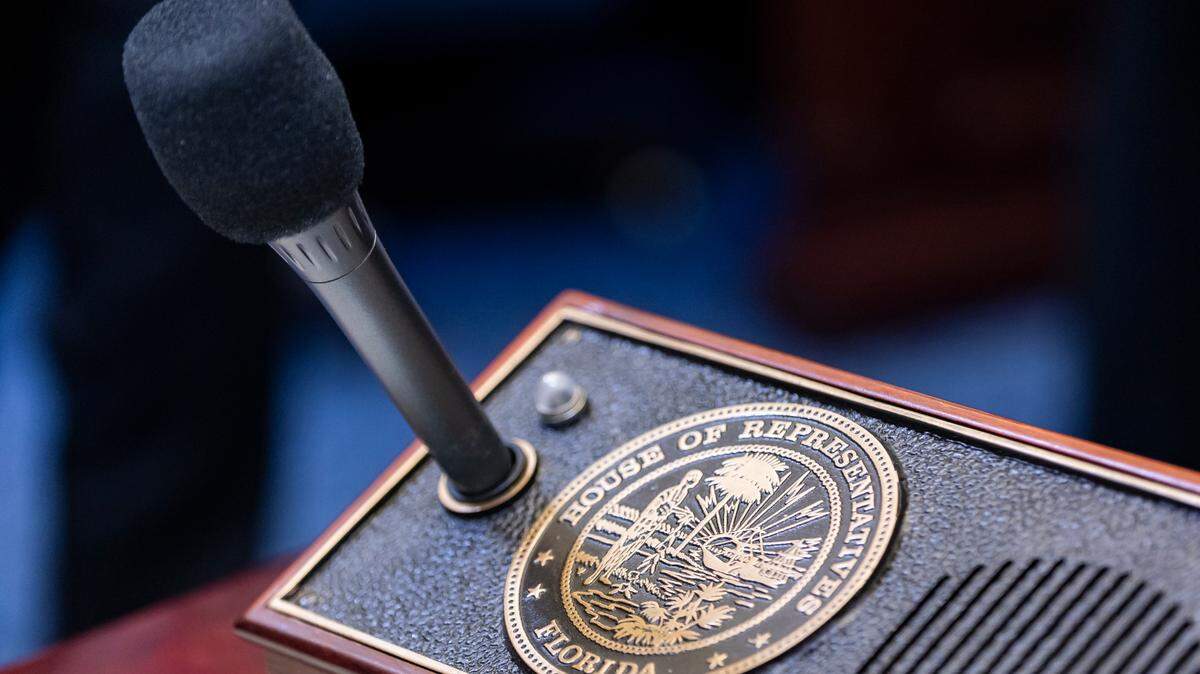
Recognizing the increased concerns over deepfakes — images or audio altered by artificial intelligence — the Florida Legislature is taking action toward cracking down on fake, pornographic depictions of people. Known as Brooke’s Law, House Bill 1161 and companion Senate Bill 1400, introduced by Miami Sen. Alexis Calatayud, would require internet platforms to create a way for people to have altered sexual depictions and copies of such depictions removed from their platform upon request of the victim.
The bill gets its name from former Jacksonville Mayor Lenny Curry’s daughter, Brooke Curry, who was a victim of a deep fake pornographic image circulated on the social media platform Snapchat. Sadly, Brooke’s story isn’t unique.
Sponsor state Rep. Wyman Duggan, R-Jacksonville, told lawmakers in a committee hearing last week, “The Department of Homeland Security has declared that deep fakes and the misuse of synthetic content pose a clear, present and evolving threat to the public — 98% of the deep fake videos found online are explicitly pornographic, and 99% of those feature women.”
Lawmakers on both sides of the aisle recognize the problem, and the bipartisan consensus is encouraging for victims who have found themselves with little protection. Last week, Brooke’s Law unanimously cleared the House and is poised for Senate passage on Wednesday.
The legislation avoids sweeping mandates and focuses on civil enforcement, and treats failure by social media platforms to comply as a deceptive business practice under Florida’s consumer protection laws.
Michael Flynn, a professor at Nova Southeastern University Shepard Broad College of Law, said that while the legislation offers a form of recourse, it’s only part of the solution.
“Once the content is posted, the damage is done and any remedy for the victim cannot take back what is already out for others to view,” he told the Miami Herald Editorial Board. Flynn argues that, “criminal penalties in addition to a civil remedy might be more effective.”
Florida lawmakers aren’t the only ones tackling the issue of deepfakes and revenge porn. The U.S. Senate has taken up the TAKE IT DOWN Act, bipartisan online safety legislation aimed to increase protections against the non-consensual dissemination of sexual images, including artificial intelligence generated images as well as deepfake and revenge porn.
The difference between Brooke’s Law and the TAKE IT DOWN Act is that Brooke’s Law is civil and applies within Florida. The TAKE IT DOWN Act establishes federal criminal penalties against people who post non-consensual intimate images. Both bills would require a platform to remove the content within 48 hours of a request
Brooke’s Law is a significant step forward. By requiring platforms to create a take-down process, it ensures victims can take immediate action to protect themselves. However, as Flynn noted, “the law may act as a deterrent but does not protect the victim once the posting of the images is complete.”
There should be broader protections, such as creating victim support services and the consideration of criminal implications at the state level.
Miami-based First Amendment attorney Tom Julin said Brooke’s Law may prompt social media platforms to “become much more aggressive in terms of limiting the content that they allow to be posted on their sites.” That may not be a bad thing, especially if it means fewer victims of deepfakes and revenge porn.
Brooke’s Law could have more teeth, but it still progress toward regulation on the destructive ways artificial intelligence can be used.
Click here to send the letter.
BEHIND THE STORY
MOREWhat's an editorial?
Editorials are opinion pieces that reflect the views of the Miami Herald Editorial Board, a group of opinion journalists that operates separately from the Miami Herald newsroom. Miami Herald Editorial Board members are: opinion editor Amy Driscoll and editorial writers Isadora Rangel and Mary Anna Mancuso. Read more by clicking the arrow in the upper right.
What's the difference between an op-ed and a column?
How does the Miami Herald Editorial Board decide what to write about?
The Editorial Board, made up of experienced opinion journalists, primarily addresses local and state issues that affect South Florida residents. Each board member has an area of focus, such as education, COVID or local government policy. Board members meet daily and bring up an array of topics for discussion. Once a topic is fully discussed, board members will further report the issue, interviewing stakeholders and others involved and affected, so that the board can present the most informed opinion possible. We strive to provide our community with thought leadership that advocates for policies and priorities that strengthen our communities. Our editorials promote social justice, fairness in economic, educational and social opportunities and an end to systemic racism and inequality. The Editorial Board is separate from the reporters and editors of the Miami Herald newsroom.
How can I contribute to the Miami Herald Opinion section?
The Editorial Board accepts op-ed submissions of 650-700 words from community members who want to argue a specific viewpoint or idea that is relevant to our area. You can email an op-ed submission to oped@miamiherald.com. We also accept 150-word letters to the editor from readers who want to offer their points of view on current issues. For more information on how to submit a letter, go here.