
Miami-Dade mayor should veto the fluoridation vote | Opinion
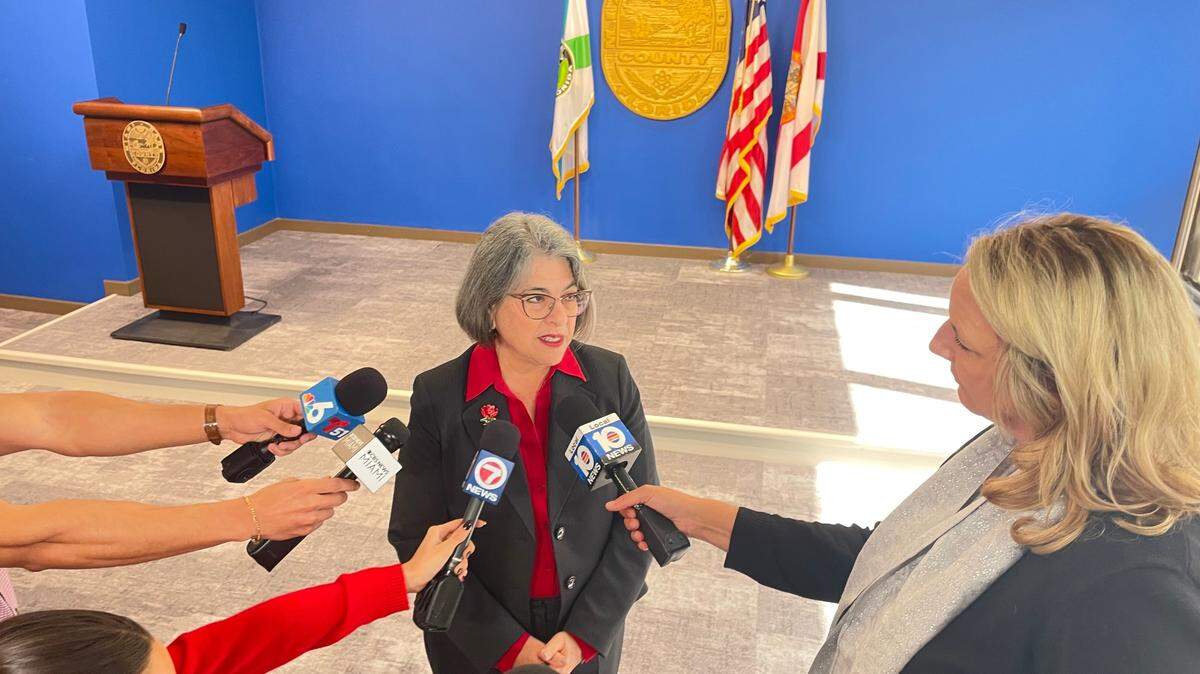
The fluoride wars that have been raging in Florida for months recently reached Miami-Dade County. Now Mayor Daniella Levine Cava, who has said she supports keeping fluoride in water, must decide by Friday whether she’ll veto an 8-2 county commission vote on April 1 to end the decades-long practice of adding fluoride to the water to improve dental health.
Vetoes should be used sparingly. In this case, a veto is appropriate.
As we have said before, the scientific consensus remains that tiny amounts of fluoride in drinking water is both safe and helpful to dental health. The American Academy of Pediatrics says it helps reduce tooth decay and lessens cavities in children. The Centers for Disease Control and Prevention called it one of the greatest achievements in public health in the 20th century, and says added fluoride continues to show no risk in the tiny amounts used in drinking water.
Miami-Dade adds 0.7 milligrams per liter, the CDC’s recommended amount. Concerns cited by opponents often focus on studies looking at much higher amounts, of 1.5 milligrams per liter or more. Miami-Dade has fluoridated its water since the 1950s. As Dr. Aileen Marty, a professor at Florida International University’s medical school, said during a hearing in Miami-Dade: “I want to be very clear that the levels that are in Miami-Dade County’s water are safe. Not only are they safe... they’re necessary for the health and well-being of the children and adults in this county.”
Removing fluoride from our drinking water is likely to penalize families of limited income the most, those without easy and affordable access to dental care. And make no mistake: Dental care is health care. Poor oral health can lead to serious health issues like heart disease and diabetes.
The debate over fluoridation grew after a federal judge in September ordered the Environmental Protection Agency to further address regulating it. The ruling came out of a report by the National Institutes of Health that indicated a link between high exposures — double the standard amount — and developmental delay in kids.
In Miami-Dade, some of those opposed to fluoride have echoed the national discussion, likening its addition to the public water supply to forced medical treatments. Rejecting fluoride would be a victory for medical freedom, they said.
Unfortunately, this has become a political issue. Mistrust of public health systems reared its head during the COVID pandemic. And Robert Kennedy Jr., the secretary of health and human services under President Trump, claims fluoride can lead to health problems. On Tuesday, he said he plans to tell the CDC to stop recommending fluoridation, and that he is assembling a task force on the issue.
But how much value should anyone give Kennedy’s medical opinion? He’s been a years-long vaccine skeptic, yet on Sunday, after visiting Texas families who lost children to measles, he publicly advocated on X for the MMR vaccine.
The fluoride issue arose in Miami-Dade when Commissioner Roberto Gonzalez sponsored legislation to remove it from the water. He held a March 11 hearing when Florida Surgeon General Joseph Ladapo and other fluoridation critics spoke. The commission voted April 1; Ladapo was allowed to address them again right before the meeting. On Monday, Levine Cava held a roundtable discussion with pro-fluoride medical professionals, the first time advocates had been allowed extended time to address the issue in County Hall. Commissioners were not invited.
There have been mixed decisions in local governments across Florida. Collier County voted to stop fluoridating water in February; Seminole County did the same this week. But the Central Florida town of Bartow voted to keep fluoride. So did Delray Beach in Palm Beach County. There’s also a Florida Senate bill being considered by the Legislature, SB 700, to ban fluoride in the water supply.
Even if Levine Cava vetoes the legislation, commissioners could override her decision with nine of the commission’s 13 votes. Because there were three commissioners absent during the April 1 vote to remove fluoride from the water supply in 30 days, it’s unclear whether there would be enough votes to do so.
Miami-Dade commissioners ignored much of the scientific consensus on fluoride. With a veto, Levine Cava could bring it back to the county.
Click here to send the letter.
BEHIND THE STORY
MOREWhat's an editorial?
Editorials are opinion pieces that reflect the views of the Miami Herald Editorial Board, a group of opinion journalists that operates separately from the Miami Herald newsroom. Miami Herald Editorial Board members are: opinion editor Amy Driscoll and editorial writers Isadora Rangel and Mary Anna Mancuso. Read more by clicking the arrow in the upper right.
What's the difference between an op-ed and a column?
How does the Miami Herald Editorial Board decide what to write about?
The Editorial Board, made up of experienced opinion journalists, primarily addresses local and state issues that affect South Florida residents. Each board member has an area of focus, such as education, COVID or local government policy. Board members meet daily and bring up an array of topics for discussion. Once a topic is fully discussed, board members will further report the issue, interviewing stakeholders and others involved and affected, so that the board can present the most informed opinion possible. We strive to provide our community with thought leadership that advocates for policies and priorities that strengthen our communities. Our editorials promote social justice, fairness in economic, educational and social opportunities and an end to systemic racism and inequality. The Editorial Board is separate from the reporters and editors of the Miami Herald newsroom.
How can I contribute to the Miami Herald Opinion section?
The Editorial Board accepts op-ed submissions of 650-700 words from community members who want to argue a specific viewpoint or idea that is relevant to our area. You can email an op-ed submission to oped@miamiherald.com. We also accept 150-word letters to the editor from readers who want to offer their points of view on current issues. For more information on how to submit a letter, go here.
This story was originally published April 9, 2025 at 1:09 PM.