
In the name of media accountability, Florida bill would make it easier to revisit history | Opinion
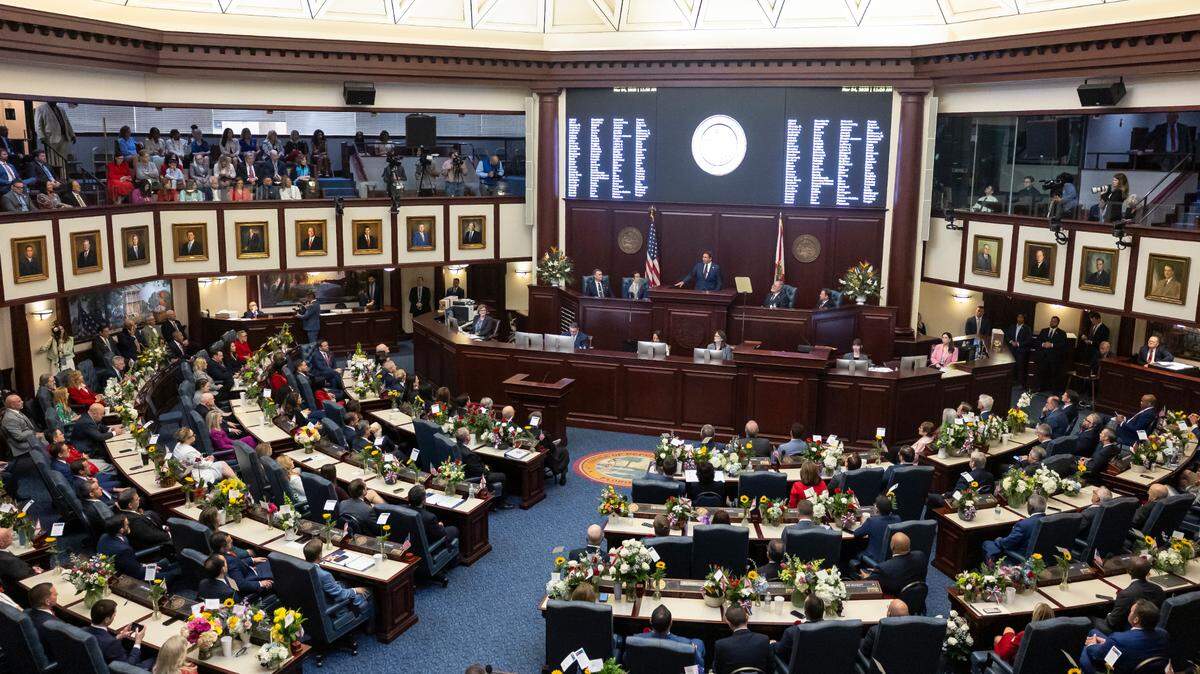
A proposed Florida law that purports to hold media outlets accountable would actually make facts “airbrushable” from history, as Bobby Block, executive director of the First Amendment Foundation, told the Herald Editorial Board.
Think of the murder charges against Casey Anthony related to the death of her daughter and those against George Zimmerman in Trayvon Martin’s death. Both cases were widely covered in the media before the accused were found not guilty.
If Senate Bill 752 is approved by the Florida Legislature, experts say, it would allow former defendants like Anthony and Zimmerman to require media outlets to take down news content about the charges against them because they weren’t convicted — even if those stories accurately described the facts at the time of their arrest.
That’s one bizarre consequence of SB 752 — and it goes even further than that.
The proposal would make it easier for subjects of news reporting to require that entire online articles be removed from a website within 10 days “if any part of the online article is inaccurate” — no matter how small or inconsequential the error — Kara Gross, legislative director and senior policy counsel at the American Civil Liberties Union of Florida, wrote in a statement.
That means taking down “entire articles, even if only one sentence is disputed,” James Lake, a defamation lawyer, told the Senate Judiciary Committee on March 12. A correction or apology alone would not be enough to avoid punitive damages in court, Miami-based First Amendment lawyer Thomas Julin told the Board.
This would affect not only the “liberal mainstream media” that Republicans dislike, but also the vast network of Florida’s conservative news organizations, many of them small, that would be hard-pressed to afford the legal costs of defending themselves from defamation lawsuits. The religious communications group National Religious Broadcasters has warned the legislation would be weaponized against against Christian broadcasters.
In the end, if entire articles are taken down or the press ends up self-censoring to avoid legal issues, the public loses its ability to be informed.
The bill, filed by Sen. Corey Smith, R-Tallahassee, undermines what’s known as “fair reporting privilege.” Under the law, reporters have legal protections if they report on judicial and public records in a fair and accurate way. That includes statements made during court proceedings, public meetings or a police report when someone is arrested.
The bill states that if a newspaper, TV station or other outlet “publishes a defamatory statement on the Internet with no knowledge of falsity of the statement,” they are required to take down that statement if they “receive notice that such statement has been found in a judicial proceeding to be false” — a judicial proceeding could be interpreted to include an acquittal from criminal charges — “or receives notice of facts that would cause a reasonable person to conclude that such statement was false.” If the news outlet fails to do so, they lose their fair reporting privilege.
SB 752, and its House companion, have been sold as a remedy for people whose reputations were ruined because of news stories about crimes they were accused of, even when those charges were later dropped or the defendants were found not guilty. Certainly, being accused of a crime shouldn’t ruin anyone’s life, especially if they aren’t convicted.
But the problem is how broad the legislation is, and how it revisits what the truth means.
When law enforcement charged Anthony in 2008 with murdering her daughter, for example, those were the facts reported in the media at the time. Her subsequent acquittal doesn’t change those initial events.
”[The bill] would require you to go back and edit history,” Julin said.
Another problem is how the legislation addresses statements that “a reasonable person” would find false. That standard is “often a matter of perspective or opinion,” the National Religious Broadcasters wrote in a letter to Senate leadership, Fox News reported. These outlets would be at risk of facing lawsuits because they “often take positions that are at odds with views of certain elites within society,” NRB general counsel Michael Farris wrote.
If lawmakers truly want to help people whose reputations have been harmed, then a bill that narrowly addresses that would make more sense. This legislation seems more geared toward a broad and dangerous goal of chilling speech.
Click here to send the letter.
BEHIND THE STORY
MOREWhat's an editorial?
Editorials are opinion pieces that reflect the views of the Miami Herald Editorial Board, a group of opinion journalists that operates separately from the Miami Herald newsroom. Miami Herald Editorial Board members are: opinion editor Amy Driscoll and editorial writers Isadora Rangel and Mary Anna Mancuso. Read more by clicking the arrow in the upper right.
What's the difference between an op-ed and a column?
How does the Miami Herald Editorial Board decide what to write about?
The Editorial Board, made up of experienced opinion journalists, primarily addresses local and state issues that affect South Florida residents. Each board member has an area of focus, such as education, COVID or local government policy. Board members meet daily and bring up an array of topics for discussion. Once a topic is fully discussed, board members will further report the issue, interviewing stakeholders and others involved and affected, so that the board can present the most informed opinion possible. We strive to provide our community with thought leadership that advocates for policies and priorities that strengthen our communities. Our editorials promote social justice, fairness in economic, educational and social opportunities and an end to systemic racism and inequality. The Editorial Board is separate from the reporters and editors of the Miami Herald newsroom.
How can I contribute to the Miami Herald Opinion section?
The Editorial Board accepts op-ed submissions of 650-700 words from community members who want to argue a specific viewpoint or idea that is relevant to our area. You can email an op-ed submission to oped@miamiherald.com. We also accept 150-word letters to the editor from readers who want to offer their points of view on current issues. For more information on how to submit a letter, go here.