
Florida lawmakers make surprise pitch to cut $5B in sales tax. They have our attention | Opinion
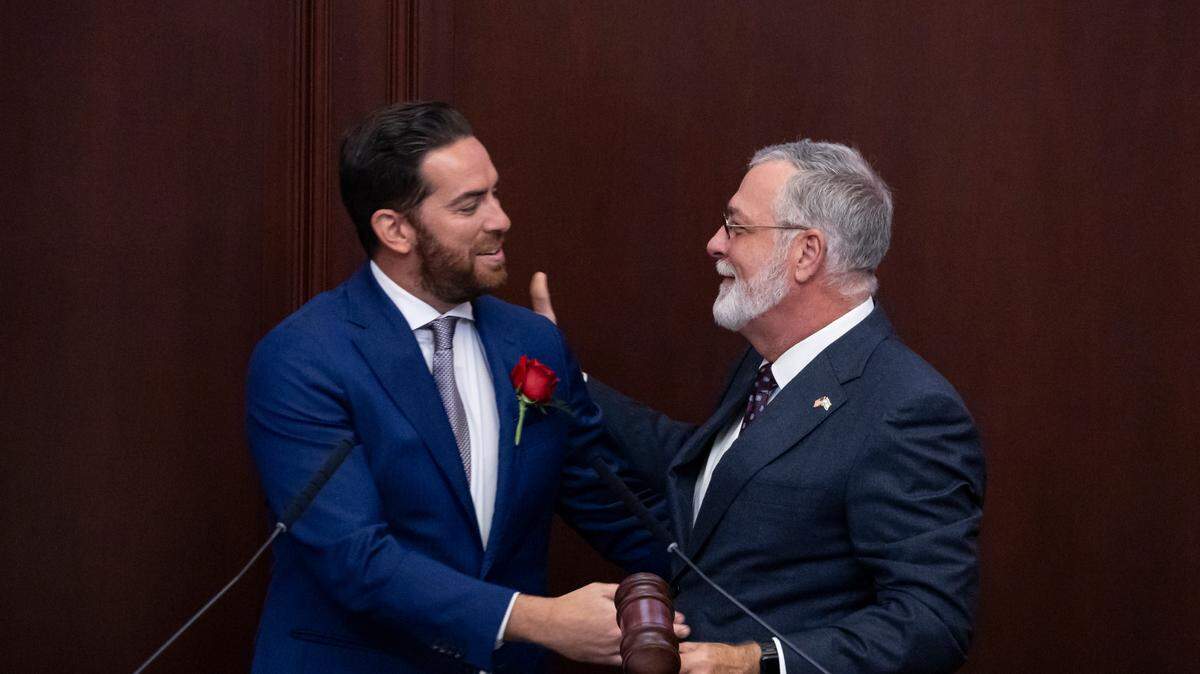
Cut Florida’s sales tax? That was the startling idea proposed Wednesday in an announcement by House Speaker Daniel Perez. He said his chamber would consider a plan to trim the sales tax rate from 6% to 5.25%, resulting in a $5 billion tax cut — “the largest state tax cut in the history of Florida,” he said.
No one’s saying yet how the state can manage without that $5 billion, and of course that’s the big question. But the idea itself is exciting, not least because it would save money for people across the socioeconomic spectrum. It could even be a long-needed step toward making the state’s tax code fairer.
This proposal didn’t happen in a vacuum. The 2025 legislative session has been marked by a new spirit of independence from the Legislature, which seems to have finally re-awakened to its own role as a check on the governor and other branches of government. The proposal to cut the sales tax is a refreshing departure from the usual proposals of special interest tax breaks.
Perez, a Miami Republican, pitched it as a way to address the affordability problem in Florida.
“We often talk about how to improve affordability in Florida, and our strategies usually involve spending money on more government programs,” Perez said. “But this year, we’ll try a novel concept and make Florida more affordable by giving the people of Florida their own money.”
The sales-tax proposal comes shortly after Florida Gov. Ron DeSantis proposed scrapping Florida’s property tax entirely — in a state that already has no income tax. DeSantis’ idea has some serious hurdles: It would likely put an enormous squeeze on local governments, which rely on property taxes to fund essential services such as police. Any move to get rid of property taxes would require lawmakers to put a constitutional amendment on the ballot, probably in 2026, and the measure would have to pass with at least 60% of the vote.
Also, if property taxes are killed, wouldn’t sales taxes have to go up, the opposite of what Perez is suggesting?
Reducing the sales tax, which is levied by state and local governments, is a more reasonable proposal, at least from what we know so far. And, importantly, it would offer relief to anyone who buys goods in Florida — everyone, basically — rather than only those who own property.
As the Herald reported, Florida taxes are considered the most regressive in the nation — the poorest people pay the largest proportion of their income toward taxes — according to the left-leaning Institute on Taxation and Economic Policy. Sales taxes, in particular, place a disproportionate burden on lower income people who generally spend more of their income on taxable goods and services than wealthier ones.
Perez — who has not shied away from taking on DeSantis, notably on immigration during January’s special sessions — took a swipe at the governor during the announcement that the House will consider cutting the sales tax.
“This will not be a temporary measure, a stunt or a tax holiday,” he said. “This will be a permanent, recurring tax reduction.”
DeSantis has routinely used sales tax holidays — a week or two when sales taxes aren’t levied on hurricane preparedness items or back-to-school shopping — as a feel-good financial measure for Floridians. He now wants a summer tax holiday for gun sales.
But as Perez said in his opening day speech to the Legislature in March, “We spend every new dime of recurring revenue while congratulating ourselves for giving easy-to-fund, non-recurring sales tax holidays.”
The practicalities of cutting the sales tax are still unknown. House Minority Leader Fentrice Driskell, a Tampa Democrat, called the proposed cuts “an interesting concept, but $5 billion is real money, and we have real programs that need funding.”
The state sales tax is the main source of money for general revenue, the pot of money lawmakers use to pay for many initiatives and services. Even in a state where the budget last year was about $116 billion, trimming $5 billion would no doubt cause some serious pain.
It’s a proposal worth discussion, especially as Florida’s government spending faces projected shortfalls within two years. Cutting the state sales tax may not have been on our bingo card for this year but putting $5 billion back in the pockets of Floridians is an interesting idea that should be given serious consideration in Tallahassee.
Click here to send the letter.
BEHIND THE STORY
MOREWhat's an editorial?
Editorials are opinion pieces that reflect the views of the Miami Herald Editorial Board, a group of opinion journalists that operates separately from the Miami Herald newsroom. Miami Herald Editorial Board members are: opinion editor Amy Driscoll and editorial writers Isadora Rangel and Mary Anna Mancuso. Read more by clicking the arrow in the upper right.
What's the difference between an op-ed and a column?
How does the Miami Herald Editorial Board decide what to write about?
The Editorial Board, made up of experienced opinion journalists, primarily addresses local and state issues that affect South Florida residents. Each board member has an area of focus, such as education, COVID or local government policy. Board members meet daily and bring up an array of topics for discussion. Once a topic is fully discussed, board members will further report the issue, interviewing stakeholders and others involved and affected, so that the board can present the most informed opinion possible. We strive to provide our community with thought leadership that advocates for policies and priorities that strengthen our communities. Our editorials promote social justice, fairness in economic, educational and social opportunities and an end to systemic racism and inequality. The Editorial Board is separate from the reporters and editors of the Miami Herald newsroom.
How can I contribute to the Miami Herald Opinion section?
The Editorial Board accepts op-ed submissions of 650-700 words from community members who want to argue a specific viewpoint or idea that is relevant to our area. You can email an op-ed submission to oped@miamiherald.com. We also accept 150-word letters to the editor from readers who want to offer their points of view on current issues. For more information on how to submit a letter, go here.