
DeSantis declares war on wasteful spending—after years of overseeing it | Opinion
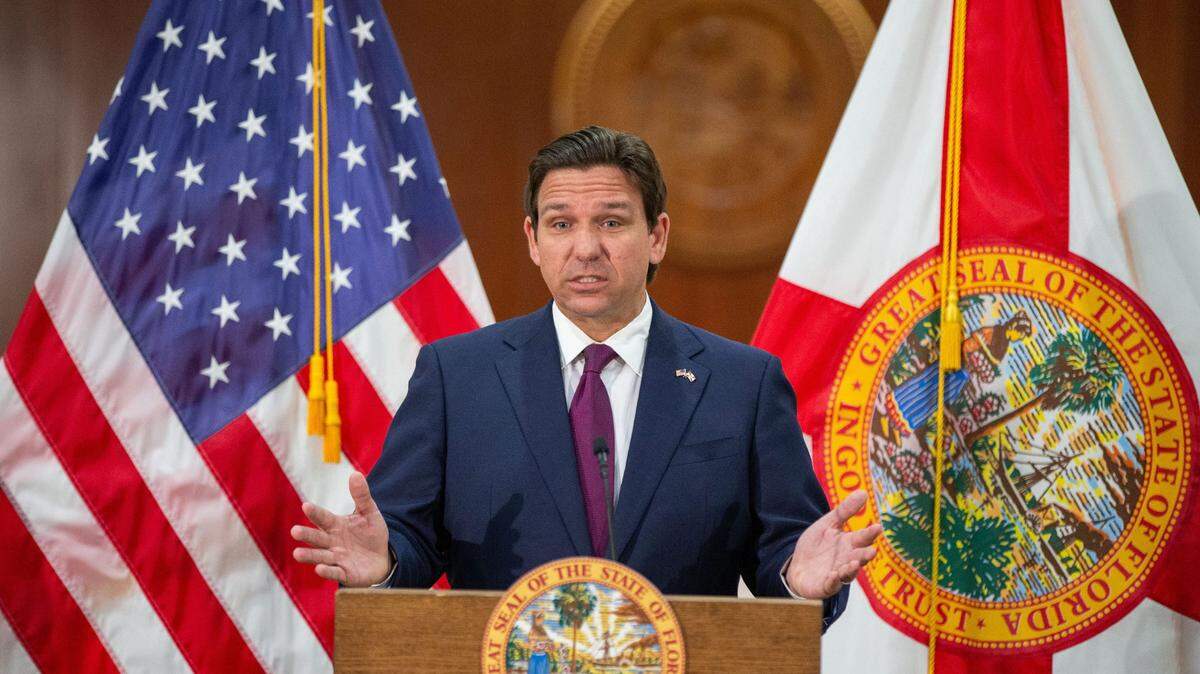
The problem with Gov. Ron DeSantis wanting to cut excessive spending in Florida is that Republicans have been in charge of spending for nearly three decades.
Since Jeb Bush took office in 1999, the GOP has held the governor’s office and has controlled both chambers of the Legislature since 1996. If there is any wasteful spending by the state, it falls on the shoulders of the Republicans who have had the power of the purse.
In another move to copy President Donald Trump, DeSantis has announced the creation of Florida’s own Department of Government Efficiency (DOGE Task Force).
DeSantis’ DOGE Task Force is similar to the quasi-department that has garnered a lot of national attention and some criticism for the hash way it is going about firing federal workers under the guise of “government efficiency.”
At a press conference on Monday, DeSantis announced the creation of his DOGE Task Force in an effort to keep Florida efficient. The initiative whose name is a nod to the Elon Musk-led DOGE agency, seems out of place in a state that has been touted by DeSantis as the standard “for fiscally conservative governance.”
The task force will cut 70 state boards along with potentially eliminating 1,700 state worker jobs. In addition, Florida DOGE will audit universities and local municipalities and counties to expose bloat and wasteful spending.
“For too long, nobody has cared about the taxpayers, much less the next generation, who is ultimately going to have to pay for all of the mismanagement that we have seen over these many, many years,” DeSantis explained.
In the executive order establishing the task force, he said the overall goal is to eliminate “bureaucratic bloat and modernizing our state government to best serve the people of Florida.”
At best, the task force will tighten an already fiscally conservative state’s spending. At worst, this could turn into a witch hunt to target opposing ideology in the higher education system and also an overreach to curb and interfere with local government spending.
The focus on higher education comes on the heels of Republican appointments of new university presidents to various Florida universities, including Florida International University, and the Florida Board of Governors recent vote earlier this year to overhaul the state university curriculum, removing hundreds of courses from general education offerings.
Local government budgets will also be audited by DeSantis’ task force, because local governments have been increasing their budgets as well as property taxes to fund spending., he said?
Overall, DeSantis’s DOGE Task Force represents a fundamental contradiction for a political party where fiscal conservatism is a central tenet: The Republican governor is running an audit on Republican spending, and is basically admitting the GOP’s decades-long control of state government has supposedly resulted in waste and inefficiency.
DeSantis’ task force feels like political theater aimed at staying above the fold and remaining relevant.
There are better task forces the governor could assemble that would help the Sunshine State beyond a misguided mimicking of Trump policies, such as addressing the insurance crisis, or increased cost of living affecting all Floridians, especially our seniors.
If the governor is serious about efficiency, perhaps he should start by examining his own priorities, such as the nearly $300 million bill recently passed by the legislature for immigration enforcement, fighting culture wars in classrooms or the $17 million in legal fees to fight Disney.
Each of those efforts could have been directed toward meaningful improvements in the state.
If Republicans have been recklessly spending Florida taxpayer dollars, then why has it taken DeSantis seven years to take action?
Click here to send the letter.
BEHIND THE STORY
MOREWhat's an editorial?
Editorials are opinion pieces that reflect the views of the Miami Herald Editorial Board, a group of opinion journalists that operates separately from the Miami Herald newsroom. Miami Herald Editorial Board members are: opinion editor Amy Driscoll and editorial writers Isadora Rangel and Mary Anna Mancuso. Read more by clicking the arrow in the upper right.
What's the difference between an op-ed and a column?
How does the Miami Herald Editorial Board decide what to write about?
The Editorial Board, made up of experienced opinion journalists, primarily addresses local and state issues that affect South Florida residents. Each board member has an area of focus, such as education, COVID or local government policy. Board members meet daily and bring up an array of topics for discussion. Once a topic is fully discussed, board members will further report the issue, interviewing stakeholders and others involved and affected, so that the board can present the most informed opinion possible. We strive to provide our community with thought leadership that advocates for policies and priorities that strengthen our communities. Our editorials promote social justice, fairness in economic, educational and social opportunities and an end to systemic racism and inequality. The Editorial Board is separate from the reporters and editors of the Miami Herald newsroom.
How can I contribute to the Miami Herald Opinion section?
The Editorial Board accepts op-ed submissions of 650-700 words from community members who want to argue a specific viewpoint or idea that is relevant to our area. You can email an op-ed submission to oped@miamiherald.com. We also accept 150-word letters to the editor from readers who want to offer their points of view on current issues. For more information on how to submit a letter, go here.
This story was originally published February 26, 2025 at 11:28 AM.