
Florida Lt. Gov. Nunez’s reversal on in-state tuition is about the GOP, not policy | Opinion
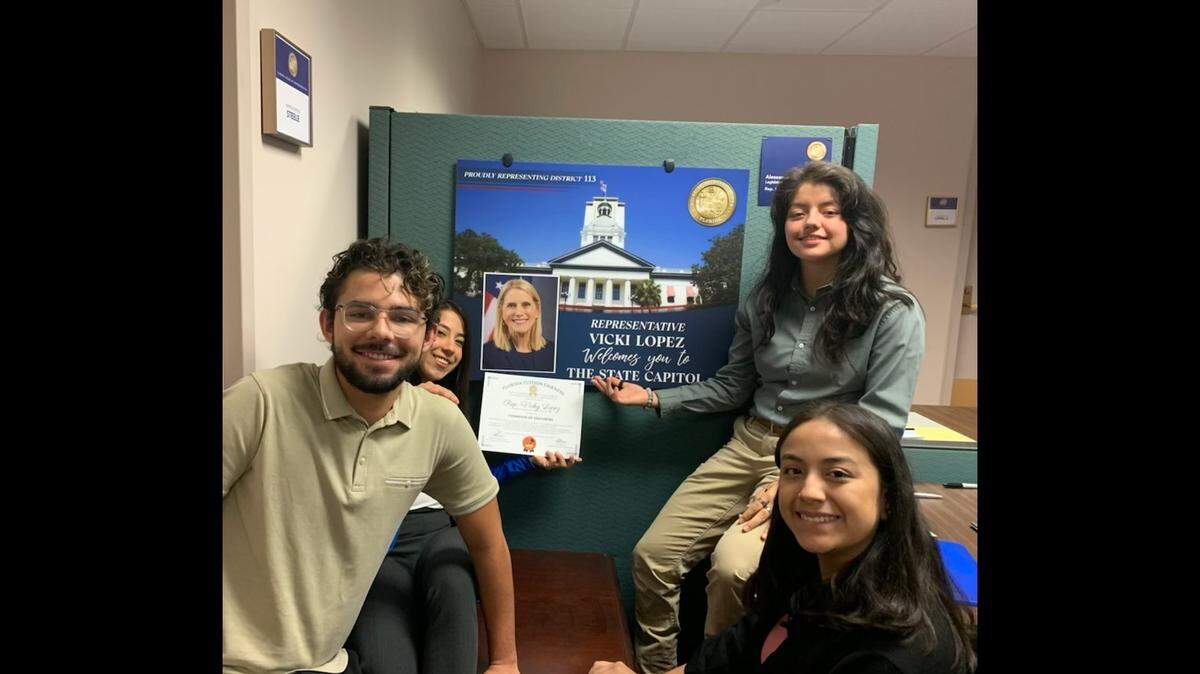
In a surprising reversal that highlights the shifting politics of immigration in Florida, Lt. Gov. Jeanette Nuñez is now advocating for the repeal of a law she once championed as a state legislator — one that has helped thousands of undocumented students pursue higher education by granting them access to in-state tuition rates.
This change in position not only reflects the broader rightward shift of the Republican Party on immigration issues but also raises questions about the impact on Florida’s educational landscape and the students who have built their futures around this decade-old policy.
Ten years ago, in 2014, while Nuñez was in the Legislature, she sponsored a bill giving undocumented immigrants access to in-state tuition. The law gave a big boost to the college hopes of Dreamers, undocumented children brought to the U.S. by their parents. Now she’s saying the law she backed and made a reality has “run its course” and should be repealed. In 2014, Nuñez argued the law “balances fairness with pragmatism, compassion with common sense.”
While Nuñez points to the fact that “our country looks very different today than it did then,” the biggest change has been the person who occupies the White House. Public sentiment has also shifted, along with the politics of the Republican Party. Nuñez’s reversal seems be more about political expediency than a principled policy shift.
On Monday, as lawmakers gaveled in for their special session — after rejecting Gov. Ron DeSantis’s initial call for one — Republican state Sen. Randy Fine filed SB 90, which would end the 10-year law of giving undocumented students in-state tuition.
Currently, there are over 43,000 undocumented students in higher education in Florida. Republicans argue that repealing the 2014 law would save taxpayers an estimated $45 million by rolling back the subsidies on in-state tuition. However, repealing this law would put higher education further out of reach for undocumented students who call Florida home.
If lawmakers are determined to end in-state tuition for undocumented students they would be wise to take a suggestion from Senate President Ben Albritton, who said last month that lawmakers should consider phasing out the state law. According to Albritton, “if you and your family have built the idea of going to college around this, and you built your budget around it, then a sunset would make sense to me.”
When the original bill passed in 2014, educators such as then-Florida International University President Mark Rosenberg commended Nuñez on her advocacy. At the time, she framed the law as a matter of fairness, emphasizing that Dreamers shouldn’t be held “responsible for actions that their parents took. Something they had no control over.” She also argued that Florida should “allow for opportunities for all of Florida’s children.”
Those principles of fairness and opportunity that Nuñez championed a decade ago haven’t changed — what’s changed is the political calculus. The shift in her position reflects a broader pattern among Republicans who once supported more moderate immigration policies but have since adopted harder-line stances that align with their party’s current direction.
The human cost of this political pivot shouldn’t be overlooked. Some 43,000 students have built their educational and career plans around the current tuition structure. They represent future doctors, engineers, teachers, and entrepreneurs who could strengthen Florida’s workforce and economy at a time when it’s needed.
Albritton’s proposed phase-out approach at least acknowledges the real-world implications for families who have made financial commitments based on the existing law. But even a gradual rollback would still ultimately close doors that were opened a decade ago with bipartisan support.
The irony is that the original arguments for the law remain valid today. These students still didn’t choose to come to Florida. The only difference is that supporting their educational aspirations has become politically inconvenient for the Republican Party.
Lawmakers should consider whether short-term political gains justify disrupting the educational paths of thousands of Florida students. The decision they make will reveal whether pragmatism and compassion still have a place in Florida’s education policy.

Click here to send the letter.
BEHIND THE STORY
MOREWhat's an editorial?
Editorials are opinion pieces that reflect the views of the Miami Herald Editorial Board, a group of opinion journalists that operates separately from the Miami Herald newsroom. Miami Herald Editorial Board members are: opinion editor Amy Driscoll and editorial writers Isadora Rangel and Mary Anna Mancuso. Read more by clicking the arrow in the upper right.
What's the difference between an op-ed and a column?
How does the Miami Herald Editorial Board decide what to write about?
The Editorial Board, made up of experienced opinion journalists, primarily addresses local and state issues that affect South Florida residents. Each board member has an area of focus, such as education, COVID or local government policy. Board members meet daily and bring up an array of topics for discussion. Once a topic is fully discussed, board members will further report the issue, interviewing stakeholders and others involved and affected, so that the board can present the most informed opinion possible. We strive to provide our community with thought leadership that advocates for policies and priorities that strengthen our communities. Our editorials promote social justice, fairness in economic, educational and social opportunities and an end to systemic racism and inequality. The Editorial Board is separate from the reporters and editors of the Miami Herald newsroom.
How can I contribute to the Miami Herald Opinion section?
The Editorial Board accepts op-ed submissions of 650-700 words from community members who want to argue a specific viewpoint or idea that is relevant to our area. You can email an op-ed submission to oped@miamiherald.com. We also accept 150-word letters to the editor from readers who want to offer their points of view on current issues. For more information on how to submit a letter, go here.