
Biden’s Cuba actions gave Miami exiles more reason to distrust Democrats | Opinion
It’s no secret. Miami’s Cuban exile community has long harbored a distrust of the Democratic Party, born from the failure of the 1961 Bay of Pigs invasion under the John F. Kennedy administration.
That wariness has been glaringly evident in recent presidential elections as Miami Cuban exiles have increasingly embraced Republican President-elect Donald Trump and his tough stance on the Cuban government — key to why exiles were instrumental in Trump’s 2024 victory in Miami-Dade in 2024.
This week, President Joe Biden helped prove their distrust was well-founded with his final-days action to remove Cuba from the list of countries that sponsor terrorism, along with lifting sanctions on Cuban military-run companies and suspending provisions that allow Cuban Americans to seek compensation for property confiscated in Cuba decades ago. Cuba will release 533 political prisoners detained at demonstrations two years ago under the deal, brokered by the Catholic Church.
For the Miami exile community, Biden’s announcement was a jaw-dropping moment, one that shows them what they had always suspected was true — that Democrats don’t understand how serious a threat Cuba is to U.S. national security. Also, that the Biden administration’s actions will be seen as weakness by the unbending Cuban regime.
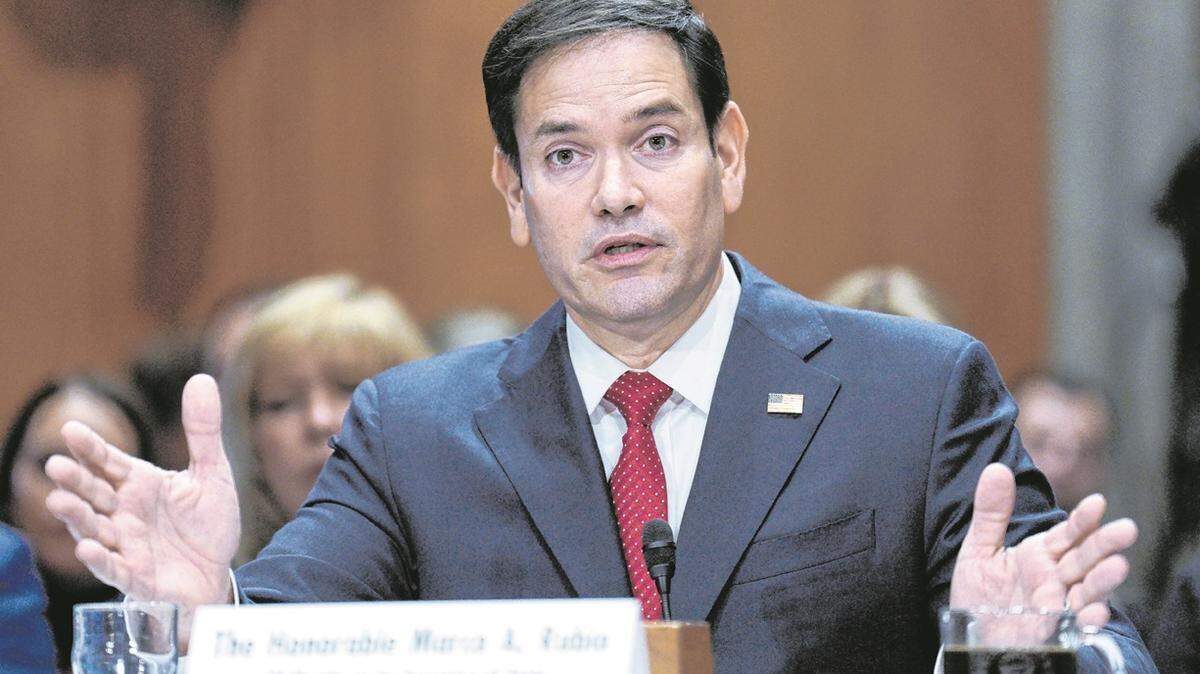
The change in U.S. policy toward Cuba will probably be short-lived. President-elect Donald Trump’s choice for secretary of state, Florida Sen. Marco Rubio, is Cuban American and from Miami. Long before now, he has been a hard-liner on Cuba.
Rubio should reverse Biden’s order as soon as he takes office — and there are indications that he will.
During his Senate confirmation hearing on Wednesday, Rubio denounced Biden’s actions and said Cuba belongs on the terror list. He added that the incoming Trump administration is not bound to honor Biden’s gift to Cuba. It should not.
At the hearing, when fellow Cuban-American Republican Sen. Ted Cruz of Texas asked if Rubio believed Cuba was a state sponsor of terrorism, Rubio answered: “Without a question.” He cited Cuba’s support of terrorist groups like the Colombian guerrilla group FARC, the island’s ties to Iran, the existence of “two countries’ espionage stations” — referring to China and Russia — and the Cuban government’s “friendly” relations with Hamas and Hezbollah.
None of this is a surprise, and that’s why Biden’s actions are so baffling. Even some of Florida’s Democratic party leaders and a member of Congress ripped the president’s actions.
State Democratic Party Chair Nikki Fried, who was raised in Miami-Dade, appeared blindsided. “We condemn in the strongest terms Cuba’s removal from this list, as well as any possible lifting of economic sanctions, and call on the Biden Administration to reverse course immediately,” she said in a statement.
Fried knows the already-reeling state party will have an even more difficult time now fighting the communist-leaning charge that Republicans have been quick to lob against Democrats, with greater and greater effect. The decision also will make it tougher to attract Florida’s Hispanic voters, many of whom have fled communist regimes. For the party, this is a severe blow to hopes of rebuilding after the 2024 election shellacking.
Even Broward U.S. Rep. Debbie Wasserman Schultz (FL-25), a true blue Democrat, broke rank with Biden. “I strongly disagree with the president’s decision to remove Cuba from the State Sponsors of Terrorism list,” she said in a statement.
The suspension of provisions allowing Cuban Americans to seek compensation for the confiscated property is galling — although each U.S. president has suspended the measure since Bill Clinton signed it into law in 1996 until the suspension was lifted by Trump in 2019.
And lifting sanctions on Cuban military-run companies is a move that may wind up supporting a regime that has long been accused of human rights abuses and oppressive tactics.
These actions may have been intended to promote goodwill and facilitate humanitarian improvements between the two countries, but they were ill-conceived. The attempt to thaw relations with Cuba during the Obama administration didn’t significantly change things.
What was Biden thinking, and does he realize the damage he has done to his party in Florida by taking softening the U.S. stance on Cuba? Or maybe he didn’t care — which is what Miami Cuba exiles have suspected for the last four years.
Click here to send the letter.
BEHIND THE STORY
MOREWhat's an editorial?
Editorials are opinion pieces that reflect the views of the Miami Herald Editorial Board, a group of opinion journalists that operates separately from the Miami Herald newsroom. Miami Herald Editorial Board members are: opinion editor Amy Driscoll and editorial writers Isadora Rangel and Mary Anna Mancuso. Read more by clicking the arrow in the upper right.
What's the difference between an op-ed and a column?
How does the Miami Herald Editorial Board decide what to write about?
The Editorial Board, made up of experienced opinion journalists, primarily addresses local and state issues that affect South Florida residents. Each board member has an area of focus, such as education, COVID or local government policy. Board members meet daily and bring up an array of topics for discussion. Once a topic is fully discussed, board members will further report the issue, interviewing stakeholders and others involved and affected, so that the board can present the most informed opinion possible. We strive to provide our community with thought leadership that advocates for policies and priorities that strengthen our communities. Our editorials promote social justice, fairness in economic, educational and social opportunities and an end to systemic racism and inequality. The Editorial Board is separate from the reporters and editors of the Miami Herald newsroom.
How can I contribute to the Miami Herald Opinion section?
The Editorial Board accepts op-ed submissions of 650-700 words from community members who want to argue a specific viewpoint or idea that is relevant to our area. You can email an op-ed submission to oped@miamiherald.com. We also accept 150-word letters to the editor from readers who want to offer their points of view on current issues. For more information on how to submit a letter, go here.